Eye surgery can refer to a broad range of procedures to correct vision disorders, treat eye diseases, and restore eye health. These procedures may address issues such as cataracts, refractive errors, glaucoma, retinal disorders, and corneal diseases, among others. Graphic Era Hospital, Dehradun has a dedicated ophthalmology department equipped to manage the full spectrum of eye conditions. The hospital, with a team of highly experienced ophthalmic surgeons and cutting-edge technology, delivers evidence-based, patient-centered care at par with international safety and precision standards.
When is Eye Surgery Recommended?
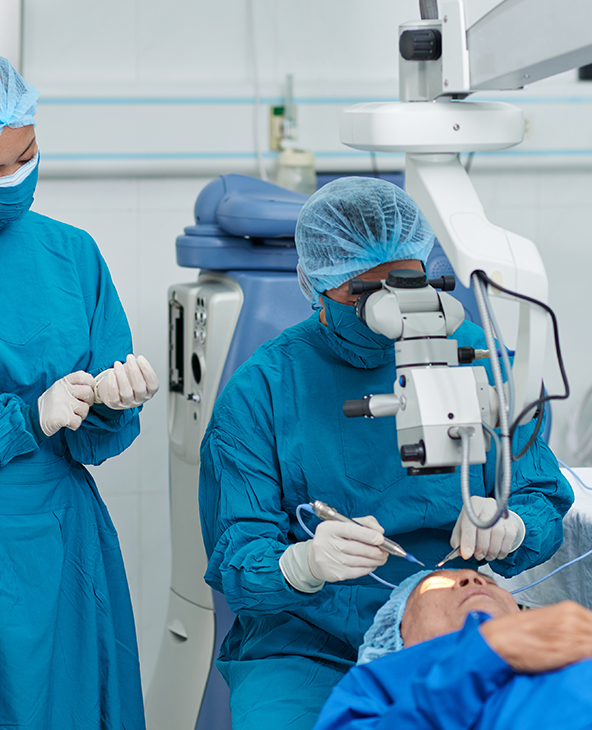
Eye surgery is considered when non-surgical treatments such as spectacles, contact lenses, or medication fail to correct or manage a condition. The decision is based on clinical evaluation, the severity of the condition, and the patient's overall ocular health. Surgery may be elective, as in vision correction procedures, or medically necessary, as in cases involving sight-threatening diseases. Common conditions for which eye surgery is recommended include:
- Refractive Errors: Conditions such as myopia, hyperopia, Presbyopia with or without astigmatism who wants to reduce the need for glasses and contact lens.
- Cataracts: Lens opacity that causes significant visual impairment, affecting daily activities such as reading, driving, or overall quality of life, often requires surgical removal.
- Glaucoma: Elevated intraocular pressure that cannot be controlled effectively with medications or laser therapy may necessitate surgical management to prevent optic nerve damage.
- Retinal Detachment: A serious condition where the retina separates from underlying tissue, requiring immediate surgical intervention to prevent permanent vision loss.
- Diabetic Retinopathy: Advanced stages involving vitreous haemorrhage or tractional retinal detachment may require vitreoretinal surgery to preserve vision.
- Keratoconus or Corneal Scarring: Progressive thinning or damage to the cornea leading to distorted or severely reduced vision that is not correctable with lenses may require surgical treatment.
- Pterygium: A growth extending onto the cornea that threatens visual clarity or causes persistent irritation and blurring of vision may require surgical removal.
- Blocked Tear Ducts: Chronic tearing or recurrent infections that do not respond to conservative treatment may require surgical correction.
- Eyelid Disorders: Conditions such as ptosis, entropion, or ectropion that interfere with vision or cause corneal damage may require surgical repair.
- Age-Related Macular Degeneration: In select cases, surgical or procedural interventions may help slow disease progression and preserve remaining vision.
Schedule Your Appointment with
Our Expert Doctors
We are dedicated to driving lasting, positive transformation in healthcare management through innovation and patient-centered solutions.
Things to Know Before Undergoing Eye Surgery
Preparation plays a significant role in the success and safety of any eye surgical procedure. Understanding what to expect before the operation helps patients make informed decisions, reduce anxiety, and ensure a smoother clinical experience.
Key things to be aware of before undergoing eye surgery:
- Comprehensive Eye Evaluation: A mandatory preoperative workup includes tests for corneal thickness, intraocular pressure, retinal health, and refractive measurements to confirm surgical candidacy.
- Full Medical History Disclosure: Contact lens use, ongoing medications, allergies, and systemic conditions such as diabetes or hypertension must all be communicated to the surgeon before any procedure is planned.
- Discontinuation of Contact Lenses: Lenses must be stopped for a specified period before surgery, typically one to three weeks for soft lenses and longer for rigid lenses, as they alter corneal shape and affect pre-surgical measurements.
- Fasting Instructions: Fasting requirements apply for procedures performed under general or sedation anaesthesia. The surgical team will provide specific instructions based on the planned approach.
- Arranging Accompaniment: Travelling or driving alone immediately after surgery is not advisable due to temporary vision changes or residual sedation effects. A companion should be arranged for the day of the procedure.
- Avoiding Makeup and Fragrances: Eye makeup, creams, and perfumes must not be applied on the day of surgery to minimise infection risk and maintain the integrity of the sterile surgical environment.
- Setting Realistic Expectations: Outcomes vary by procedure and individual eye characteristics. Complete spectacle independence is not guaranteed in all cases and should be discussed clearly with the treating surgeon beforehand.
- Pre-existing Condition Assessment: Conditions such as dry eye syndrome, autoimmune disorders, or keratoconus may affect eligibility for certain procedures and may require additional management before surgery is cleared.
- Consent and Pre-operative Counselling: All risks, benefits, and alternatives are formally discussed and documented as part of the pre-surgical process. Patients are encouraged to ask questions and seek clarification at this stage.
Types of Eye Surgeries Available at Graphic Era Hospital
Graphic Era Hospital offers a comprehensive range of ophthalmic surgical procedures addressing both refractive conditions and sight-threatening diseases.
The following surgical procedures are available at the Department of Ophthalmology:
- Cataract Surgery with premium IOL Implantation: Phacoemulsification technique is used to remove the clouded natural lens, which is replaced with a premium intraocular lens. Monofocal, multifocal, and toric lens options are available based on individual visual requirements.
- Glaucoma Surgery: Surgical and laser interventions including trabeculectomy and laser trabeculoplasty are performed to control intraocular pressure and prevent further damage to the optic nerve in cases unresponsive to medication.
- Retinal Surgery: Advanced microsurgical procedures to treat retinal detachment, diabetic retinopathy, macular holes, epiretinal membranes, and vitreous haemorrhage using state-of-the-art vitrectomy systems.
- Squint Surgery: Corrective surgical realignment of the extraocular muscles to treat strabismus in both paediatric and adult patients, improving both visual function and cosmetic appearance.
- Oculoplasty and Orbital Surgery: Reconstructive and functional procedures addressing ptosis, entropion, ectropion, lacrimal duct obstruction, orbital fractures, and periorbital tumours.
- Pterygium Excision: Surgical removal of pterygium tissue encroaching on the cornea, performed with conjunctival autografting to minimise recurrence and restore corneal clarity.
- Paediatric Ophthalmology Procedures: Surgical management of congenital cataracts, congenital glaucoma, and nasolacrimal duct obstruction in infants and children, supported by a dedicated paediatric eye care team.
- Intravitreal Injections and Laser Photocoagulation: Minimally invasive procedural interventions for age-related macular degeneration, diabetic macular edema, and retinal vascular conditions, performed as outpatient daycare procedures.
All surgical procedures are supported by comprehensive preoperative evaluation and structured post-operative follow-up to ensure optimal recovery and sustained visual outcomes.
Why Choose Graphic Era Hospital for Eye Surgery
The ophthalmology department at Graphic Era Hospital integrates technology with specialised expertise to ensure safe, evidence-based, and reproducible outcomes for every patient. Here’s why people choose Graphic Era Hospital for eye surgery:

Experienced Ophthalmology Team : The department includes ophthalmologists trained in different areas of eye care, capable of handling both routine and complex surgical cases. Clinical decisions are based on detailed assessments and established medical practices.

Comprehensive Diagnostic and Surgical Services : The hospital provides access to essential diagnostic tests that support accurate evaluation of eye conditions. A range of surgical procedures is available, allowing treatment to be aligned with the specific needs of each condition.

Structured Pre- and Post-Operative Care : Each case undergoes thorough evaluation before surgery to assess suitability and minimise risks. After the procedure, regular follow-up and monitoring help track recovery and address any concerns during the healing process.
Post-Surgery Care and Recovery After Eye Surgery
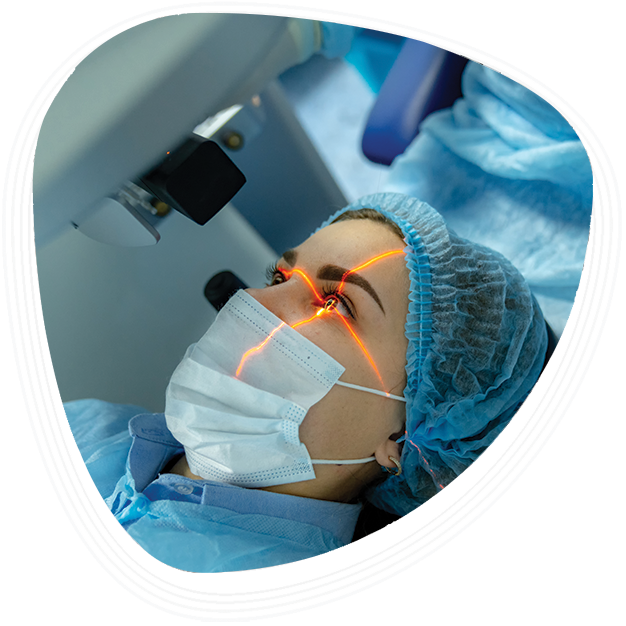
Recovery after eye surgery requires careful attention to instructions provided after the procedure. Proper care supports healing, reduces the risk of complications, and helps achieve the expected visual outcome.
- Use prescribed eye drops as directed to prevent infection and support healing
- Avoid rubbing or touching the eyes to reduce irritation or injury
- Limit screen time and activities that may strain the eyes in the initial recovery period
- Protect the eyes from dust, smoke, and bright light by using protective eyewear if advised
- Avoid heavy lifting, bending, or strenuous activity for a few days, based on medical advice
- Maintain proper hygiene, especially around the eyes, to prevent infection
- Attend scheduled follow-up visits to monitor healing and visual progress
Recovery time varies depending on the type of surgery performed and the condition treated.
Risks and Possible Complications After Eye Surgery
Eye surgery is generally safe, but like any medical procedure, it carries certain risks. The type and likelihood of complications depend on the specific surgery and the individual condition being treated.
- Infection in or around the eye
- Redness, irritation, or swelling during the early recovery period
- Temporary blurred or fluctuating vision
- Dryness or discomfort in the eyes
- Increased sensitivity to light
- Rise in eye pressure in some cases
- Delayed healing or inflammation
- Rare risk of vision loss or need for additional procedures
Most side effects are temporary and improve with proper care and medication.
Top Eye Surgical Procedures at Graphic Era Hospital
- Cataract surgery
- Glaucoma surgery
- Retinal surgeries
- Squint (strabismus) correction surgery
- Oculoplastic and eyelid surgeries
- Eye trauma and emergency surgical procedures
Patient Stories





Blog





Frequently Asked Questions (FAQs)
How long does vision take to stabilise after eye surgery?
Vision may begin to improve within a few days for some procedures, but complete stabilisation can take a few weeks. The exact duration depends on the type of surgery and the condition treated.
Is eye surgery performed on both eyes at the same time?
In most cases, one eye is operated on first, followed by the second eye after a gap. This allows proper healing and assessment before proceeding with the next surgery.
What type of anaesthesia is used during eye surgery?
Most eye surgeries are performed using local anaesthesia, which numbs the eye while the patient remains awake. In some cases, mild sedation or general anaesthesia may be used based on the procedure and patient condition.
Can existing health conditions affect eligibility for eye surgery?
Certain conditions such as diabetes, high blood pressure, or infections may influence the timing or type of surgery. A detailed medical evaluation is conducted before proceeding.
How soon can normal activities be resumed after surgery?
Light activities may be resumed within a few days, but activities that strain the eyes or involve physical effort may need to be avoided for a longer period, depending on medical advice.
Are there any dietary restrictions before or after eye surgery?
Dietary restrictions are usually minimal. In some cases, fasting may be required before surgery, and a balanced diet is recommended after the procedure to support recovery.
Can eye surgery be repeated if vision changes again over time?
In certain cases, additional procedures or enhancements may be considered if vision changes, depending on the initial surgery and current eye condition.
What precautions should be taken during travel after eye surgery?
Travel may be limited for a short period after surgery. Protection from dust, avoiding strain, and following medication schedules are important during travel.
How often are follow-up visits required after the procedure?
Follow-up schedules vary but typically include an initial visit within a few days, followed by additional visits over the next few weeks to monitor healing.
Is it normal to experience glare or halos after certain eye surgeries?
Some patients may notice glare or halos, especially after refractive procedures. These effects are usually temporary and improve as the eyes heal.
 Emergency 24×7 : 1800 889 7351