Piles (haemorrhoids) are a common condition, but the discomfort they cause is anything but minor. From pain and bleeding to difficulty during bowel movements, untreated piles can significantly affect daily life. Yet, many people delay seeking care, often due to embarrassment or the assumption that symptoms will resolve on their own.
At Graphic Era Hospital in Dehradun, piles are managed by experienced gastroenterologists and surgical specialists who focus on accurate diagnosis and effective, long-term relief. The approach goes beyond temporary symptom control, identifying the underlying cause and offering treatment options ranging from medical management to advanced minimally invasive procedures. With access to modern diagnostic tools such as endoscopy and colonoscopy, along with specialised surgical expertise, patients receive comprehensive care under one roof, ensuring both precision in diagnosis and clarity in treatment decisions.
Doctors Available

Dr. Sachin Dev Munjal
Senior Consultant and Head
Gastroenterology, Hepatology and Advanced Endoscopy
Experience: 15 Years
Book An Appointment
What are Piles (Haemorrhoids)?
Piles, clinically known as haemorrhoids, are swollen and inflamed blood vessels in and around the rectum and anus. They develop when increased pressure on the veins in the lower rectum causes them to stretch, swell and sometimes bleed. While piles are extremely common - affecting people across all age groups - they vary significantly in severity, location and the level of discomfort they cause. At Graphic Era Hospital, our specialists assess piles across all grades and types to determine the most appropriate course of treatment.
Piles are classified as:
- Internal Haemorrhoids: Develop inside the rectum and are typically painless, though they may bleed during bowel movements. Graded from I to IV based on the degree of prolapse.
- External Haemorrhoids: Form under the skin around the anus and are often more painful, particularly when a blood clot develops - a condition known as thrombosed haemorrhoid.
- Prolapsed Haemorrhoids: Internal haemorrhoids that protrude outside the anus during straining, ranging from those that retract spontaneously to those requiring manual reduction or surgical intervention.
- Thrombosed Haemorrhoids: External haemorrhoids in which a blood clot forms, causing sudden, severe pain and swelling that often requires prompt medical attention.
- Bleeding Piles: Haemorrhoids - internal or external - that bleed during or after bowel movements, ranging from minor spotting on tissue to more significant blood loss requiring investigation.
When to See a Piles Doctor?
Mild piles can often be managed with dietary changes and over-the-counter remedies. However, certain symptoms indicate the need for specialist evaluation, either because the condition is progressing or because similar symptoms may point to a different underlying issue.
If any of the following apply, it is advisable to consult a piles doctor (gastroenterologist) at Graphic Era Hospital:
- Rectal Bleeding: Any bleeding from the rectum, whether seen on tissue, in the toilet bowl, or mixed with stools, should be evaluated to confirm the cause and rule out other conditions.
- Persistent Pain or Discomfort: Pain around the anus that does not resolve within a few days, particularly if it is severe or worsening, requires specialist assessment.
- A Lump Around the Anus: A soft or firm swelling outside the anus, particularly if tender, swollen, or discoloured, may indicate an external or thrombosed haemorrhoid.
- Prolapse During Bowel Movements: Tissue that protrudes from the anus during or after straining, especially if it does not go back on its own, needs proper grading and treatment.
- Itching or Mucus Discharge: Ongoing itching, irritation, or mucus discharge from the anal area often points to internal haemorrhoids that need evaluation.
- Symptoms That Return After Home Treatment: Piles that improve temporarily but keep recurring despite dietary and lifestyle changes benefit from specialist review and a more definitive treatment approach.
- Anaemia or Significant Blood Loss: Chronic bleeding from piles leading to fatigue, pallor or low iron levels requires urgent evaluation and treatment to address both the haemorrhoids and their systemic impact.
What Causes Piles?
Piles develop when increased pressure on the veins in the lower rectum causes them to swell and stretch over time. This pressure can build up due to a combination of lifestyle factors and underlying health conditions. Identifying the cause is important, as it helps guide both effective treatment and long-term prevention. Common causes and risk factors include:
- Chronic Constipation and Straining: Repeated straining during bowel movements is one of the most direct causes of haemorrhoids, placing sustained pressure on rectal veins with each episode.
- Low-Fibre Diet: A diet lacking in fibre produces hard, difficult-to-pass stools — increasing straining and the likelihood of haemorrhoid development over time.
- Pregnancy: Hormonal changes and the growing uterus place significant pressure on the pelvic veins during pregnancy, making haemorrhoids particularly common in the second and third trimesters.
- Obesity: Excess body weight increases intra-abdominal pressure and places sustained strain on the veins of the lower rectum, making obesity a significant risk factor for piles.
- Prolonged Sitting: Spending extended periods seated, particularly on the toilet, increases pressure on the anal and rectal veins and contributes to haemorrhoid formation.
- Chronic Diarrhoea: Frequent loose stools cause repeated irritation and inflammation of the rectal lining, increasing the risk of haemorrhoid development over time.
- Ageing: The supporting tissues around the rectum and anus weaken naturally with age, making haemorrhoids more likely in adults over 45.
- Heavy Lifting: Regular heavy lifting, particularly without proper technique, raises intra-abdominal pressure in a manner similar to straining and contributes to haemorrhoid development.
- Family History: A genetic predisposition to weak rectal vein walls increases the likelihood of developing piles, particularly when combined with other risk factors.
Why Choose Graphic Era Hospital for Piles Treatment

Specialist-Led Proctology Care: At Graphic Era Hospital, piles are assessed and treated by proctology specialists with dedicated experience in colorectal and anorectal conditions. Every patient undergoes a thorough clinical evaluation, including grading of haemorrhoids and assessment of contributing factors, before a treatment plan is recommended. This ensures patients receive care matched to their specific condition rather than a one-size-fits-all approach.

Full Range of Non-Surgical and Surgical Options: Our team offers the complete spectrum of piles treatments, ranging from non-surgical approaches such as rubber band ligation and sclerotherapy to advanced laser surgery and open haemorrhoidectomy for severe or recurring cases. Having all treatment options available under one roof means the most appropriate intervention is always accessible, without the need for external referrals or delays.

Minimally Invasive Techniques and Rapid Recovery: Where clinically appropriate, our specialists prioritise minimally invasive approaches, including laser haemorrhoidectomy and stapled haemorrhoidopexy, that significantly reduce post-operative pain, bleeding and recovery time compared to traditional open surgery. Most patients treated with minimally invasive techniques return to normal activity within a few days, with structured follow-up to ensure complete resolution.
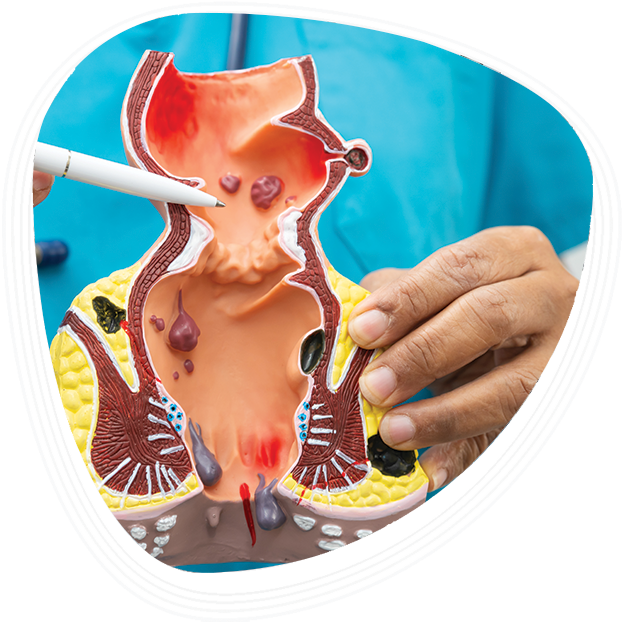
Piles Care at Graphic Era Hospital: From Diagnosis to Recovery
Diagnostic Approach
Accurate diagnosis determines both the grade of haemorrhoids and the most appropriate treatment. Our proctologists use a structured evaluation pathway:
- Clinical History and Symptom Assessment: A detailed review of symptom duration, bleeding pattern, bowel habits, diet and lifestyle factors to establish the likely cause and severity of piles.
- Digital Rectal Examination (DRE): A physical examination to assess the anorectal region, detect external haemorrhoids, prolapse or other anorectal pathology requiring further investigation.
- Proctoscopy: Direct visualisation of the anal canal and lower rectum using a short, lighted scope - the standard tool for grading internal haemorrhoids and detecting associated conditions such as fissures or polyps.
- Sigmoidoscopy or Colonoscopy: Recommended when rectal bleeding is significant, recurrent or associated with other symptoms, to rule out colorectal pathology beyond the anorectal region.
- Blood Tests: Ordered where chronic bleeding has caused anaemia or where systemic assessment is needed to guide treatment planning.
Non-Surgical Treatments
For Grade I and Grade II haemorrhoids - and selected Grade III cases - non-surgical options offer effective relief with minimal recovery time:
- Rubber Band Ligation: A small rubber band is placed around the base of an internal haemorrhoid, cutting off its blood supply and causing it to shrink and fall away within days. It is one of the most effective non-surgical treatments for internal piles.
- Sclerotherapy: A chemical solution is injected into the haemorrhoid tissue to shrink it, suitable for small internal haemorrhoids and patients where banding is not appropriate.
- Infrared Coagulation (IRC): Infrared energy is applied to the haemorrhoid to coagulate the blood vessels and reduce the tissue - a quick, well-tolerated outpatient procedure.
- Dietary and Lifestyle Management: High-fibre dietary guidance, adequate hydration and bowel habit modification form an essential part of both treatment and long-term prevention of recurrence.
Surgical Treatments
For Grade III and Grade IV haemorrhoids, thrombosed haemorrhoids or cases that have not responded to non-surgical management, surgical intervention provides definitive relief:
- Laser Haemorrhoidectomy: Uses a precisely focused laser beam to ablate haemorrhoid tissue with minimal bleeding, reduced post-operative pain and faster recovery compared to conventional surgery, available at Graphic Era Hospital for eligible patients.
- Stapled Haemorrhoidopexy (PPH): A circular stapling device repositions and reduces prolapsed haemorrhoidal tissue without excision, offering less post-operative pain and quicker return to activity than open surgery.
- Conventional Haemorrhoidectomy: Surgical excision of haemorrhoid tissue under anaesthesia - the gold standard for large, symptomatic Grade III and IV haemorrhoids - providing definitive, long-term resolution.
- Thrombosed Haemorrhoid Evacuation: Prompt surgical removal of a blood clot from a thrombosed external haemorrhoid, providing immediate pain relief when performed within 72 hours of onset.
Post-Treatment Care
Recovery and recurrence prevention are as important as the procedure itself. Our team provides:
- Pain Management: Tailored analgesia plans for the post-operative period, with guidance on sitz baths, topical applications and activity modification to support comfort during healing.
- Dietary Guidance: A structured high-fibre dietary plan and hydration advice to ensure soft, regular bowel movements during recovery and reduce the risk of recurrence.
- Wound Care and Follow-Up: Clear instructions on wound hygiene after surgical procedures, with scheduled outpatient follow-up to monitor healing and address any concerns.
- Long-Term Recurrence Prevention: Lifestyle counselling addressing the root causes of piles, including diet, hydration, weight management and bowel habits, to minimise the likelihood of recurrence after treatment.
Top Piles Treatment Procedures
- Rubber Band Ligation
- Sclerotherapy
- Infrared Coagulation (IRC)
- Laser Haemorrhoidectomy
- Stapled Haemorrhoidopexy (PPH)
- Conventional Haemorrhoidectomy
- Thrombosed Haemorrhoid Evacuation
- Anal Fissure Treatment
- Anal Fistula Surgery (Fistulotomy)
- Video-Assisted Anal Fistula Treatment (VAAFT)
- Pilonidal Sinus Surgery
- Proctoscopy
- Sigmoidoscopy
- Colonoscopy
Conditions Treated at Graphic Era Hospital
Other Specialities


Patient Stories

Blog

World Breastfeeding Week 2026: Common Challenges New Mothers Face and How to Overcome Them



Frequently Asked Questions (FAQs)
Can piles be treated without surgery?
Yes. Grade I and Grade II haemorrhoids, and many Grade III cases, can be effectively managed with non-surgical treatments such as rubber band ligation, sclerotherapy, and infrared coagulation. Surgery is usually recommended when these options do not provide lasting relief or when haemorrhoids are large, prolapsed, or thrombosed.
Is laser treatment for piles better than conventional surgery?
Laser haemorrhoidectomy is associated with less post-operative pain, minimal bleeding, and faster recovery compared to conventional open surgery. It is often preferred for suitable candidates. However, the choice of treatment depends on the severity and type of haemorrhoids. At Graphic Era Hospital, specialists assess each case individually to determine whether laser, stapled, or conventional surgery is the most appropriate option.
How long does recovery take after piles surgery?
Recovery after minimally invasive procedures such as laser haemorrhoidectomy or rubber band ligation typically takes three to seven days. Conventional haemorrhoidectomy may require two to four weeks of recovery, with complete healing over six to eight weeks.
Will piles come back after treatment?
Piles treated with definitive surgical procedures, particularly haemorrhoidectomy, have a low risk of recurrence. Non-surgical treatments carry a higher chance of recurrence, especially if underlying factors such as constipation, low dietary fibre, and straining are not addressed alongside treatment.
Are piles common during pregnancy?
Yes. Haemorrhoids are common during pregnancy due to increased pressure in the pelvic area and hormonal changes. Most cases are managed conservatively during pregnancy and reviewed after delivery. Care is tailored to ensure safety for both mother and baby.
How do I book an appointment with a piles doctor at Graphic Era Hospital?
Appointments can be booked through the hospital website, by calling at 1800 889 7351, or by visiting the outpatient department. The team ensures consultations are scheduled at the earliest available time.
What dietary changes help prevent piles from recurring?
A high-fibre diet that includes vegetables, fruits, whole grains, and legumes, along with adequate fluid intake, helps maintain soft stools and reduces straining. Personalised dietary guidance is provided as part of the treatment plan to support long-term prevention.