Cholesterol Myths: Do You Actually Need to Avoid Ghee, Eggs, and Non-Veg?
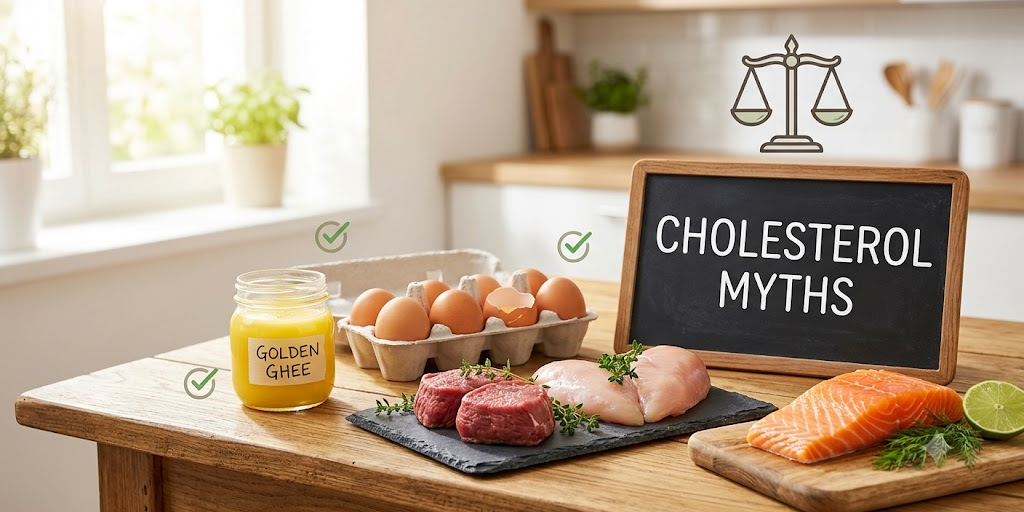
A diagnosis of high cholesterol can quickly turn familiar foods into a source of worry. Ghee may be labelled unhealthy, eggs may be avoided, and non-vegetarian foods may be removed from the plate altogether. But are these restrictions always necessary? In reality, cholesterol management is more nuanced than simply avoiding a few foods. In this article, we’ll separate common cholesterol myths from facts and take a closer look at how ghee, eggs, and non-vegetarian foods can fit into a balanced, heart-conscious diet.
Understanding Cholesterol
Cholesterol is a waxy substance that the body needs to build cells and make hormones. The liver makes most of the cholesterol the body needs, while foods from animal sources also contain dietary cholesterol.
However, eating cholesterol-containing foods does not automatically mean blood cholesterol will rise significantly. What matters more is the overall diet, particularly the amount of saturated fat it contains. Foods high in saturated fat can raise LDL cholesterol, the type of cholesterol associated with plaque buildup in the arteries.
This is why managing cholesterol is not simply about avoiding every food that contains cholesterol. The focus should be on limiting excess saturated fat and choosing more unsaturated fats, along with a balanced diet rich in vegetables, whole grains, pulses, fruits and other fibre-rich foods.
Myth 1: Ghee Must Be Completely Avoided
Ghee does not need to be completely avoided when managing cholesterol, but moderation is important. Ghee is high in saturated fat, which can raise LDL (bad) cholesterol when consumed in excess. However, it also helps the body absorb fat-soluble vitamins A, D, E and K from food and has a high smoke point, making it suitable for various cooking methods.
The key is to watch how much and how often you consume it rather than eliminating it entirely.
- Keep portions small: One teaspoon (5 g) of ghee provides approximately 45 calories.
- Account for total fat intake: Use ghee as part of your daily fat allowance rather than adding it on top of other dietary fats.
- Prioritise healthier fats: Include sources of unsaturated fats, such as nuts, seeds and suitable vegetable oils, more frequently.
Using a small amount of ghee for flavour can fit into a cholesterol-conscious diet. What matters most is your overall eating pattern, particularly your total saturated fat intake.
Myth 2: Eggs Always Raise Cholesterol
Eating eggs does not automatically raise blood cholesterol levels. Although egg yolks contain dietary cholesterol, its effect on blood cholesterol is generally smaller than that of saturated fat. For most people, eggs can be part of a balanced diet as they provide high-quality protein, vitamins and essential nutrients.
For many healthy adults, eating up to one egg a day can fit into a heart-healthy diet. However, how you prepare your eggs matters. Boiled or poached eggs are healthier choices than eggs cooked with large amounts of butter, cheese or processed meat.
People with high LDL cholesterol, familial hypercholesterolaemia or other cardiovascular risk factors may need personalised dietary advice. The key is to consider your overall diet and individual health needs rather than avoiding eggs altogether.
Myth 3: All Non-Vegetarian Food is Bad for Cholesterol
Not all non-vegetarian foods are bad for cholesterol. What matters is the type of meat, its fat content and how it is prepared. Fatty cuts of meat and processed meats, such as sausages and bacon, can be high in saturated fat, which may raise LDL (bad) cholesterol when consumed regularly.
However, lean poultry, fish and other lower-fat protein sources can be part of a heart-healthy diet. The key is to make healthier choices:
- Choose lean proteins: Opt for skinless chicken, fish and lean cuts of meat.
- Limit processed meats: Reduce your intake of bacon, sausages and other high-fat processed meats.
- Use healthier cooking methods: Prefer grilling, baking, steaming or roasting over deep-frying.
Managing cholesterol does not mean giving up non-vegetarian food entirely. Choosing leaner options, controlling portions and preparing food with less saturated fat can help you maintain a balanced, cholesterol-conscious diet.
Foods to Avoid or Limit for High Cholesterol
When managing high cholesterol, the focus should be on limiting foods high in saturated and trans fats, as these can raise LDL cholesterol. Rather than avoiding every food that contains dietary cholesterol, choose foods that support a heart-healthy eating pattern.
- Fatty cuts of meat: Choose leaner cuts and remove visible fat where possible.
- Processed meats: Limit sausages, bacon, salami and other processed meats, which can also be high in sodium.
- Butter, ghee and cream: Use smaller amounts because they are high in saturated fat.
- Full-fat dairy products: Limit high-fat milk, cheese and other full-fat dairy foods when they contribute significantly to saturated fat intake.
- Deep-fried foods: Fried snacks and foods can contain high amounts of saturated fat, depending on the oil and preparation method.
- Packaged baked foods: Biscuits, cakes, pastries and similar foods may contain saturated fat and, in some cases, industrial trans fats.
- Foods containing trans fats: Check food labels and avoid products that contain partially hydrogenated oils.
The aim is not to follow a highly restrictive diet. Replacing foods high in saturated fat with sources of unsaturated fat and fibre-rich foods can help support healthier cholesterol levels.
What to Eat More Often for Better Cholesterol Control
A cholesterol-conscious diet does not have to be restrictive. It can include a wide range of foods, but portion sizes and food choices both matter. As a general guide, adults can consider the following portions, although individual requirements vary based on age, activity level, body size and health conditions.
| Food | Practical portion and guidance |
| Vegetables | About 1–2 cups per meal. Include a variety of vegetables with lunch and dinner to increase fibre and overall nutrient intake. |
| Fruits | 1 -2medium fruits or about 2 cup of cut fruit per day,per serving about 100-150grams.. Choose whole fruit rather than fruit juice. |
| Whole grains | About ½–1 cup cooked rice or other whole grains, or 1–2 small rotis per meal, depending on individual energy needs. |
| Beans, lentils and other pulses | About ½–1 cup cooked per serving. These provide protein and dietary fibre and can be included regularly. |
| Nuts and seeds | About 25–30 g or a small handful per day. Choose unsalted varieties and avoid large portions because they are energy-dense. |
| Fish | About 100–150 g cooked per serving. Fish can be included as part of a varied diet, particularly in place of fatty or processed meats. |
| Lean protein sources | About 85–100 g cooked lean chicken per serving. Choose skinless cuts and preparation methods such as grilling, baking or steaming. |
| Unsaturated fats | Use small amounts of oils such as cold pressed or woodpressed sesame, mustard or groundnut oil in cooking instead of relying heavily on saturated fats. The total quantity should still be kept appropriate for individual energy needs. |
These are general portion guidelines rather than strict prescriptions. People with high LDL cholesterol, diabetes, cardiovascular disease or other health conditions may need personalised dietary advice based on their overall diet and health needs.
Fibre-rich foods can help support healthy cholesterol levels, while replacing foods high in saturated fat with foods containing unsaturated fats can improve the overall dietary fat profile. The goal is not to find one “cholesterol-lowering” food, but to build an eating pattern that supports healthier cholesterol levels over time.
How to Include Ghee, Eggs and Non-Veg in a Balanced Diet
These foods can be considered in the context of the whole diet rather than in isolation.
| Food | What to consider | Practical approach |
| Ghee | High in saturated fat | Use small amounts rather than making it the main cooking fat |
| Eggs | High in dietary cholesterol but not particularly high in saturated fat | Can be included as part of a balanced diet for most people |
| Lean chicken | Generally lower in saturated fat than fatty meat | Choose lean cuts and remove the skin |
| Fish | Provides protein, and some varieties provide omega-3 fats | Include as part of a varied diet |
| Fatty meat | Can be high in saturated fat | Choose less often and in smaller portions |
| Processed meat | Often high in saturated fat and sodium | Limit consumption |
For people who already have high LDL cholesterol or other cardiovascular risk factors, a doctor or dietitian can help determine which dietary changes are appropriate.
Lifestyle Changes for Cholesterol Management
Along with a balanced diet, making healthy lifestyle changes can help manage cholesterol levels and reduce cardiovascular risk. Individuals can incorporate the following habits into their daily routine:
- Stay physically active: Regular exercise can support healthy cholesterol levels and overall heart health.
- Maintain a healthy weight: Losing excess weight, when appropriate, can help improve cholesterol levels.
- Avoid smoking: Smoking damages blood vessels and increases cardiovascular risk.
- Manage blood pressure and blood sugar: High blood pressure and diabetes can increase cardiovascular risk alongside high cholesterol.
- Consider family history: Genetics can contribute to high cholesterol, particularly in conditions such as familial hypercholesterolaemia.
Note: Lifestyle changes can help improve cholesterol levels, but they may not be sufficient for everyone. People with very high LDL cholesterol, familial hypercholesterolaemia or existing cardiovascular disease may need cholesterol-lowering medication as part of their treatment plan. A doctor can determine whether medication is appropriate based on cholesterol levels, overall cardiovascular risk and other health factors.
When to Consult a Doctor for High Cholesterol
A lipid profile can identify abnormal cholesterol levels, but the result does not provide the complete picture on its own. A doctor can assess the result alongside blood pressure, diabetes, family history, existing cardiovascular disease and other risk factors.
A consultation becomes particularly important when:
- LDL cholesterol remains high despite lifestyle changes.
- A person has a family history of high cholesterol or early heart disease.
- Diabetes, high blood pressure or other cardiovascular risk factors are present.
- Previous cardiovascular disease increases the need for closer cholesterol management.
- A person plans to make major dietary changes or wants to understand whether medication is necessary.
Final Word
High cholesterol does not automatically mean giving up ghee, eggs or all non-vegetarian foods. The focus should be on the overall diet, including portion sizes, food choices, preparation methods and sources of saturated fat. For individuals with high LDL cholesterol or other cardiovascular risk factors, a cardiologist can assess the results and recommend an appropriate management plan.
At Graphic Era Hospital, the Department of Cardiology provides consultation, diagnosis and management for cardiovascular conditions, including high cholesterol. The hospital also has a Nutrition and Dietetics specialty, which can support dietary assessment and nutritional guidance when needed as part of an individual’s care. To discuss cholesterol levels and
Frequently Asked Questions (FAQs)
Is ghee bad for high cholesterol?
Ghee is high in saturated fat, which can raise LDL cholesterol. People with high cholesterol should use it in moderation and choose more unsaturated fat sources where possible.
Can I eat eggs if I have high cholesterol?
For most people, eggs can be part of a balanced diet. However, people with high LDL cholesterol or other cardiovascular risk factors may need personalised dietary advice.
Does dietary cholesterol increase blood cholesterol?
Dietary cholesterol can affect blood cholesterol, but its effect varies between individuals. Saturated fat generally has a greater effect on raising LDL cholesterol, which is why the overall dietary pattern matters.
Can I eat chicken if I have high cholesterol?
Chicken can fit into a cholesterol-conscious diet. Choose lean, skinless cuts and prepare them by grilling, baking, or steaming instead of deep-frying.
Is non-vegetarian food bad for cholesterol?
Not all non-vegetarian foods have the same effect. Fatty and processed meats can be high in saturated fat, while fish and lean poultry can be part of a balanced diet.
Which meats are better choices for high cholesterol?
Lean, unprocessed poultry and lean cuts of meat are generally lower in saturated fat than fatty or processed meats. Portion size and preparation method also matter.
Which foods should I limit if I have high cholesterol?
Limit foods high in saturated and trans fats, such as fatty meats, processed meats, butter, ghee in excess, deep-fried foods and some packaged baked products.
Which foods can help manage cholesterol levels?
Include more vegetables, fruits, whole grains, pulses, beans, nuts, seeds and other fibre-rich foods. Replacing foods high in saturated fat with foods containing unsaturated fats can also support healthier LDL cholesterol levels.
What is the difference between LDL and HDL cholesterol?
LDL carries cholesterol to tissues and can contribute to plaque buildup in the arteries when levels are too high. HDL helps transport cholesterol back to the liver for processing. LDL is commonly referred to as “bad” cholesterol and HDL as “good” cholesterol.
Can high cholesterol be managed through diet alone?
Diet can improve cholesterol levels, but it may not be enough for everyone. People with very high LDL cholesterol, familial hypercholesterolaemia or existing cardiovascular disease may need medication alongside lifestyle changes.
Which doctor should I consult for high cholesterol?
A cardiologist can assess high cholesterol, evaluate overall cardiovascular risk and recommend appropriate management. A dietitian can also provide personalised dietary guidance as part of cholesterol management. At Graphic Era Hospital, Dehradun, individuals can access both cardiology and nutrition and dietetics services as part of their care.




 Emergency 24×7 : 1800 889 7351