World Polio Day 2026: Raising Awareness for a Polio-Free World
Key Takeaways
- World Polio Day is observed every year on 24 October to raise awareness about polio and support global eradication efforts.
- Polio, or poliomyelitis, is caused by the poliovirus and spreads mainly through the faecal-oral route.
- Most infected people have no symptoms or only mild illness, but in a small proportion, the virus can affect the nervous system and cause paralysis.
- There is no specific cure for polio. Polio vaccines are the most effective way to prevent the disease.
- India has remained free of wild poliovirus since 2011, but vaccination and surveillance continue because the virus has not yet been eradicated globally.
- Wild poliovirus remains endemic in Afghanistan and Pakistan, making continued global polio eradication efforts necessary.
For many parents in India today, polio may feel like a disease from the past. That is understandable. India has not reported a case of wild poliovirus since 13 January 2011, and the country was certified polio-free as part of the WHO South-East Asia Region in 2014. But this success did not happen because the virus simply disappeared. It came after years of widespread polio vaccination, surveillance and efforts to reach children in every corner of India.
World Polio Day 2026 is a reminder that this work still matters. Wild poliovirus continues to circulate in parts of the world, which means maintaining high vaccination coverage remains important even in countries that are currently polio-free.
Understanding polio causes, transmission, symptoms and prevention can help families make informed decisions and ensure that the progress made against this potentially disabling disease is not lost.
What is World Polio Day and When is it Observed?
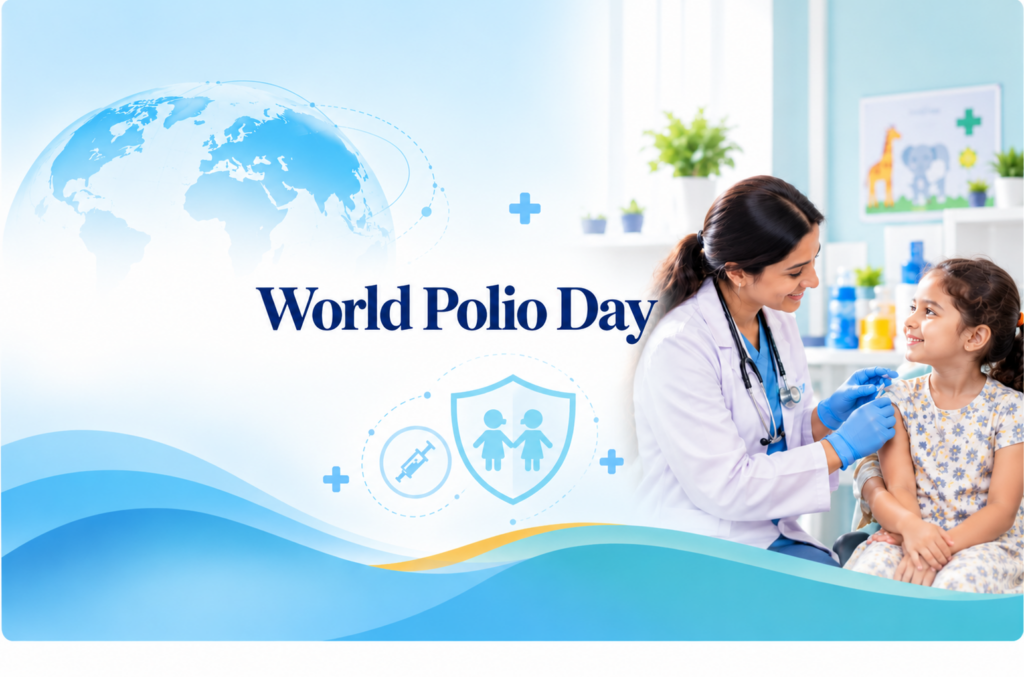
World Polio Day is observed on 24 October every year to raise polio awareness, highlight the importance of vaccination and recognise the continuing global effort to eradicate the disease.
Rotary International established the day in honour of Dr Jonas Salk, whose team developed the first successful inactivated polio vaccine. The date marks his birth anniversary. Today, World Polio Day brings together public health organisations, healthcare professionals, governments, volunteers and communities around the shared goal of ending polio. The International Society for Infectious Diseases also identifies vaccination as the most effective way to build protection against poliovirus.
The global effort gained significant momentum in 1988, when the World Health Assembly resolved to eradicate polio worldwide and the Global Polio Eradication Initiative (GPEI) was launched. Since then, cases caused by wild poliovirus have fallen by more than 99%.
What is the World Polio Day 2026 Theme?
Rotary International’s current World Polio Day campaign carries the message:
“One Day. One Focus: Ending Polio.”
The campaign encourages people to recognise how far the world has come while staying focused on what remains to be done. It is not enough for polio to become rare. The ultimate goal is to stop transmission everywhere so that future generations no longer face the disease.
Rather than treating Polio Day as only a celebration of past success, the 2026 message reinforces the need for continued vaccination, surveillance, public awareness and global cooperation.
Why Does World Polio Day Still Matter in 2026?
The progress against polio is one of modern public health’s major achievements. In 1988, polio was endemic in more than 125 countries and an estimated 350,000 children were paralysed by the disease each year. Global cases of wild poliovirus have since fallen by more than 99%.
But eradication is not yet complete.
In 2026, Afghanistan and Pakistan remain the world’s two polio-endemic countries, with continued transmission of wild poliovirus type 1. Vaccine-derived poliovirus outbreaks can also occur in areas where immunisation coverage is too low, which is another reason strong vaccination programmes remain essential.
This matters even in countries where polio has already been eliminated. Viruses cross borders. If vaccination coverage falls and poliovirus is introduced into an under-immunised population, transmission can begin again.
World Polio Day therefore carries a simple but important message: the world is close to eradicating polio, but close is not the same as finished.
What is Polio and What Causes it?
Polio, medically known as poliomyelitis, is a highly infectious disease caused by the poliovirus. It mainly affects children younger than five years, although an unvaccinated person of any age can become infected.
The virus enters through the mouth and multiplies in the intestine. In most people, the infection causes no noticeable illness or only mild symptoms. In a small proportion of cases, however, poliovirus can enter the nervous system and damage the nerve cells that control muscles. This can lead to muscle weakness or paralysis, most commonly affecting the legs.
Historically, there were three types of wild poliovirus:
- Wild poliovirus type 1 (WPV1): still circulating
- Wild poliovirus type 2 (WPV2): eradicated globally
- Wild poliovirus type 3 (WPV3): eradicated globally
Today, WPV1 is the only wild poliovirus type that continues to circulate.
How Does Polio Spread?
Polio transmission occurs mainly through the faecal-oral route.
An infected person sheds poliovirus in their faeces. The virus can then enter another person’s mouth through contaminated hands, food or water, particularly where sanitation and hand hygiene are inadequate. Less commonly, transmission can occur through oral secretions.
Once swallowed, the virus multiplies in the intestine. Because many infected people have no obvious symptoms, someone can carry and spread poliovirus without knowing they have been infected.
This ability to spread silently is one reason vaccination coverage needs to remain high even when no cases of paralytic polio are being seen.
What Are the Symptoms of Polio?
Most people infected with poliovirus either develop no symptoms or experience only a mild illness. This means infection can easily go unnoticed.
When polio symptoms do occur, they may initially include:
These symptoms often improve completely.
When Polio Affects the Nervous System
In a small proportion of infections, poliovirus reaches the nervous system and damages motor neurons, the nerve cells responsible for controlling muscle movement.
This can result in sudden muscle weakness and acute flaccid paralysis, which means weakness or paralysis with reduced muscle tone. The legs are commonly affected, although muscles involved in breathing or swallowing can also be involved in severe cases.
Paralysis caused by polio may be permanent. This is why preventing infection is far more effective than trying to manage its consequences after neurological damage has occurred.
Parents should seek prompt medical evaluation if a child develops sudden unexplained weakness or loss of movement in an arm or leg, particularly after a febrile illness.
Who is Most at Risk of Polio?
Polio most commonly affects children under five years of age, particularly those who have not been adequately vaccinated. However, being older does not make someone naturally immune.
Any person who lacks adequate immunity may potentially become infected if exposed to poliovirus.
Risk can be higher when:
- Routine vaccination has been missed or remains incomplete
- A person lives in or travels to an area where poliovirus is circulating
- Communities have low immunisation coverage
- Sanitation and access to clean water are poor
The most important protection is therefore not age but adequate immunisation.
How Can You Help Prevent Polio?
Preventing polio depends on keeping protection strong at both the individual and community level. A few consistent measures can help reduce the risk of infection and support continued progress towards a polio-free world. Here’s what you can do:
Keep Your Child’s Polio Vaccination Up to Date
Polio vaccination is the cornerstone of prevention. Children need multiple doses to build strong protection, which is why parents should follow the recommended immunisation schedule rather than relying on a single dose.
Participate in Polio Immunisation Campaigns
If health authorities announce a National or Sub-National Immunisation Day, eligible children should receive the recommended polio drops even if they have previously received routine polio vaccines. Supplementary campaigns provide additional protection and help maintain strong population immunity.
Practise Good Hand Hygiene
Wash hands properly with soap and clean water, particularly after using the toilet, changing nappies and before preparing or eating food.
Use Safe Water and Food
Clean drinking water, safe food preparation and proper sanitation reduce opportunities for poliovirus and other intestinal infections to spread.
Keep Vaccination Records
Maintain your child’s vaccination card and take it to paediatric appointments. If you are unsure whether a dose has been missed, speak with a paediatrician rather than assuming your child is fully immunised.
Hygiene and sanitation are valuable, but they should complement vaccination, not replace it.
Polio Vaccine: Understanding OPV and IPV
Two important types of polio vaccine are used in the fight against the disease.
Oral Polio Vaccine (OPV)
OPV is given as drops by mouth. It contains weakened polioviruses and is particularly useful because it develops immunity in the intestine, where poliovirus normally multiplies.
This helps protect the vaccinated child and can also reduce person-to-person transmission, making OPV especially valuable during mass vaccination campaigns and outbreak control.
Inactivated Polio Vaccine (IPV)
IPV contains inactivated, or killed, polioviruses and is administered by injection.
It produces strong immunity in the blood and helps prevent the virus from reaching the central nervous system and causing paralytic disease. Because it does not contain live virus, IPV cannot cause vaccine-associated paralytic polio.
OPV and IPV therefore have complementary roles. India’s routine immunisation programme uses both approaches to strengthen protection.
Polio Vaccination Schedule in India
According to the Government of India’s current National Immunisation Schedule, polio protection begins from birth and continues through infancy and early childhood.
| Age | Polio Vaccination |
| At birth | OPV-0 |
| 6 weeks | OPV-1 + fIPV-1 |
| 10 weeks | OPV-2 |
| 14 weeks | OPV-3 + fIPV-2 |
| 9–12 months | fIPV-3 |
| 16–24 months | OPV booster |
fIPV means fractional-dose inactivated poliovirus vaccine.
National and sub-national polio campaigns may provide additional OPV doses to eligible children. These campaign doses supplement rather than replace routine immunisation.
Parents should follow the current vaccination schedule advised by their child’s paediatrician because recommendations may be updated as immunisation policies evolve.
What Should You Do If Your Child Misses a Polio Vaccine Dose?
A missed vaccination does not mean you should give up on completing the schedule.
Take your child’s immunisation record to a paediatrician or vaccination clinic. The healthcare team can review which vaccines and doses have already been received and recommend an appropriate catch-up plan.
Do not wait for the next Pulse Polio campaign to address missing routine vaccines. Campaign doses provide valuable additional immunity, but routine childhood immunisation still needs to be completed according to the recommended schedule.
Is There a Treatment for Polio?
There is currently no medicine that cures polio or reverses established nerve damage caused by the virus. This makes prevention through vaccination especially important.
Treatment is supportive and depends on how severely a person has been affected. It may include:
- Pain and symptom management
- Respiratory support if breathing muscles are affected
- Physiotherapy to help maintain movement, muscle function and flexibility
- Rehabilitation and mobility support
- Orthopaedic care when required
People left with weakness or disability following paralytic polio may need long-term rehabilitation. Physiotherapy can help improve function and independence, but it does not eliminate poliovirus or reverse destroyed motor neurons.
Polio can therefore be considered alongside other serious neurological disorders when the virus has caused damage to the nervous system, although prevention remains the most effective strategy.
India’s Journey From Polio-Endemic to Polio-Free
India’s success against polio is one of the country’s major public health achievements.
The Pulse Polio Immunisation Programme began in 1994 at a time when India accounted for a large share of the world’s polio burden. Vaccination teams eventually reached children in homes, schools, transit points and communities that were traditionally difficult to access.
The country’s last reported case of wild poliovirus occurred on 13 January 2011 in West Bengal. After maintaining the required period without wild poliovirus transmission, India, along with the rest of WHO’s South-East Asia Region, received polio-free certification on 27 March 2014.
That achievement depended on more than vaccine availability. It involved:
- Repeated vaccination campaigns
- Door-to-door outreach
- Community engagement
- Strong surveillance
- Laboratory testing
- Efforts to reach mobile and underserved populations
India’s experience demonstrated that sustained vaccination and public participation can interrupt transmission even in a large and highly populated country.
Where Does Global Polio Eradication Stand in 2026?
The world has come remarkably close to eradicating wild poliovirus.
Today, Afghanistan and Pakistan remain the only countries where wild poliovirus remains endemic. The Global Polio Eradication Initiative continues to work with national programmes to interrupt the remaining chains of WPV1 transmission.
Another challenge is circulating vaccine-derived poliovirus (cVDPV), which can emerge in communities where vaccination coverage stays low for prolonged periods.
This does not mean that routine vaccination should be avoided. In fact, low population immunity is what allows these rare vaccine-derived strains to circulate. Maintaining high vaccination coverage is central to stopping both wild and circulating vaccine-derived polioviruses.
The final stage of polio eradication is therefore not simply about treating cases. It depends on finding the virus quickly, vaccinating every eligible child and stopping transmission wherever it occurs.
Why Must India Continue Vaccinating Against Polio?
India being polio-free does not mean the country is permanently protected without continued effort.
Wild poliovirus still circulates internationally, including in neighbouring Pakistan and Afghanistan. Until global transmission ends, there remains a possibility that poliovirus could be imported into a polio-free country.
India therefore continues to protect its polio-free status through measures such as:
- Routine childhood immunisation
- Polio vaccination campaigns
- Acute flaccid paralysis surveillance
- Environmental surveillance through sewage sampling
- Vaccination measures at international borders and other high-risk settings
Environmental surveillance is especially valuable because poliovirus can be detected in sewage even when infected people have no symptoms.
Continued vaccination is therefore not a sign that India’s eradication programme failed. It is one of the reasons the country has remained polio-free.
How Can Families and Communities Support a Polio-Free World?
Ending polio requires more than the work of doctors and vaccination teams. Families and communities also have an important role.
Parents can start by keeping their children’s vaccinations up to date and participating in government polio campaigns when advised. Communities can support health workers, encourage families with missed vaccinations to seek guidance and help prevent misinformation about vaccines from spreading.
Schools and community organisations can use World Polio Day 2026 to explain why a disease that has become rare still deserves attention.
And when someone is unsure about vaccination, the answer should be reliable information rather than fear. Speaking with qualified healthcare professionals can help families understand what their child needs and why each dose matters.
Paediatric Vaccination and Preventive Care at Graphic Era Hospital
At Graphic Era Hospital, Dehradun, our Department of Paediatrics provides preventive and medical care for infants and children, including a dedicated vaccination clinic.
The hospital’s vaccination services include scheduled immunisation against vaccine-preventable diseases, including polio, along with parental counselling on vaccination schedules, expected reactions and post-vaccination care. Our Paediatricians can also review a child’s immunisation history and guide parents when there are questions about upcoming or missed doses.
For parents seeking vaccination guidance or comprehensive child healthcare at a Paediatric Hospital in Dehradun, timely consultation can help ensure that preventive care remains on track.
Protect Every Child, One Vaccination at a Time
The fact that many families in India have never personally encountered polio is something worth protecting. World Polio Day reminds us that this progress was achieved through vaccination, awareness and sustained public-health action, and maintaining it requires the same commitment.
If you have questions about your child’s vaccination history or are unsure whether any doses are due, speak with a paediatrician rather than postponing immunisation.
To book a vaccination or paediatric consultation at Graphic Era Hospital, Dehradun, call 1800-889-7351 and take an important step towards protecting your child’s health.
Frequently Asked Questions (FAQs)
Does my child still need Pulse Polio drops after receiving routine polio vaccines?
Yes, when your child is eligible for a government polio campaign. Campaign doses are given in addition to routine vaccination and provide extra protection. GPEI advises that children who have previously received OPV should still receive campaign doses when offered.
Can adults get polio?
Yes. Polio is most common in children under five, but an unvaccinated person of any age can become infected if exposed to poliovirus. Adults travelling to areas where poliovirus is circulating should discuss their vaccination history and any additional recommendations with a healthcare professional.
Can polio return to India?
India remains free from wild poliovirus, but importation remains possible as long as the virus circulates elsewhere. This is why India continues vaccination, surveillance and other preventive measures even years after its last wild-polio case.
Can someone spread polio without having symptoms?
Yes. Many poliovirus infections cause no noticeable symptoms, but infected individuals can still shed the virus and contribute to transmission. This silent spread is one reason surveillance and high vaccination coverage are so important.
Can paralysis caused by polio be reversed?
Recovery varies depending on the extent of nerve damage. Some people may regain a degree of strength or function, while paralysis can be permanent in others. Rehabilitation and physiotherapy can help improve mobility, flexibility and independence but cannot restore motor neurons that have been permanently destroyed by the virus.
Can the polio vaccine itself cause polio?
IPV cannot cause polio because it contains an inactivated virus. OPV uses weakened live virus and has an excellent safety record, but very rare vaccine-associated paralysis can occur. In communities with persistently low vaccination coverage, weakened vaccine virus can also circulate for long periods and evolve into vaccine-derived poliovirus. The way to prevent such circulation is to maintain high immunisation coverage.
Are Pulse Polio campaigns the same as routine childhood immunisation?
No. Routine immunisation gives polio vaccines at specific ages as part of the child’s regular vaccination schedule. Pulse Polio campaigns provide additional OPV doses to eligible children to increase community immunity and help prevent poliovirus transmission. One does not replace the other.
What is post-polio syndrome?
Some people who recovered from paralytic polio may develop new muscle weakness, fatigue or muscle and joint problems many years later. This is known as post-polio syndrome. It is a late complication of previous polio and does not mean the person has become newly infected or is spreading poliovirus.
My child's vaccination record is incomplete. Should the whole schedule be started again?
Do not restart or alter the schedule on your own. Take whatever vaccination records you have to a paediatrician or immunisation clinic. The healthcare team can assess the doses already received, the child’s age and the current recommendations and plan the appropriate catch-up vaccination.





 Emergency 24×7 : 1800 889 7351