Surgical care in children requires a specialised approach that considers growth, development, and long-term outcomes. At Graphic Era Hospital in Dehradun, paediatric surgeons manage a wide range of surgical conditions in infants, children, and adolescents using age-appropriate techniques and advanced surgical care. From congenital conditions to acquired surgical issues, treatment is guided by accurate diagnosis, careful planning, and a multidisciplinary approach. The focus remains on ensuring safety, minimising discomfort, and supporting faster recovery while preserving normal growth and function.
Doctors Available

What Does a Paediatric Surgeon Do?
A paediatric surgeon is a specialist trained to perform surgical procedures on children from birth through adolescence. Unlike general surgeons, paediatric surgeons understand the unique anatomical, physiological and psychological needs of young patients and adapt every aspect of care accordingly. At Graphic Era Hospital, our paediatric surgeons manage the full spectrum of surgical conditions in children, ranging from common procedures to complex neonatal and congenital surgeries. Key responsibilities of a paediatric surgeon include:
- Neonatal Surgery: Performs life-saving surgical interventions in newborns for congenital conditions such as intestinal atresia, tracheo-oesophageal fistula and abdominal wall defects.
- Congenital Anomaly Correction: Diagnoses and surgically corrects structural defects present from birth affecting the digestive, urological and thoracic systems.
- Paediatric Gastrointestinal Surgery: Treats conditions affecting the oesophagus, stomach, intestines and bowel in children, including gastroenterology-related disorders requiring surgical intervention.
- Paediatric Urology Surgery: Manages urological conditions in children such as hypospadias, undescended testes, vesicoureteric reflux and hydrocele treatment.
- Hernia Repair in Children: Surgical treatment for inguinal, umbilical, and epigastric hernias - common conditions in children - where the procedure is carefully adapted to the child’s age, anatomy, and stage of development for safe and effective repair.
- Minimally Invasive Paediatric Surgery: Uses laparoscopic and thoracoscopic techniques to perform procedures with smaller incisions, reduced pain and faster recovery in children.
- Paediatric Oncology Surgery: Surgically manages tumours and cancers affecting children, including Wilms' tumour, neuroblastoma and hepatoblastoma.
- Trauma and Emergency Surgery: Provides urgent surgical care for children with abdominal injuries, solid organ trauma and other acute surgical emergencies.
- Thoracic Surgery in Children: Treats lung, chest wall and mediastinal conditions in children requiring surgical correction or intervention.
When to Consult a Paediatric Surgeon?
Many surgical conditions in children are time-sensitive, and early consultation with a paediatric surgeon can help prevent complications and improve outcomes. At Graphic Era Hospital, paediatric surgeons evaluate children across all age groups, from newborns to adolescents, for both elective and emergency conditions. Parents should seek a paediatric surgical consultation if their child experiences any of the following:
- A Visible Lump or Swelling: Any unexplained lump in the groin, abdomen, neck or scrotum, particularly one that appears or enlarges during crying or straining, warrants prompt evaluation.
- Persistent Abdominal Pain: Recurring or worsening abdominal pain in a child, especially when accompanied by vomiting, fever or changes in bowel habits, requires specialist assessment.
- Vomiting in Newborns or Infants: Persistent or projectile vomiting in newborns may indicate pyloric stenosis, intestinal obstruction or another congenital condition requiring surgical attention.
- Difficulty Passing Urine or Stools: Straining, infrequent urination, blood in urine or prolonged constipation in a child may point to a urological or gastrointestinal condition needing evaluation.
- An Undescended Testicle: If one or both testes are not in the scrotum by the time a male infant is six months old, surgical correction is recommended to prevent long-term complications.
- Suspected Hernia: A bulge in the groin or around the navel, particularly one that appears intermittently, in a child of any age requires assessment by a paediatric surgeon.
- Diagnosed Congenital Anomaly: Any antenatally detected or postnatally confirmed congenital disorder affecting the digestive, urological or thoracic system requires early paediatric surgical evaluation.
- Abdominal Trauma: A child who has sustained a significant blow to the abdomen, from a fall, accident or sports injury, needs urgent assessment to rule out internal organ injury.
Paediatric vs. General Surgery - Why it Matters for Your Child
Choosing a paediatric surgeon rather than a general surgeon for a child’s procedure is not a preference; it is a clinical necessity. Children are not simply smaller adults. Their anatomy, physiology, immune response and capacity to tolerate surgical stress differ fundamentally from those of adults, and these differences directly influence how surgery is planned, performed and managed.
Anatomical and Physiological Differences
A child's organs are smaller, more delicate and positioned differently than an adult's. Blood volume is significantly lower, making fluid management during surgery far more precise and unforgiving. Thermoregulation is less stable, particularly in neonates, requiring specially controlled operating environments. Paediatric surgeons train specifically to work within these constraints, using instruments, techniques and protocols designed for children's bodies.
Anaesthesia in Children
Anaesthesia in children, particularly infants and neonates, carries unique risks that require a paediatric-trained anaesthetist working alongside the surgeon. Drug dosing, airway management and monitoring parameters differ significantly from adult practice. At Graphic Era Hospital, paediatric surgical cases are supported by anaesthetists with specific experience in paediatric cases, ensuring the highest standards of safety throughout every procedure.
Surgical Technique and Recovery
Minimally invasive techniques in paediatric surgery require specialised training. The instruments used in adult laparoscopy are not appropriate for a child's smaller abdominal cavity. Paediatric surgeons adapt both technique and approach based on the child's age, size and condition. Recovery protocols also differ: pain assessment, wound care, feeding resumption and mobilisation are all managed according to age-appropriate clinical guidelines rather than adult standards.
Psychological and Family-Centred Care
Surgery is a significant experience for a child and their family. Paediatric surgical care includes structured preparation for the child, clear communication with parents at every stage and post-operative support that accounts for the emotional as well as physical dimensions of recovery. At Graphic Era Hospital, our paediatric surgical team works closely with nursing staff and support services to ensure every child feels safe and every family feels informed.
Why Choose Graphic Era Hospital for Paediatric Surgery?

Dedicated Paediatric Surgical Expertise: Our paediatric surgeons have specialised training and extensive experience in managing surgical conditions in children, from common procedures such as hernia repair and hydrocele correction to complex congenital anomalies and paediatric oncology cases. Each child undergoes an individualised assessment, with treatment decisions guided by age, stage of development, and overall health rather than approaches adapted from adult care.

Child-Friendly Infrastructure and Neonatal Surgical Capability: Graphic Era Hospital is equipped with dedicated paediatric operating theatres, neonatal surgical support, and age-appropriate monitoring systems designed specifically for infants and children. The facility supports minimally invasive techniques such as laparoscopic, thoracoscopic, and endoscopic procedures, along with open surgery for complex or emergency cases. A specialised neonatal intensive care unit provides continuous post-operative support for newborns and high-risk patients.

Integrated Multidisciplinary Care for Complex Cases: Managing complex paediatric conditions often requires coordinated care across multiple specialties. At Graphic Era Hospital, paediatric surgeons work closely with neonatologists, paediatricians, radiologists, anaesthetists, and rehabilitation teams. This collaborative approach ensures each child receives comprehensive care from diagnosis through treatment and recovery.
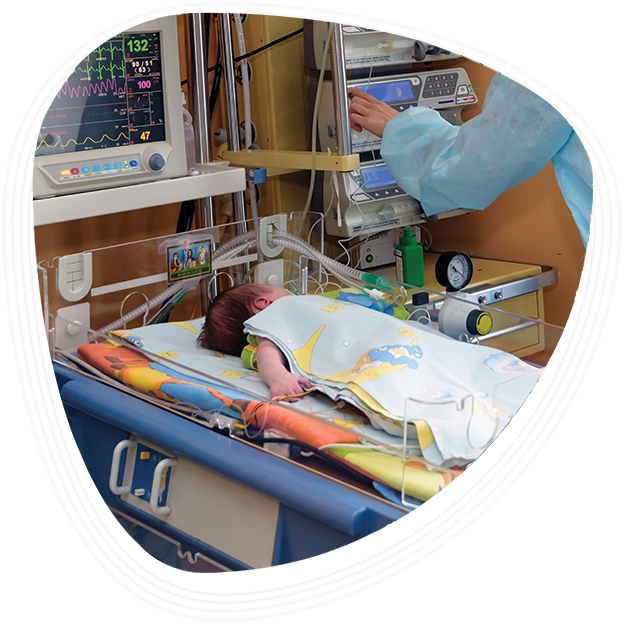
Paediatric Surgical Care at Graphic Era Hospital
Diagnostic Approach
Accurate diagnosis in children requires specialised imaging and assessment tools suited to their age and anatomy. Our paediatric surgical team uses:
- Paediatric Ultrasound: The primary imaging tool for evaluating abdominal, urological and soft tissue conditions in children. It is safe, non-invasive and well-tolerated.
- Contrast Studies and Fluoroscopy: Used to assess bowel anatomy, detect obstructions and evaluate swallowing and digestive function in neonates and infants.
- CT and MRI Imaging: Deployed selectively for complex or oncological cases where detailed cross-sectional imaging is required to plan surgical intervention.
- Cystoscopy: Used in paediatric urological evaluation to assess bladder and urethral anatomy before surgical correction.
- Antenatal Diagnosis and Postnatal Correlation: Many congenital conditions are detected before birth. Our team reviews antenatal findings and correlates them with postnatal assessments to plan early surgical intervention where needed.
Surgical Techniques
Our paediatric surgeons use a range of surgical approaches, carefully selected based on the child’s condition, age, and overall clinical profile:
- Minimally Invasive Paediatric Surgery: Laparoscopic and thoracoscopic procedures for conditions such as appendicitis, hernia, and reflux. These techniques involve smaller incisions, leading to less pain and quicker recovery
- Neonatal Open Surgery: Required for complex conditions present at birth, such as intestinal atresia, Hirschsprung’s disease, and abdominal wall defects, where open surgical access is necessary in early life
- Paediatric Urological Surgery: Procedures including correction of hypospadias, orchidopexy for undescended testes, pyeloplasty for ureteropelvic junction obstruction, and management of vesicoureteric reflux
- Oncological Surgery: Removal of paediatric tumours such as Wilms’ tumour, neuroblastoma, and liver tumours, carried out in coordination with paediatric oncology and imaging teams
Post-Operative Care and Family Support
Recovery in children requires careful monitoring, comfort-focused care, and clear guidance for families. Our team ensures that both the child and parents are supported throughout the recovery process:
- Age-Appropriate Pain Management: Pain relief is tailored to the child’s age, weight, and type of surgery to ensure comfort while avoiding over-sedation
- Early Feeding and Nutritional Support: Feeding is reintroduced gradually based on the procedure, with guidance on appropriate nutrition for recovery and growth
- Wound Care and Follow-Up: Parents receive clear instructions on wound care, activity restrictions, and follow-up visits to monitor healing
- Parental Counselling and Discharge Planning: Detailed discharge guidance is provided, along with access to the surgical team for any concerns during recovery at home
Top Paediatric Surgery Procedures
- Inguinal Hernia Repair
- Umbilical and Supra-umbilical Hernia Repair
- Orchidopexy (Undescended Testes)
- Appendicectomy
- Circumcision
- Hypospadias Repair
- Pyloric Stenosis Surgery (Pyloromyotomy)
- Anorectal Malformation Surgery
- Hirschsprung's Disease Surgery (Pull-Through)
- Intestinal Atresia Repair
- Tracheo-Oesophageal Fistula Repair
- Gastroschisis and Exomphalos Repair
- Pyeloplasty
- Vesicoureteric Reflux Surgery
- Splenectomy
- Cholecystectomy in Children
- Wilms' Tumour Resection
- Neuroblastoma Surgery
- Minimally Invasive Thoracic Surgery
- Bowel Resection and Anastomosis
- Colostomy and Stoma Formation
Paediatric Conditions Treated at Graphic Era Hospital
Other Specialities


Patient Stories





Blog








Frequently Asked Questions
At what age does a paediatric surgeon treat patients?
Paediatric surgeons at Graphic Era Hospital treat patients from birth, including premature neonates, through to 18 years of age. The surgical approach, anaesthesia protocol and post-operative care are all adapted to the child’s specific age and developmental stage.
Is surgery safe for newborns and very young infants?
Neonatal surgery carries specific risks related to the infant’s small size, limited blood volume and immature organ systems. At Graphic Era Hospital, neonatal surgical cases are supported by paediatric-trained anaesthetists, specialised monitoring and a dedicated neonatal intensive care unit to manage post-operative recovery safely.
How is anaesthesia managed differently in children?
Anaesthesia in children requires age-specific drug dosing, smaller airway equipment and more vigilant monitoring than adult anaesthesia. Our paediatric surgical team works alongside anaesthetists with specific experience in paediatric cases to ensure safety throughout every procedure.
How long does recovery take after paediatric surgery?
Recovery varies significantly by procedure and age. Minimally invasive procedures such as hernia repair or simple appendicectomy typically allow discharge within one to two days. Complex neonatal or oncological surgeries may require a longer inpatient stay with structured rehabilitation and outpatient follow-up.
Can my child eat and drink normally after gastrointestinal surgery?
Feeding is resumed gradually based on the type of surgery and the child’s age. Our team provides clear guidance to parents on when and how to reintroduce feeds, with nutritional support available for children who require additional assistance during recovery.
How do I book an appointment with a paediatric surgeon at Graphic Era Hospital?
You can book an appointment through our website, call 1800-889-7351, or visit the outpatient department directly. Our team schedules your child’s consultation at the earliest available slot.
What should I tell my child before surgery?
Age-appropriate preparation helps children feel less anxious before a procedure. Our paediatric surgical team and nursing staff guide parents on how to explain the procedure to their child, what to expect on the day and how to provide reassurance during the hospital stay.