World Trauma Day 2026: Date, Importance, First Aid and Prevention Tips
Key Takeaways
- World Trauma Day 2026 : Observed on 17 October 2026
- Main focus : Trauma awareness, injury prevention and timely emergency care
- Common causes : Road crashes, falls, workplace injuries, burns, sports injuries and violence
- Emergency warning sign : Severe bleeding, breathing difficulty, loss of consciousness, confusion, major head or spinal injury and signs of shock
- First response : Make sure the scene is safe, call for emergency help, check breathing and control severe bleeding
- Prevention : Road safety, fall prevention, workplace precautions and appropriate protective equipment can reduce injury risk
A road accident, fall, burn or other serious injury can happen within seconds, but the response in the first few minutes can make a critical difference. Knowing how to recognise an emergency, provide basic first aid and seek timely medical help can help reduce complications and improve the chances of recovery.
World Trauma Day 2026 draws attention to the impact of traumatic injuries and the importance of prevention, emergency preparedness and prompt medical care. It also serves as a reminder that many injuries can be prevented through safer behaviour at home, on the road and at the workplace.
In this blog, we’ll look at the importance of World Trauma Day, essential first-aid steps for common injuries and practical measures that can help prevent trauma.
What is World Trauma Day and When is it Observed?
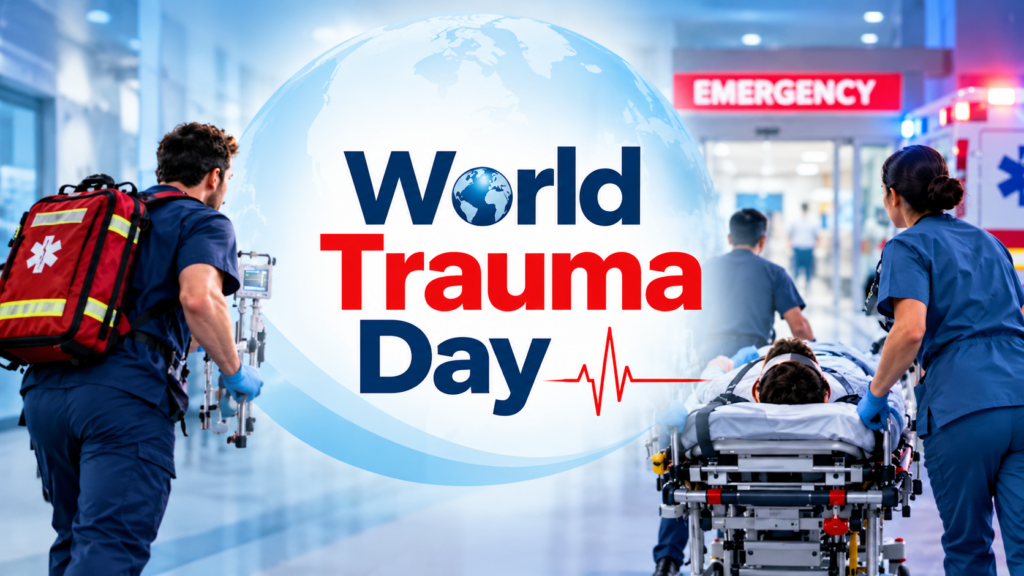
World Trauma Day is observed every year on 17 October to raise awareness about traumatic injuries, their prevention and the importance of timely medical care after a serious accident or injury.
The observance began in New Delhi in 2011, at a time when India was facing a high burden of deaths and disabilities linked to road traffic injuries. It was created to draw greater attention to accident prevention, emergency response and the need for stronger trauma-care systems.
Today, Trauma Day serves as a broader reminder that serious injuries can happen on roads, at workplaces, at home or during sports and other activities. It highlights the importance of both prevention and preparedness, along with access to effective emergency care when injuries do occur.
Why is World Trauma Day Important?
Traumatic injuries remain a major public-health concern worldwide.
According to the World Health Organization (WHO), injuries cause approximately 4.4 million deaths globally each year and account for an estimated 10% of all years lived with disability. Injuries are also a leading cause of death among younger people.
Road traffic injuries alone cause approximately 1.16 million deaths every year, while an estimated 20 to 50 million more people sustain non-fatal injuries. Road traffic injuries are also the leading cause of death among children and young adults aged 5 to 29 years.
These numbers underline two sides of trauma awareness: preventing injuries wherever possible and ensuring that people who are injured receive effective care without avoidable delay.
What Does Trauma Mean in Medical Terms?
In emergency medicine, physical trauma refers to an injury caused by an external force or event. This may involve the skin, bones, muscles, internal organs, brain, spinal cord or several parts of the body at the same time.
Trauma can range from a relatively minor injury to a life-threatening emergency. A person involved in a high-speed road crash, for example, may have injuries that are not immediately visible but still require urgent assessment.
The word “trauma” is also used to describe psychological responses to distressing experiences. These are important, but they are different from the physical injuries that form the main focus of World Trauma Day and emergency trauma services.
A serious physical injury can, however, also affect emotional wellbeing. Some people may experience anxiety, stress, sleep problems or fear after an accident, which may need attention during recovery.
What are the Common Causes of Trauma?
Traumatic injuries can happen in many settings. Some of the most common causes include:
- Road traffic crashes: Injuries may result from speeding, distracted driving, driving under the influence of alcohol or drugs, or not using seat belts and helmets properly.
- Falls: These can happen at home, at work or from a height. Older adults may be more vulnerable to serious injuries after a fall.
- Workplace and industrial accidents: Machinery, falls, electrical hazards and other occupational risks can cause significant trauma.
- Burns: Thermal, chemical or electrical burns may lead to serious skin and tissue damage.
- Sports injuries: Contact sports, falls and high-impact activities can cause fractures, head injuries and soft-tissue damage.
- Violence: Assaults and other violent incidents can result in both external and internal injuries.
- Natural disasters and major incidents: Earthquakes, fires and similar events can cause multiple or complex injuries.
The severity of trauma depends on factors such as the force involved, the body part affected, the person’s age and any underlying health conditions.
When Does an Injury Need Emergency Care?
Not every cut, bruise or sprain requires hospital-level emergency trauma care. Certain warning signs, however, should not be ignored.
| Warning Sign | Why It Needs Attention |
| Loss of consciousness or increasing drowsiness | May indicate a significant head or brain injury |
| Confusion, unusual behaviour or seizures | May indicate neurological injury |
| Difficulty breathing | Can signal chest, airway or other serious injury |
| Severe or uncontrolled bleeding | Can rapidly lead to shock and life-threatening blood loss |
| Severe head, neck or back pain after an accident | May indicate head or spinal injury |
| Weakness, numbness or inability to move a limb | May suggest neurological or spinal involvement |
| Obvious deformity or bone protruding through the skin | May indicate a major fracture |
| Repeated vomiting after a head injury | Requires medical assessment |
| Severe chest or abdominal pain after trauma | Internal injury or bleeding may be present |
| Rapid breathing, weak pulse, pale or cool skin, confusion | These may be signs of shock |
Head, neck and spinal injuries can cause symptoms including confusion, weakness, numbness, balance problems, vomiting and impaired breathing. Severe bleeding and signs of shock also require immediate emergency assistance.
Someone can also have serious internal injuries without a visible wound. For example, a fall or blow to the head can cause a concussion or traumatic brain injury even when there is no obvious external injury. Similarly, internal bleeding can occur without visible bleeding, especially after a high-impact accident.
If the injury was significant, particularly involving the head, chest or abdomen, medical evaluation may be needed even when symptoms initially seem mild.
First Aid After a Serious Injury: What Should You Do?
Good first aid for injuries focuses on protecting the person from further harm and addressing immediate threats to life until trained medical help arrives.
1. Check that the scene is safe. Do not put yourself at risk by rushing into moving traffic, fire, electrical hazards or an unstable structure.
2. Call emergency medical services. Serious injury, loss of consciousness, severe bleeding, breathing difficulty or suspected head, neck or spinal injury requires professional help.
3. Check responsiveness and breathing. If the person is unresponsive and not breathing normally, begin CPR and use an AED if available, according to your level of training.
4. Control severe external bleeding. Apply firm, steady direct pressure over the wound using appropriate material. For life-threatening bleeding from a limb, a tourniquet may be used when available and when you are trained to use it.
5. Avoid unnecessary movement. If you suspect a head, neck or spinal injury, encourage the person to remain still and leave them in the position found unless there is immediate danger, CPR is needed or movement is necessary to control life-threatening bleeding.
6. Do not routinely remove a helmet after a crash. If a person wearing a helmet may have a head or neck injury, leave it in place unless removal is necessary to provide CPR or another life-saving intervention.
7. Keep the injured person warm and continue monitoring them. Watch for changes in breathing, responsiveness and signs of shock.
8. Do not give food or drink to a seriously injured person. This can increase the risk of vomiting and aspiration and may also complicate further medical care.
First aid is not a substitute for professional treatment. Its purpose is to provide immediate support until emergency medical care becomes available.
Why Does Timely Trauma Care Matter?
You may have heard the term “golden hour” used after a serious accident. It describes the principle that rapid assessment and treatment following major trauma can improve outcomes.
However, it should not be interpreted as a rigid rule that every trauma patient must receive definitive treatment within exactly 60 minutes. Different injuries have different levels of urgency.
For someone with uncontrolled bleeding, blocked breathing or severe shock, minutes can matter. Other patients may need careful stabilisation before transport or surgery.
Research supports the importance of timely trauma care, although evidence does not support treating 60 minutes as a universal threshold for every type of injury. The priority is to recognise life-threatening problems early and get the patient the right treatment as quickly and safely as possible.
WHO likewise emphasises early recognition, appropriate first response, effective transport, resuscitation and timely access to surgical and critical care as components of good injury care.
What Happens During Emergency Trauma Care?
When a seriously injured person reaches an emergency department, the first priority is not necessarily the injury that looks the most dramatic. The trauma team first looks for problems that could immediately threaten life.
WHO and the International Committee of the Red Cross use a structured ABCDE approach for the initial assessment of acutely ill and injured patients:
A – Airway: Checking that the airway is open while protecting the cervical spine when needed.
B – Breathing: Assessing whether the patient is breathing adequately and identifying serious chest or respiratory problems.
C – Circulation: Checking blood flow, controlling significant bleeding and treating shock.
D – Disability: Rapidly assessing neurological function, including consciousness and possible brain or spinal injury.
E – Exposure: Examining the patient for additional injuries while preventing excessive heat loss.
Once immediate threats have been addressed, further evaluation may involve blood tests, X-rays, ultrasound, CT or MRI scans depending on the suspected injuries.
Some patients may need fracture stabilisation, emergency surgery, blood transfusion, Pain Management, intensive care or specialist treatment. Others may be discharged after evaluation with instructions for follow-up and recovery.
Recovery After a Traumatic Injury
Surviving the emergency is often only the beginning of recovery.
After fractures, surgery, neurological injuries or prolonged hospitalisation, physiotherapy and rehabilitation may help restore strength, movement, balance and independence. Some people also need occupational rehabilitation or assistive devices depending on their injuries.
Pain may need to be managed throughout healing, particularly after major fractures, surgery or soft-tissue injury. Patients with other medical conditions may also need follow-up with Internal Medicine Specialists as part of coordinated recovery.
WHO describes effective trauma care as a continuum that can extend from community first aid and emergency transport to hospital treatment, psychological support and rehabilitation.
Emotional Recovery Matters Too
A serious accident can be frightening even after the physical injuries have begun to heal.
Some people may experience anxiety, stress, disturbed sleep, recurring memories or fear of driving, travelling or returning to the activity associated with the injury. These responses may improve with time, but persistent or severe distress deserves attention rather than being dismissed.
Recovery should therefore focus not only on healing an injury but also on helping the person return safely and confidently to everyday life.
How Can You Help Prevent Traumatic Injuries?
Not every accident is avoidable, but many serious injuries can be reduced through safer behaviour, appropriate protective equipment and safer environments.
Make Road Safety a Daily Habit
Road accident prevention begins with everyday decisions. Wear a seat belt on every journey, use an appropriate helmet on two-wheelers, follow speed limits and avoid using a mobile phone while driving.
Never drive under the influence of alcohol or drugs, and do not continue driving when excessively tired. Children should travel using age- and size-appropriate restraints.
WHO identifies speeding, alcohol or drug use, distracted driving, failure to use helmets and seat belts, and unsafe road infrastructure among important contributors to road injuries.
In India, the government’s road-safety strategy is built around four broad areas: Education, Engineering, Enforcement and Emergency Care.
Reduce the Risk of Falls at Home
Keep stairs and walkways free of clutter, improve lighting and use handrails where needed. Bathrooms and other slippery areas may benefit from non-slip surfaces or support rails, particularly in homes with older adults.
Children should also be supervised around balconies, stairs, windows and other fall hazards.
Follow Workplace Safety Measures
Use appropriate personal protective equipment for the task, follow machinery and electrical safety procedures and do not bypass workplace precautions for convenience.
People working at height should use the recommended fall-protection equipment.
Use Protective Equipment During Sports
Helmets, guards, appropriate footwear and other sport-specific protective equipment can reduce injury risk.
Warm up appropriately, learn correct techniques and avoid returning to sport too early after an injury, particularly after a concussion or significant musculoskeletal injury.
Trauma prevention works best when safety becomes routine rather than something considered only after an accident has occurred.
Emergency & Trauma Care at Graphic Era Hospital, Dehradun
Graphic Era Hospital provides 24/7 Emergency & Trauma Services for road accidents, falls, severe injuries and other medical emergencies.
Its trauma-care infrastructure includes a dedicated trauma bay for stabilisation, 24/7 operating theatres for emergency surgery, ICU support and on-site diagnostic facilities including CT, MRI, ultrasound and X-ray. The hospital also provides multidisciplinary care involving specialists from areas such as orthopaedics, neurology, cardiology and surgery according to the patient’s injuries and clinical needs.
Advanced life-support ambulances and rehabilitation services support continuity of care from the emergency phase through recovery.
For patients and families looking for a Best Emergency & ICU Hospital in Dehradun, the priority in a genuine emergency should always be to seek appropriate medical attention without unnecessary delay.
Be Prepared Before an Emergency Happens
World Trauma Day 2026 is a reminder that preparedness begins long before an emergency reaches the hospital.
Following safety rules, learning basic first aid and knowing when an injury requires urgent medical attention can help reduce preventable harm. And when a serious injury does occur, getting the right care quickly can help improve the chances of recovery.
For emergency and trauma care at Graphic Era Hospital, Dehradun, call 1800-889-7351.
Frequently Asked Questions (FAQs)
Should you remove a motorcyclist's helmet after an accident?
Not routinely. If a head, neck or spinal injury is possible, unnecessary movement should be avoided. A helmet is generally left in place unless it must be removed to perform CPR or provide another essential life-saving intervention.
Can someone have internal bleeding without a visible wound?
Yes. Internal bleeding can occur without obvious external bleeding. Possible warning signs include abdominal or chest tenderness or swelling, significant bruising, blood in vomit or urine, weakness, confusion or signs of shock. Suspected internal bleeding requires emergency medical care.
Should you give water to someone after a serious accident?
Generally, no. A seriously injured person should not be given food or drink while waiting for emergency care because they may vomit and aspirate, and they may require procedures or surgery.
Should you move someone who has fallen from a height?
Avoid unnecessary movement if a head, neck or spinal injury is possible. Leave the person in the position found unless there is immediate danger, CPR is required or movement is necessary to control life-threatening bleeding.
Can someone appear fine immediately after a head injury and develop symptoms later?
Yes. Some concussion or mild traumatic brain injury symptoms can appear hours or even days later. Increasing drowsiness, confusion, repeated vomiting, seizures, worsening headache, weakness or other neurological changes require urgent medical assessment.
What should you do if blood soaks through a dressing?
Continue applying firm direct pressure. Do not repeatedly lift the original dressing to check the wound, as this can disturb clot formation. Additional dressing material may be placed appropriately while pressure is maintained.
Is it dangerous to let someone sleep after a concussion?
Sleep itself is not necessarily dangerous after a medically assessed concussion. Current guidance does not require keeping someone awake simply because they have a concussion. However, concerning symptoms after a head injury require urgent assessment, and the person should be monitored according to medical advice.
When does physiotherapy start after a major injury?
There is no single timeline. Physiotherapy may begin once the treating team considers the patient medically stable and movement is safe for the specific injury. The timing depends on factors such as fractures, surgery, neurological injury, pain and overall health.
What is the difference between an emergency department and trauma care?
An emergency department treats a wide range of urgent illnesses and injuries, from breathing problems and heart emergencies to fractures and infections. Trauma care is specifically focused on people with significant physical injuries and may require coordinated input from emergency physicians, surgeons, orthopaedic specialists, critical-care teams and other departments.
Can anxiety continue after physical injuries have healed?
Yes. Some people continue to experience anxiety, stress, sleep problems or fear associated with the accident even after physical recovery. If these symptoms persist, worsen or interfere with everyday life, it is worth discussing them with a healthcare professional.










 Emergency 24×7 : 1800 889 7351