
Why So Many Women Develop Heel Pain in Their 30s and 40s and What Is Actually Causing It
Key Takeaways
- Heel pain can have several causes. Plantar fasciitis is common, but tendon problems, heel pad changes and injuries can produce similar symptoms.
- Morning heel pain is an important clue. Sharp pain during the first few steps after waking up is characteristic of plantar fasciitis, although other causes are possible.
- Everyday habits can contribute. Prolonged standing, poorly cushioned footwear and sudden changes in physical activity may increase stress on the feet.
- Most causes can be managed without surgery. Appropriate footwear, activity modification and physiotherapy are common treatment approaches, depending on the diagnosis.
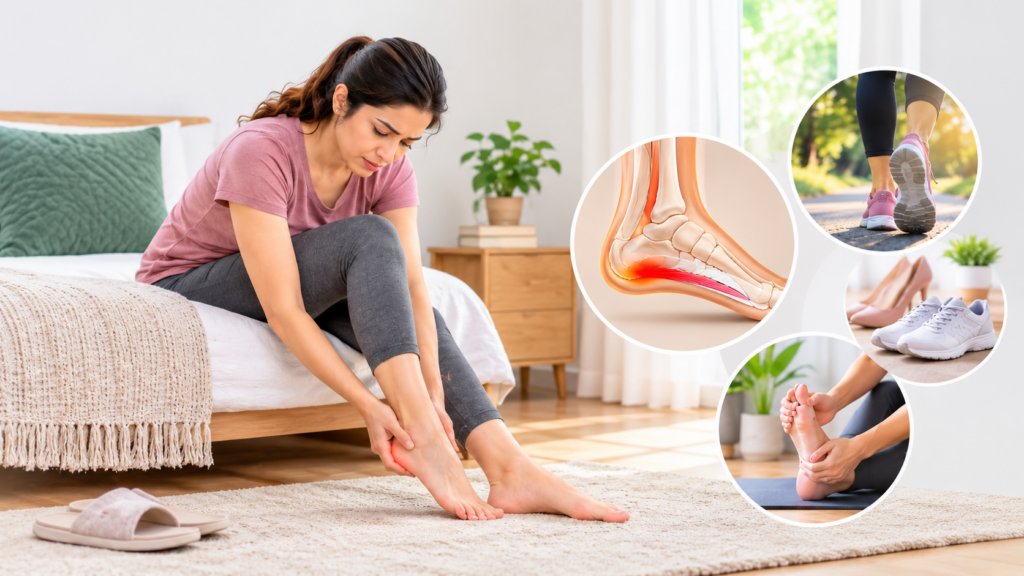
You get out of bed in the morning, take your first few steps and suddenly feel a sharp pain under your heel. After walking around for a while, it seems to ease. But by the end of a long day of standing, working or running errands, the pain returns.
Heel pain in women during their 30s and 40s can develop for several reasons, including prolonged standing, unsuitable footwear, changes in physical activity and conditions affecting the tissues around the heel. Yet, it’s easy to dismiss the discomfort as ordinary tiredness or assume that a little rest will make it disappear.
The truth is that heel pain causes aren’t always obvious. Pain beneath the heel may have a different cause from pain behind it, and the timing of your symptoms can offer important clues.
In this blog, we’ll explore why heel pain may develop during these years, the common conditions responsible, ways to manage discomfort and when medical attention may be necessary.
Why Heel Pain May Develop in Women in Their 30s and 40s
Your feet support your body weight whenever you stand, walk, climb stairs or exercise. Over time, repeated pressure can affect the tissues responsible for supporting and cushioning your heels.
Although heel pain can affect people of any age or sex, some everyday circumstances may make it more noticeable during your 30s and 40s.
Spending Long Hours on Your Feet
Whether you’re working in a profession that involves prolonged standing, managing household activities or spending much of the day walking, your feet experience repeated loading.
Standing for extended periods, particularly on hard surfaces, can aggravate the tissues beneath and around the heel.
Wearing Footwear That Doesn’t Provide Enough Support
Flat, thin-soled slippers, worn-out shoes and poorly fitted footwear may not provide sufficient cushioning or support for prolonged walking.
High heels can also affect how pressure is distributed across the foot and may aggravate certain heel or Achilles tendon problems.
The concern isn’t one particular type of footwear. It’s whether your shoes are appropriate for your foot structure and daily activities.
Sudden Changes in Exercise or Activity
Perhaps you’ve recently started taking longer morning walks, joined a fitness class or increased your running distance.
While regular exercise supports good health, increasing activity too quickly can place additional demands on the plantar fascia, Achilles tendon and other foot structures.
The tissues may need time to adapt to these changes.
Changes in Body Weight and Foot Loading
An increase in body weight can place additional mechanical pressure on the heels during standing and walking.
However, heel pain is not limited to people who are overweight. Foot structure, activity levels, footwear and individual tissue capacity also influence the risk.
Common Heel Pain Causes and What They Feel Like
One of the most useful clues is where the pain occurs and when it becomes worse.
While a medical examination is needed to identify the exact cause, the following patterns can help you understand what may be happening.
1. Plantar Fasciitis: Sharp Pain Under the Heel
Plantar fasciitis, also called plantar fasciopathy, is one of the most common causes of pain beneath the heel.
The plantar fascia is a thick band of connective tissue that runs along the bottom of the foot, connecting the heel to the toes and supporting the arch.
Repeated excessive loading can irritate this tissue and cause pain.
Typical signs include:
- Sharp or stabbing pain beneath the heel, often towards its inner side
- Heel pain after waking up or taking the first steps after sitting
- Discomfort that improves after moving around briefly
- Pain that returns after prolonged standing, walking or exercise
If you experience heel pain in the morning that eases after a few steps, plantar fasciitis is one possibility.
However, the pain pattern alone cannot confirm the diagnosis.
2. Achilles Tendinopathy: Pain Behind the Heel
The Achilles tendon connects the calf muscles to the heel bone. It helps you walk, run, climb stairs and push off the ground.
When the tendon is exposed to more loading than it can tolerate, it may become painful and stiff.
Common symptoms include discomfort behind the heel or slightly above it, stiffness after rest and pain during activities such as climbing stairs or walking uphill.
The condition may develop after suddenly increasing exercise intensity or running distance.
3. Heel Fat Pad Problems: Deep Pain in the Centre of the Heel
Your heel contains a thick pad of fatty tissue that acts as a natural shock absorber.
Over time, this cushioning tissue may lose some of its thickness or elasticity. Repeated pressure can then cause discomfort.
Pain associated with heel fat pad syndrome often feels like a deep bruise in the centre of the heel.
It may become worse when standing barefoot on hard floors or walking for extended periods.
Unlike plantar fasciitis, the discomfort is often more noticeable directly beneath the centre of the heel rather than towards the inner arch.
4. Heel Bursitis: Pain and Swelling Behind the Heel
Bursae are small, fluid-filled sacs that help reduce friction between nearby tissues.
When a bursa near the heel becomes irritated, it may cause pain, tenderness and swelling.
Heel bursitis commonly affects the back of the heel and may be aggravated by shoes that rub against the area.
5. Heel Stress Fractures: Pain That Gets Worse with Activity
A stress fracture is a small crack in a bone caused by repeated loading that exceeds its ability to recover.
In the heel, stress fractures may develop after sudden increases in walking, running or other weight-bearing activities.
Pain often begins during activity and gradually becomes more persistent. In some cases, it may eventually occur even during rest.
This condition requires medical evaluation because continuing to put pressure on the affected foot may worsen the injury.
6. Arthritis and Nerve-Related Conditions
Sometimes, heel pain while walking is associated with an underlying inflammatory or neurological condition.
Certain forms of inflammatory arthritis can affect the points where tendons and ligaments attach to bones, including around the heel.
Nerve compression or irritation may produce burning pain, tingling, numbness or unusual sensations in the foot.
These conditions require a different treatment approach from ordinary mechanical heel pain.
How to Relieve Heel Pain at Home
If your heel pain is mild, has developed gradually and is not associated with an injury or warning signs, a few changes may help reduce discomfort.
The aim is to temporarily reduce excessive pressure on the affected tissues without unnecessarily stopping all movement.
1. Reduce Activities That Aggravate the Pain
If long walks, running or prolonged standing make your heel hurt, temporarily reduce these activities.
For example, you might shorten your morning walk or divide household tasks into smaller periods with breaks.
Low-impact activities, such as swimming or suitable stationary cycling, may help you remain active while limiting pressure on your heel.
2. Choose Supportive Footwear
Wear comfortable shoes with adequate heel cushioning, arch support and a secure fit.
If walking barefoot on tiled or concrete floors makes the pain worse, consider using supportive indoor footwear rather than thin, unsupportive slippers.
Some people may benefit from cushioned heel pads or shoe inserts, depending on the cause of their pain.
3. Apply a Cold Pack
Applying a cold pack to the painful area may provide temporary relief. Wrap the pack in a towel and place it over the heel for approximately 15–20 minutes at a time.
Avoid applying ice directly to the skin, particularly if you have reduced sensation or circulation problems.
4. Try Gentle Foot and Calf Stretches
For selected conditions, such as plantar fasciitis, gentle stretching of the plantar fascia and calf muscles may help.
For example, while seated, you can gently pull your toes towards your shin to stretch the sole of your foot. A calf stretch against a wall may also help improve flexibility.
However, exercises should be appropriate to the underlying condition. Avoid forceful stretching if you have severe pain, a recent injury or a suspected fracture.
5. Avoid Pushing Through Increasing Pain
If your pain becomes sharper or more persistent during an activity, don’t force yourself to continue.
Repeatedly walking through worsening heel pain may aggravate certain injuries.
Remember: These measures may help relieve discomfort, but they won’t address every cause of heel pain. Persistent symptoms need an appropriate assessment.
How is Heel Pain Diagnosed and Treated?
The right heel pain treatment depends on identifying which tissues are involved and why they have become painful.
A doctor generally begins by reviewing your symptoms, daily activities, footwear, medical history and any recent changes in exercise.
The examination may involve checking where the heel is tender, how the ankle and foot move, whether there is swelling and how you walk.
Are X-rays or Scans Always Needed?
Not necessarily.
Conditions such as plantar fasciitis can often be diagnosed through medical history and physical examination.
However, an X-ray may be recommended if a fracture or another bone-related problem is suspected.
Ultrasound or MRI may be considered when the diagnosis remains unclear or specific soft tissue injuries need further evaluation.
Physiotherapy and Rehabilitation
For several common mechanical causes of heel pain, physiotherapy plays an important role in recovery.
Depending on the diagnosis, treatment may include:
- Plantar fascia and calf stretching
- Progressive strengthening of the foot and ankle muscles
- Selected manual therapy techniques
- Footwear and walking-pattern assessment
- Advice on gradually returning to physical activities
Physiotherapy programmes are adjusted according to the condition and the patient’s response.
Other Treatment Options
Some patients may benefit from taping, shoe inserts or night splints, particularly when plantar fasciitis causes significant first-step pain.
If symptoms remain troublesome despite appropriate conservative treatment, a specialist may consider other interventions.
For selected conditions, these may include extracorporeal shockwave therapy or injections after discussing their potential benefits and risks. Surgery is rarely necessary for common causes of heel pain.
However, a stress fracture, inflammatory condition or nerve problem may require a different treatment plan.
When Should You See a Doctor for Heel Pain?
You don’t need to seek medical care for every brief episode of heel discomfort. However, persistent or worsening symptoms shouldn’t be ignored.
Consider consulting a doctor if:
- Heel pain continues despite approximately two weeks of appropriate self-care.
- The pain is getting worse or repeatedly returning.
- Walking, standing or routine activities become difficult.
- You notice persistent swelling, redness or tenderness around the heel.
- You experience tingling, numbness or burning sensations in your foot.
- You have diabetes and develop new foot pain.
Seek urgent medical attention if you experience severe pain after an injury, cannot bear weight, notice a sudden popping sensation near the Achilles tendon, or develop significant swelling or deformity. A hot, swollen foot accompanied by fever also requires prompt assessment.
Early evaluation can help identify conditions that need specific treatment rather than continued home remedies.
How to Reduce the Risk of Recurring Heel Pain
Once your heel pain improves, the next step is helping your feet tolerate everyday activity more comfortably.
The following habits may reduce the risk of certain overuse-related heel problems.
Build Foot and Calf Strength
Foot and ankle strengthening exercises can improve the ability of muscles and tendons to manage everyday physical demands.
A physiotherapist can recommend appropriate exercises and help you progress gradually.
Increase Physical Activity Gradually
If you’re starting a walking or fitness routine, avoid making sudden, large increases in duration or intensity.
Gradual progression gives the muscles, tendons and other tissues time to adapt.
Replace Worn-Out Footwear
Shoes lose cushioning and support with regular use.
Check for uneven wear, damaged soles or reduced cushioning, especially if you spend long hours standing or walking.
Maintain Sustainable Health Habits
Regular physical activity and appropriate weight management can help manage the mechanical demands placed on your feet.
However, maintaining a healthy weight is only one part of preventing heel pain. Footwear, activity levels, strength and existing medical conditions also matter.
The goal is not to avoid walking or exercising, but to make sure your feet are prepared for the demands you place on them.
Don’t Let Heel Pain Become Part of Your Everyday Routine
Heel pain may begin as a minor inconvenience, but when it repeatedly affects your morning steps, work or daily activities, it’s worth understanding what’s causing it.
Not every painful heel is a case of plantar fasciitis, and the treatment that helps one person may not be suitable for another. Recognising how the pain behaves, making appropriate changes to your routine and seeking medical advice when needed can help you manage the problem more effectively.
At Graphic Era Hospital in Dehradun, our Orthopaedics and Joint Replacement and Physiotherapy departments provide assessment and rehabilitation support for foot and ankle problems, musculoskeletal injuries and movement difficulties. Our team evaluates symptoms, physical function and relevant medical factors to recommend appropriate treatment options, including non-surgical care and rehabilitation when indicated.
For information about consultations with our orthopaedists in Dehradun, call 1800-889-7351.
Frequently Asked Questions (FAQs)
Can heel pain develop even if I never wear high heels?
Yes. Heel pain can develop from prolonged standing, repetitive walking, unsuitable footwear, changes in physical activity or underlying foot conditions. Even flat shoes or slippers may contribute to discomfort if they lack adequate cushioning and support.
Does a heel spur on an X-ray always cause pain?
No. A heel spur is a bony growth that may develop near the heel bone, but many people have heel spurs without experiencing pain. Finding a spur on an X-ray does not automatically mean it is responsible for your symptoms. A doctor will consider the examination findings before recommending treatment.
Can I continue my morning walks if I have heel pain?
It depends on the cause and severity of the pain. If walking aggravates your symptoms, reducing the distance or switching temporarily to a lower-impact activity may help. Severe pain, suspected injury or worsening symptoms should be assessed before continuing your usual exercise routine.
How long does heel pain usually take to improve?
Recovery varies depending on the underlying condition and its severity. Mild overuse-related discomfort may improve within days or weeks, while conditions such as plantar fasciitis or Achilles tendinopathy may take several months to settle. Consistent rehabilitation and appropriate activity adjustments can support recovery.
Can heel pain in both feet indicate an underlying condition?
Yes. Heel pain affecting both feet may result from factors such as prolonged standing, footwear or mechanical strain. However, bilateral heel pain accompanied by joint swelling, prolonged morning stiffness or other symptoms may suggest an inflammatory condition. Medical assessment can help identify the cause.
Do I need complete rest until my heel pain goes away?
Not usually. For many overuse-related conditions, modifying painful activities while maintaining suitable movement is preferable to prolonged complete rest. However, some injuries, such as stress fractures, may require restricted weight-bearing or temporary immobilisation. The appropriate activity level depends on the diagnosis.
Where can I find PRP or GFC hair treatment near me in Dehradun?
If you’re looking for PRP or GFC hair treatment near you in Dehradun, you can consult the Dermatology Department at Graphic Era Hospital for a hair and scalp assessment. Our dermatologists can identify the possible cause of hair loss and discuss suitable treatment options.












 Emergency 24×7 : 1800 889 7351