
Gout vs High Uric Acid: What’s the Difference?
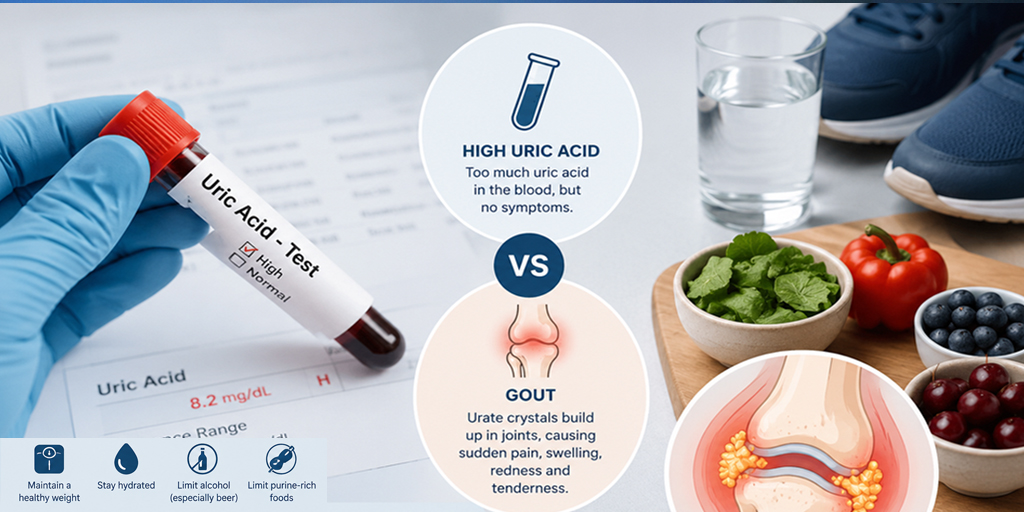
If your blood test shows high uric acid, it is natural to wonder whether gout is around the corner. But the two are not the same. You can have high uric acid for years without developing gout, and a high reading alone is not enough to diagnose the condition.
Gout develops when urate crystals build up in and around a joint, triggering inflammation that can cause sudden and often severe pain, swelling, redness and tenderness. To make things slightly more confusing, uric acid levels may sometimes fall within the normal range during an acute gout attack. This is why doctors look beyond a single blood test and consider your symptoms, medical history, medicines and other health factors when making a diagnosis.
So, what does a high uric acid result actually mean, and when should you be concerned about gout? This article explains how the two differ, why they are connected, the symptoms to watch for, and how they are diagnosed and managed.
What is Uric Acid and What Does High Uric Acid Mean?
Uric acid is a natural waste product. The body produces it when it breaks down purines, which are compounds found in certain foods and in the body’s own cells. Most uric acid is removed by the kidneys and passed out in urine, while the rest is eliminated through the digestive system.
When the kidneys cannot clear uric acid efficiently, or when the body produces more than usual, its level in the blood rises. This state is called hyperuricaemia. Most laboratories define it as a serum uric acid level above 7.0 mg/dL in men and above 6.0 mg/dL in women, though reference ranges can vary slightly between labs.
A raised result on a uric acid test does not, by itself, mean that anything is wrong with your joints. Studies consistently show that only around one in five people with persistently high uric acid ever develops gout. The rest remain asymptomatic, sometimes for their entire lives.
What the number does indicate is that the body’s uric acid balance is off and that it is worth understanding why.
Also Read: High Uric Acid: What it Means, Common Causes, and When it Can Lead to Gout
Gout vs High Uric Acid: Key Differences
The table below outlines the core differences. Reading it alongside the sections that follow will provide a clearer picture of where the two conditions overlap and where they differ. The most important point to take from this comparison is that high uric acid is a risk factor for gout, not a diagnosis of it.
| Feature | High Uric Acid (Hyperuricaemia) | Gout |
| What it is | Elevated uric acid in the blood | Inflammatory arthritis caused by urate crystal deposits in joints |
| Symptoms | Usually none | Sudden, severe joint pain, swelling, redness, warmth |
| What happens in the body | Uric acid accumulates in the bloodstream | Crystals form and trigger an acute inflammatory response in the joint |
| Diagnosis | Blood test (serum uric acid) | Clinical assessment, blood test, sometimes joint fluid analysis |
| Treatment | Lifestyle changes; medication only if indicated | Anti-inflammatory treatment for acute attacks; urate-lowering therapy when required |
| Can one exist without the other? | Yes, most people with high uric acid do not have gout | Gout almost always involves a history of elevated uric acid, though levels may appear normal during an acute attack |
What Causes High Uric Acid?
Uric acid rises when the balance between its production and excretion shifts in the wrong direction. The kidneys are responsible for clearing roughly two-thirds of the body’s uric acid, so anything that reduces their efficiency directly affects blood levels.
The most common reasons for a raised reading include:
- Reduced kidney excretion: The kidneys clear less uric acid than they should, accounting for the majority of high uric acid cases. Chronic kidney disease, dehydration and certain medicines, such as diuretics and low-dose aspirin, can all reduce excretion.
- Increased production: The body generates more uric acid than usual, often because of a diet high in red meat, organ meats and shellfish, or conditions such as psoriasis and blood disorders in which cell turnover is rapid.
- Dietary factors: Regular consumption of alcohol, particularly beer, and drinks sweetened with fructose can raise uric acid levels. Fructose directly stimulates uric acid production.
- Excess body weight: Adipose tissue simultaneously increases uric acid production and reduces kidney clearance.
- Medicines: Diuretics (water tablets), low-dose aspirin, cyclosporine and some tuberculosis drugs are associated with raised levels.
- Health conditions: Hypothyroidism, diabetes, metabolic syndrome and hypertension are all linked to higher uric acid readings.
Identifying why uric acid is elevated is important because treatment depends on the underlying cause. For example, high uric acid linked to a medicine such as a diuretic may be managed differently from a raised level related to diet or reduced kidney function.
What Causes Gout?
Gout develops when uric acid levels remain high enough for urate crystals to form and build up in and around the joints. These crystals can trigger inflammation, leading to the sudden pain, swelling, redness and tenderness associated with a gout attack. The big toe is commonly affected, although gout can also involve the ankles, knees, wrists, fingers and elbows.
In many people, uric acid may remain elevated for years before the first gout attack occurs. During this time, crystals can gradually accumulate without causing symptoms. An attack may then be triggered when the joint becomes inflamed.
Common triggers for a gout attack include:
- A sudden change in uric acid levels, whether a rise or a rapid fall
- Dehydration, often after illness, surgery or a long journey
- A heavy meal rich in organ meats or shellfish
- Alcohol, particularly beer and spirits
- Certain medicines, including diuretics and some antibiotics
- An acute illness or physical stress on the body
Not everyone with the same uric acid level has the same risk. Genetics play a significant role. Some people are more prone to crystal formation at a given level than others, which explains why two people with identical blood results can have very different clinical outcomes.
Symptoms of High Uric Acid vs Gout
High uric acid, on its own, is silent. It causes no joint symptoms, pain or swelling. The only way to know that the level is raised is through a blood test, which is why it is often discovered incidentally during a routine health check or an investigation for something else.
Gout is the opposite of silent. An attack typically begins quickly, often overnight, and the pain can be severe enough to wake someone from sleep. The affected joint becomes swollen, red, warm to the touch and extremely tender. Even the weight of a bedsheet can feel unbearable.
The most commonly affected joint is the metatarsophalangeal joint at the base of the big toe, a presentation so characteristic that it has a specific name: podagra. The ankle, knee, wrist and fingers are also frequently affected.
An acute gout attack may last for several days and can gradually settle even without treatment. However, if the underlying uric acid level remains high, attacks may return and can become more frequent or affect additional joints over time.
In long-standing or inadequately controlled gout, urate crystals can also build up under the skin and around joints, forming firm deposits known as tophi.
How are High Uric Acid and Gout Diagnosed?
Diagnosis usually begins with a discussion about your symptoms and medical history, followed by a physical examination. A doctor may ask which joints are affected, how the pain or swelling started, whether gout runs in your family, and about any medicines, dietary habits or alcohol intake that may influence uric acid levels.
Depending on the findings, blood tests and other investigations may be recommended to check uric acid levels, confirm gout or rule out other possible causes of joint pain and swelling.
Serum Uric Acid Test
The blood test measuring serum uric acid is the standard first investigation, but the result is more nuanced than it may appear. It provides a useful baseline, but timing matters: during an acute gout attack, uric acid levels can temporarily fall within the normal range as urate shifts from the bloodstream into the inflamed joint. A reading of 5.8 mg/dL taken on day two of a flare does not rule out gout; it may simply reflect that shift. For this reason, doctors often repeat the test two to four weeks after an attack has settled to obtain a true resting level.
Joint Fluid Analysis
When the diagnosis is uncertain, aspirating a small amount of fluid from the affected joint and examining it under a polarised light microscope is the most definitive test available. The presence of needle-shaped, negatively birefringent monosodium urate crystals confirms gout with a specificity that no blood test can match. This test is particularly useful when the presentation is atypical or when a joint infection must be excluded, as septic arthritis and gout can look almost identical on clinical examination alone.
Imaging
Ultrasound can detect urate crystal deposits and joint inflammation. In experienced hands, it can also identify the characteristic “double contour sign” caused by urate coating a joint surface. In specialist settings, dual-energy CT scan identifies urate deposits with high accuracy and can help assess the extent of disease in complex or longstanding cases.
Kidney Function Assessment
Because the kidneys are central to uric acid clearance, a kidney function test is part of a thorough evaluation. This is particularly important if uric acid levels are persistently high, kidney stones are suspected, or urate-lowering medication is being considered, as some of these medicines require dose adjustment when kidney function is reduced.
Treatment for High Uric Acid and Gout
Treatment depends on whether high uric acid is causing symptoms or has led to gout. A raised uric acid level without symptoms is managed differently from an acute gout attack, where the immediate focus is on reducing pain and inflammation. Long-term treatment may also be recommended to help lower uric acid levels and reduce the risk of future attacks.
Asymptomatic High Uric Acid
If uric acid levels are high but there are no symptoms of gout, medication may not always be necessary. A doctor will consider how high the uric acid level is, whether it remains elevated over time, and whether there are other health concerns such as kidney disease, kidney stones or certain medicines that may be contributing to the increase.
For many people with asymptomatic high uric acid, the focus is on identifying and managing contributing factors, maintaining a healthy lifestyle and monitoring uric acid levels when appropriate. Medication may be considered in selected cases based on the person’s overall health and risk factors rather than the blood test result alone.
Acute Gout Attack
During an acute gout attack, treatment focuses on relieving pain and reducing inflammation. Depending on the person’s overall health, other medicines and medical history, a doctor may recommend:
- Non-steroidal anti-inflammatory drugs (NSAIDs): These help reduce pain and inflammation during a gout flare.
- Colchicine: This medicine reduces the inflammation caused by urate crystals and is often used to manage an acute attack.
- Corticosteroids: These may be recommended when NSAIDs or colchicine are not suitable or have not provided adequate relief.
The choice of treatment varies from person to person, particularly in those with conditions such as kidney disease, heart disease or other health concerns.
Long-Term Urate-Lowering Therapy
After a gout attack, a doctor may discuss urate-lowering therapy to reduce the risk of future attacks and prevent complications. It is particularly considered for people with recurrent or troublesome gout attacks, tophi, chronic gouty arthritis or certain conditions such as chronic kidney disease.
Medicines such as allopurinol may be used to lower uric acid levels over the long term. Treatment is usually started at a low dose and adjusted gradually based on uric acid levels and how well the medicine is tolerated. The usual treatment target is to maintain serum uric acid below 6 mg/dL, although a lower target may be recommended in some people with more severe gout.
Urate-lowering treatment is often started after an acute flare has settled, although the timing may vary depending on how frequently attacks occur and the individual treatment plan.
Diet and Lifestyle Changes That May Help Lower Uric Acid
Diet and lifestyle changes can play a supportive role in managing high uric acid and gout, but they may not be enough on their own when gout requires medical treatment. Rather than following an overly restrictive diet, the focus should be on balanced eating, maintaining a healthy weight and limiting foods and drinks that may contribute to higher uric acid levels or trigger gout attacks.
Foods and drinks to limit may include:
- Organ meats such as liver and kidney
- Large portions of red meat
- Certain seafood, particularly shellfish, sardines and anchovies
- Alcohol, especially beer and spirits
- Sugary drinks and foods high in added fructose
A balanced diet can include whole grains, vegetables, fruits, pulses and low-fat dairy products. Purine-containing vegetables such as spinach and mushrooms generally do not need to be avoided simply because of their purine content.
Staying adequately hydrated is also important, particularly for supporting normal kidney function. However, fluid requirements vary, and people who have kidney or heart conditions or have been advised to restrict fluids should follow their doctor’s recommendations.
If you are overweight, gradual and sustainable weight loss may also help with gout management. Avoid crash diets or prolonged fasting, as sudden changes in diet and weight can affect uric acid levels.
Dietary changes should complement, rather than replace, any treatment recommended by your doctor.
Can High Uric Acid or Gout Affect the Kidneys?
The kidneys play an important role in removing uric acid from the blood. When kidney function is reduced, uric acid may build up more easily. At the same time, people with gout may also be at increased risk of certain kidney-related problems, particularly uric acid kidney stones.
Uric acid kidney stones can form when urine becomes too acidic and uric acid crystallises in the urinary tract. They account for a relatively small proportion of kidney stones and, unlike some other types, may sometimes be dissolved by medicines that make the urine less acidic.
Gout and chronic kidney disease can also occur together. This is important because reduced kidney function may influence the choice and dose of medicines used to manage gout.
Having high uric acid does not mean that kidney problems will necessarily develop. However, if uric acid remains elevated, gout attacks recur, kidney stones develop or kidney disease is already present, a doctor may recommend further evaluation and appropriate monitoring.
When Should You Consult a Doctor?
It is advisable to consult a doctor if you have symptoms suggestive of gout or repeatedly high uric acid levels. Seek medical evaluation if you notice:
- Sudden, severe pain, swelling, redness or warmth in a joint, particularly the big toe, ankle or knee
- Recurrent episodes of joint pain or swelling that improve and then return
- Persistently high uric acid levels on blood tests
- Symptoms of a kidney stone, such as severe pain in the side or back, pain while urinating or blood in the urine
- Firm lumps around the joints or under the skin, which may be tophi associated with long-standing gout
A suddenly painful, red and swollen joint should be assessed promptly, particularly if you also have fever or feel unwell. Gout can sometimes resemble septic arthritis, a joint infection that requires urgent medical treatment.
Graphic Era Hospital provides evaluation and treatment for gout and other forms of arthritis through its Internal Medicine and Rheumatology services, supported by diagnostic facilities such as blood tests and imaging.
Final Thoughts
High uric acid and gout are closely related, but they are not the same. A raised uric acid level may not cause any symptoms, while gout develops when urate crystals build up in and around the joints and trigger inflammation.
If your uric acid levels remain high or you experience sudden or recurrent joint pain and swelling, it is worth discussing the findings with a doctor. The right approach may involve monitoring, lifestyle changes or treatment, depending on the underlying cause and your overall health.
At Graphic Era Hospital, specialists in Internal Medicine and Rheumatology can evaluate high uric acid and gout and recommend appropriate treatment based on your symptoms and test results. To book a consultation, call the 24×7 helpline at 1800 889 7351.
Frequently Asked Questions
Is high uric acid the same as gout?
No. High uric acid, or hyperuricaemia, means there is more uric acid than usual in the blood. Gout is an inflammatory form of arthritis that develops when urate crystals build up in and around a joint. Many people with high uric acid never develop gout.
Can you have high uric acid without having gout?
Yes. This is known as asymptomatic hyperuricaemia. A person may have an elevated uric acid level for years without experiencing gout attacks or joint symptoms.
What is the normal uric acid level?
Normal uric acid ranges vary between laboratories and may also differ by sex. MedlinePlus lists reference ranges of approximately 3.0–7.1 mg/dL for women and 4.0–8.6 mg/dL for men, but the range printed on your own laboratory report should be used when interpreting the result. For people being treated for gout, the target is generally below 6 mg/dL.
What are the first signs of gout?
Gout commonly begins with sudden, severe pain in a joint, often at the base of the big toe. The affected joint may also become swollen, warm, red and extremely tender, with symptoms often developing rapidly over several hours.
Does high uric acid always cause joint pain?
No. High uric acid itself may cause no symptoms. Joint pain develops when urate crystals form in or around a joint and trigger the inflammation associated with gout.
What causes uric acid levels to increase?
Uric acid can rise when the body produces too much of it or, more commonly, when the kidneys do not remove enough. Kidney disease, obesity, certain medicines, alcohol, fructose-sweetened drinks and diets high in some purine-rich foods can contribute to higher levels.
Can gout be cured permanently?
Gout is generally considered a long-term condition, but it can be controlled very effectively. Urate-lowering treatment can keep uric acid below the recommended target, reduce crystal deposits and help prevent future attacks when treatment is continued as advised.
Which foods should I avoid if my uric acid is high?
It may help to limit organ meats, large amounts of red meat, certain seafood such as anchovies, sardines, mussels and scallops, alcohol, particularly beer, and drinks or foods high in fructose. Dietary changes should form part of an overall management plan rather than being treated as the only way to control uric acid.
Can drinking more water lower uric acid?
Staying well hydrated supports the kidneys in removing waste through urine and can help reduce the risk of uric acid kidney stones. However, drinking more water alone may not be enough to bring persistently high uric acid into the desired range, particularly in people with gout.
Does high uric acid damage the kidneys?
Persistently high uric acid can contribute to uric acid kidney stones and may be associated with kidney damage in some people. The relationship also works in the other direction: reduced kidney function can cause uric acid to build up because the kidneys are less able to remove it.
When should I see a doctor for high uric acid?
You should consult an internal medicine physician or rheumatologist if your uric acid remains elevated on repeated tests, you develop sudden joint pain or swelling, or you have recurrent gout attacks. If high uric acid is associated with kidney stones or reduced kidney function, a nephrologist may also be involved in your care. Sudden severe joint pain with fever, redness and marked swelling should be assessed promptly, as a joint infection can sometimes cause similar symptoms.
Can gout occur even if uric acid levels are normal during a test?
Yes. Uric acid levels can sometimes be within the normal range during an acute gout attack. Doctors therefore do not diagnose or rule out gout on the basis of a single uric acid blood test alone.
What is the difference between gout and hyperuricaemia?
Hyperuricaemia refers to an elevated level of uric acid in the blood and may cause no symptoms. Gout occurs when urate crystals accumulate in the joints and trigger episodes of inflammation, pain and swelling.
How is gout diagnosed?
A rheumatologist or internal medicine physician may diagnose gout by assessing the pattern of joint pain, swelling and other clinical findings along with blood tests for uric acid. When needed, fluid may be taken from the affected joint to look for urate crystals, while ultrasound or other imaging may help identify crystal deposits or rule out other causes of joint pain.
How can I lower uric acid naturally?
Lifestyle measures that may help include maintaining a healthy weight, staying adequately hydrated, limiting alcohol and sugar-sweetened drinks, reducing excessive intake of red and organ meats and certain seafood, and following a balanced diet. However, lifestyle changes may not lower uric acid sufficiently in everyone, and people with gout or persistently high levels may require urate-lowering medicines prescribed by a doctor.


















 Emergency 24×7 : 1800 889 7351