
World Psoriasis Day 2026: Theme, Causes, Symptoms and Treatment Options
Key Takeaways
- World Psoriasis Day is observed every year on 29 October.
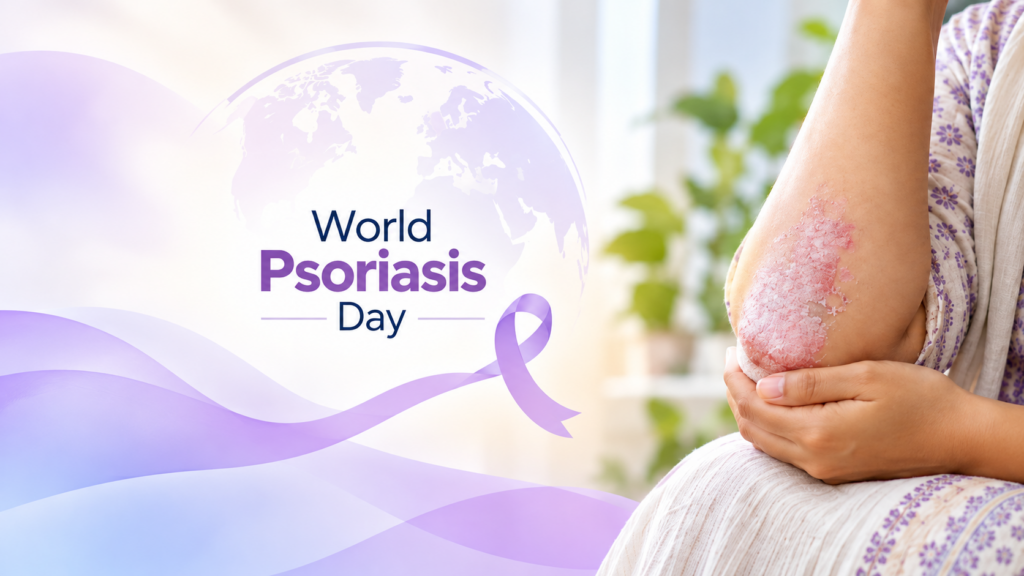
- The World Psoriasis Day 2026 theme is “Look Beyond My Skin”, with a special focus on young people.
- Psoriasis is a chronic, immune-mediated inflammatory disease and cannot spread from one person to another.
- Common psoriasis symptoms include thick or scaly patches, itching, burning, dry or cracked skin and nail changes.
- Genetics and immune-system activity contribute to psoriasis, while factors such as stress, infections, skin injury and certain medicines can trigger flare-ups.
- Psoriasis may also affect the joints, causing psoriatic arthritis in some people.
- There is currently no permanent cure, but modern psoriasis treatment can control symptoms, reduce inflammation and improve quality of life.
Psoriasis is often recognised by the red, scaly patches it can cause on the skin, but the condition goes beyond appearance. It is a chronic immune-mediated disease that can cause itching, discomfort and recurring flare-ups, and in some people, it may also affect the joints. Because its symptoms can sometimes be mistaken for other skin problems, understanding the condition is an important first step towards timely diagnosis and appropriate care.
World Psoriasis Day 2026 provides an opportunity to raise awareness, address common misconceptions and encourage greater understanding of what living with psoriasis can involve. It also highlights the importance of recognising symptoms early and seeking medical guidance for effective long-term management.
In this blog, we’ll look at the significance of World Psoriasis Day 2026, along with the causes, common symptoms, diagnosis and treatment options for psoriasis.
What is World Psoriasis Day and When is it Observed?
World Psoriasis Day is observed globally on 29 October to raise awareness about psoriasis and psoriatic arthritis and to improve understanding of the challenges faced by people living with these conditions.
The initiative is led by IFPA, the International Federation of Psoriasis Associations. It brings together patients, healthcare professionals, advocacy organisations and communities to address misconceptions, improve access to care and encourage people with psoriasis to seek appropriate medical support.
This is especially important because visible skin conditions can attract unwanted attention or judgement. Raising awareness helps shift the conversation away from appearance and towards the medical, social and emotional realities of the disease.
What is the World Psoriasis Day 2026 Theme?
The official World Psoriasis Day 2026 theme is “Look Beyond My Skin.”
This year’s campaign focuses particularly on young people living with psoriasis and psoriatic arthritis, because the condition can affect much more than their skin. Visible patches, recurring flare-ups or joint symptoms may influence confidence, social interactions, school or college life, work and relationships. Some young people may also face unwanted questions, staring or misconceptions that psoriasis is contagious.
Through the “Look Beyond My Skin” campaign, IFPA encourages people to see the individual beyond the visible symptoms and understand the physical, emotional and social impact of living with psoriasis.
The campaign also reinforces the importance of awareness, timely diagnosis, appropriate treatment and reducing stigma so that people with psoriasis can seek care without feeling judged because of how their skin looks.
What is Psoriasis?
Psoriasis is a chronic immune-mediated disease in which immune activity becomes overactive and causes skin cells to multiply much faster than usual.
Instead of shedding gradually, these extra cells build up on the skin, contributing to thickened, inflamed and scaly areas known as plaques. Psoriasis commonly affects the scalp, elbows, knees and trunk, but it can occur almost anywhere on the body.
The condition often follows a pattern of flares and remission. Symptoms may become worse for several weeks or months and then improve or become much less noticeable.
Psoriasis can affect people of any age and skin tone, although its appearance can vary. On lighter skin, plaques may look pink or red, while on darker skin they may appear violet, brown or darker than the surrounding skin.
What Causes Psoriasis?
There is no single known cause of psoriasis. Research suggests that a combination of genetic susceptibility, abnormal immune-system activity and environmental factors contributes to the development of the condition. In people who are predisposed, immune signals can become overactive and speed up the production of skin cells, leading to inflammation and the characteristic plaques associated with psoriasis.
It is also important to distinguish between psoriasis causes and psoriasis triggers. A trigger does not necessarily cause the underlying disease. Instead, it may bring on psoriasis for the first time or cause symptoms to flare in someone who is already susceptible.
Genetics and Immune-System Activity
Psoriasis can run in families. Having a close relative with the condition may increase your likelihood of developing it, although not everyone with a family history develops psoriasis.
The immune system also plays a central role. Abnormal inflammatory activity causes skin cells to be produced too quickly, resulting in the characteristic inflammation and scaling.
Common Psoriasis Triggers
Triggers differ from person to person. Common ones may include:
- Emotional stress
- Skin injury, including cuts, scratches or sunburn
- Certain infections, including streptococcal throat infections
- Some medicines
- Cold, dry weather
- Smoking
- Heavy alcohol consumption
Identifying personal triggers can help with long-term psoriasis management, but avoiding triggers does not replace medical treatment.
What are the Symptoms and Signs of Psoriasis?
The symptoms of psoriasis vary depending on the type, severity and part of the body involved.
Common signs of psoriasis include:
- Thick, raised or inflamed patches of skin
- Dry or flaky scales over the patches
- Itching, burning or soreness
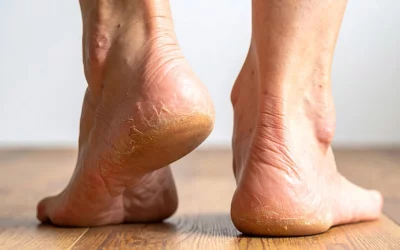
- Dry skin that may crack or bleed
- Scalp scaling
- Changes in the fingernails or toenails
- Periods when symptoms worsen followed by periods of improvement
Psoriasis can also affect the nails. You may notice tiny pits, discolouration, crumbling, thickening or separation of the nail from the nail bed.
Not everyone develops the same appearance. If you have a persistent or recurring skin rash, particularly one that is scaly or itchy, seeing a dermatologist is more reliable than trying to identify it from photographs online.
What are the Different Types of Psoriasis?
There are several types of psoriasis, and some people can develop more than one type over time.
Plaque Psoriasis
Plaque psoriasis is the most common form. It causes raised, well-defined patches of inflamed skin covered with scale. It frequently affects the elbows, knees, scalp and lower back.
Guttate Psoriasis
Guttate psoriasis causes numerous small, drop-like scaly spots, often over the trunk or limbs. It frequently develops in children or young adults and may appear after an infection such as streptococcal throat infection.
Inverse Psoriasis
Inverse psoriasis affects skin folds, such as the armpits, groin, under the breasts or around the buttocks. The affected skin tends to appear smooth and inflamed rather than heavily scaly because of moisture and friction in these areas.
Pustular Psoriasis
Pustular psoriasis causes pus-filled bumps surrounded by inflamed skin. It can affect small areas, such as the hands and feet, or become widespread.
Widespread pustular psoriasis can be serious and requires prompt medical evaluation.
Erythrodermic Psoriasis
Erythrodermic psoriasis is a rare but potentially severe form in which inflammation and scaling affect a large proportion of the body’s skin.
It can interfere with the body’s ability to regulate temperature and fluid balance and requires urgent medical care.
Psoriasis can also involve the scalp and nails regardless of the main type affecting the skin.
Can Psoriasis Affect More Than the Skin?
Yes. Although psoriasis is most visible on the skin, the inflammation associated with the disease can affect other parts of the body.
One of the most important related conditions is psoriatic arthritis, an inflammatory form of arthritis that develops in some people with psoriasis.
Possible warning signs include:
- Joint pain or swelling
- Stiffness after waking or sitting for a long time
- A swollen finger or toe
- Heel pain
- Lower back pain
- Tenderness where tendons attach to bone
Not everyone with psoriasis develops psoriatic arthritis. However, early diagnosis matters because untreated disease can lead to permanent joint damage. People with psoriasis who develop new joint symptoms should inform their dermatologist and may also need assessment by a Rheumatology specialist.
Psoriasis is also associated with a higher likelihood of some other health problems, including cardiovascular and metabolic conditions and mental-health concerns. This is another reason psoriasis should be viewed as more than a cosmetic condition.
How is Psoriasis Diagnosed?
Psoriasis diagnosis usually begins with a dermatologist examining your skin, scalp and nails.
The doctor may also ask about:
- When the symptoms began
- Whether the affected areas itch or burn
- Previous flare-ups
- Recent infections or significant stress
- Medicines you take
- Family history of psoriasis
- Joint pain, swelling or stiffness
In many cases, the appearance and clinical history are enough to make a diagnosis.
If the diagnosis is uncertain, your dermatologist may remove a small sample of skin for examination under a microscope. This can help distinguish psoriasis from eczema, fungal infections and other conditions that can sometimes look similar.
There is no single routine blood test that confirms ordinary skin psoriasis.
How is Psoriasis Treated?
There is currently no permanent cure for psoriasis, but effective treatment can control symptoms, reduce inflammation, improve the appearance and comfort of the skin and help maintain longer periods with few or no symptoms.
There is also no single treatment that works best for everyone. Your dermatologist chooses a treatment based on factors such as:
- Type of psoriasis
- Severity
- Areas of the body affected
- Impact on daily life
- Other health conditions
- Previous treatment response
Treatment may involve one or a combination of the following.
Topical Treatments
Creams, ointments, lotions or other medicines applied directly to the skin are often used for mild or localised psoriasis.
These may include corticosteroids, vitamin D-related treatments and other prescription topical medicines selected according to the area being treated and severity of disease.
Phototherapy
Phototherapy exposes the affected skin to controlled doses of ultraviolet light under medical supervision.
It may be recommended when psoriasis involves larger areas or when topical treatment alone has not provided adequate control.
Medical phototherapy is different from simply spending longer in the sun and should be given according to a dermatologist’s treatment plan.
Systemic Medicines
Moderate-to-severe psoriasis may require medicines that work throughout the body rather than only on the skin.
These treatments affect inflammatory or immune pathways involved in psoriasis and need appropriate medical monitoring.
Biologic Therapies
Biologic medicines target specific parts of the immune system that contribute to inflammation.
They may be considered for suitable people with moderate-to-severe psoriasis or psoriatic arthritis, depending on disease severity, previous treatments and overall health.
The right psoriasis treatment is therefore highly individual. What controls symptoms well for one person may not be the most appropriate option for another.
How Can You Manage Psoriasis at Home and Reduce Flare-Ups?
Medical treatment controls the disease, but everyday skin care and healthy habits can also help you manage symptoms and reduce avoidable triggers.
Moisturise Regularly
Using an appropriate moisturiser can help reduce dryness, scaling, cracking and itching. Applying it after bathing can help retain moisture in the skin.
Be Gentle With Your Skin
Scratching, picking scales or injuring the skin can sometimes trigger new psoriasis patches. Avoid harsh scrubbing and treat cuts or other skin injuries promptly.
Identify Your Triggers
Keeping track of when flare-ups occur can help you recognise patterns involving stress, illness, weather, alcohol, smoking or other individual triggers.
Manage Stress
Stress can trigger or worsen psoriasis in some people. Exercise, adequate sleep, relaxation techniques or professional mental-health support may help with stress management.
Yoga may also be included as part of a stress-management routine. Gentle yoga combines physical movement with breathing and relaxation practices, which may help reduce stress and support overall well-being. Research supports yoga as a stress-reduction approach, although evidence that yoga itself directly improves psoriasis remains limited. It should therefore complement, rather than replace, prescribed psoriasis treatment.
For people with psoriatic arthritis or significant joint pain, it is advisable to discuss suitable movements or modifications with their doctor or physiotherapist before starting a yoga routine.
Follow Your Treatment Consistently
Psoriasis often improves and worsens over time. Do not stop or change prescribed treatment simply because your skin has started to clear unless your dermatologist advises you to do so.
Stopping certain medicines suddenly can sometimes worsen psoriasis.
Avoid Smoking and Limit Alcohol
Smoking and heavy alcohol use are recognised psoriasis triggers for some people and may also affect overall health.
Home care can support psoriasis management, but it should not replace medical treatment when psoriasis is persistent, widespread, painful or affecting everyday life.
When Should You See a Dermatologist?
Psoriasis can sometimes be mistaken for eczema, allergies, fungal infections or other skin rashes, so getting an accurate diagnosis matters.
Consider consulting a skin specialist if you have:
- Persistent scaly, thickened or itchy patches
- A rash that repeatedly returns
- Cracking, bleeding or painful skin
- Scalp symptoms that do not improve
- Unexplained nail pitting or separation
- Symptoms that affect sleep, work or confidence
- Psoriasis that is spreading or not responding to treatment
- New joint pain, swelling or stiffness
Seek urgent medical attention if you develop widespread redness, severe skin peeling, fever or feel significantly unwell with extensive skin involvement.
Dermatology Care for Psoriasis at Graphic Era Hospital, Dehradun
The Department of Dermatology at Graphic Era Hospital provides diagnosis and long-term management for psoriasis and a range of other skin conditions.
For psoriasis, treatment options available at Graphic Era Hospital include topical treatments, phototherapy and biologic therapy, selected according to the patient’s condition and clinical needs. The department also manages conditions such as eczema, vitiligo, allergic skin reactions and nail disorders, while diagnostic procedures such as skin biopsy may be used when required.
People experiencing persistent skin changes can consult a Skin Specialist at Graphic Era Hospital for appropriate evaluation and an individualised treatment plan.
Look Beyond the Skin This World Psoriasis Day
World Psoriasis Day 2026 reminds us that living with psoriasis is about much more than managing visible patches. Understanding the condition, challenging misconceptions and seeking timely treatment can make everyday life easier for people affected by it.
If you are dealing with recurring scaly patches, itching, nail changes or previously diagnosed psoriasis that is not well controlled, consider speaking with a dermatologist rather than managing repeated flare-ups on your own.
Consult dermatology specialists at Graphic Era Hospital, Dehradun, for diagnosis and personalised psoriasis care. Call 1800-889-7351 to book an appointment.
Frequently Asked Questions (FAQs)
Can I catch psoriasis by touching someone who has it?
No. Psoriasis is not contagious. You cannot develop it by touching someone with psoriasis, sharing clothes or meals, swimming together or through sexual contact.
Is psoriasis the same as eczema?
No. Both psoriasis and eczema can cause itchy, inflamed skin, but they are different conditions with different underlying mechanisms and patterns. Because their appearance can sometimes overlap, a dermatologist can help determine which condition is responsible.
Can psoriasis begin suddenly in adulthood?
Yes. Psoriasis can begin at almost any age, including adulthood. Genetic susceptibility may exist for years before triggers or other factors contribute to the first noticeable flare.
Does psoriasis always itch?
No. Some people experience considerable itching, burning or soreness, while others have visible plaques with relatively little discomfort. Symptoms vary considerably from person to person.












 Emergency 24×7 : 1800 889 7351