
World Thyroid Day 2026: The Role of Nutrition, Early Diagnosis, and Treatment Options
Many people experience persistent fatigue, unexplained weight changes, or mood fluctuations, but only a few report these symptoms to a doctor to identify the underlying cause. In many cases, these subtle yet disruptive symptoms point to a dysfunction in the thyroid gland: a small organ that plays a central role in regulating the body’s metabolism and hormonal balance.
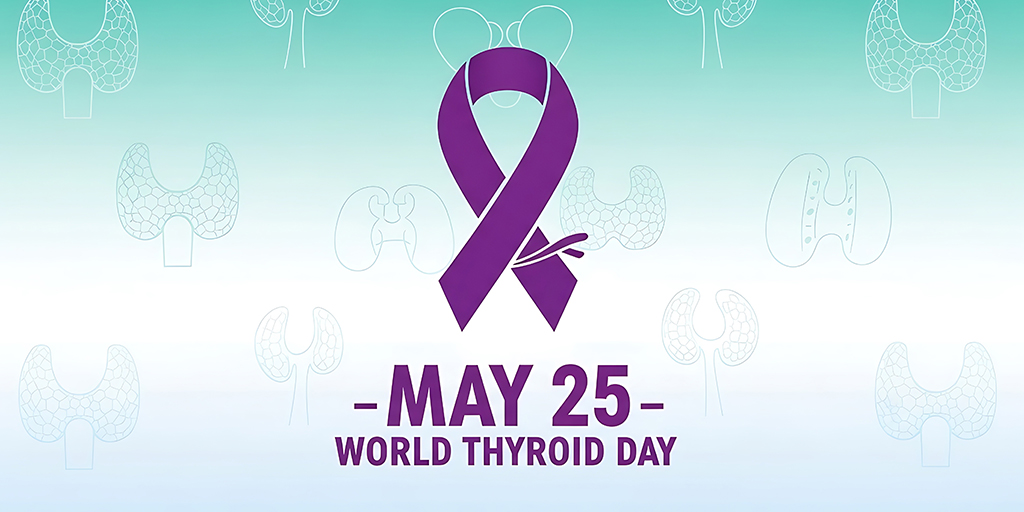
World Thyroid Day, observed on May 25, brings attention to this often-overlooked condition. Despite the growing prevalence of thyroid disorders, awareness remains limited, and diagnosis is frequently delayed. This delay can lead to complications that affect not just physical health, but also mental well-being and overall quality of life. In this blog, we’ll take a closer look at thyroid disorders, how they develop, the role of timely thyroid tests, and the range of thyroid treatment options available today.
History and Significance of World Thyroid Day
World Thyroid Day was established in 2008 by the European Thyroid Association and is now supported by global organisations, including the American Thyroid Association and the Asian Oceanic Thyroid Association. The date, May 25, marks the anniversary of the European Thyroid Association’s founding.
The day is part of International Thyroid Awareness Week, an initiative aimed at improving public understanding of thyroid diseases and encouraging early diagnosis.
While it is not officially recognised by the United Nations, the day has gained global acceptance among healthcare professionals, patient organisations, and research bodies.
The significance lies not just in awareness but in addressing persistent gaps in diagnosis, access to care, and long-term management.
World Thyroid Day 2026 Theme: “Thyroid and Nutrition”
The 2026 theme underscores a fundamental truth: thyroid health is closely linked to what we eat.
Nutrition influences hormone production, metabolism, and immune responses. Iodine, for instance, is essential for thyroid hormone synthesis, while nutrients such as selenium and zinc support overall gland function.
- Balanced iodine intake: Both deficiency and excess can disrupt thyroid function.
- Micronutrient support: Selenium and iron deficiencies may contribute to thyroid dysfunction.
- Dietary patterns: Highly processed diets may indirectly affect hormonal balance.
This theme is especially relevant for vulnerable groups such as pregnant women, children, and older adults, who are more susceptible to thyroid-related complications.
Understanding the Thyroid Gland
The thyroid is a butterfly-shaped gland located at the base of the neck. Despite its small size, it influences nearly every organ system in the body.
Its primary function is to produce hormones, thyroxine (T4) and triiodothyronine (T3), that regulate metabolism. These hormones affect how the body uses energy, controls temperature, and maintains heart rate.
When thyroid function becomes imbalanced, it can lead to a wide range of symptoms that are often mistaken for lifestyle-related issues or stress.
Common Types of Thyroid Disorders
Thyroid disorders are broadly classified based on whether the gland is underactive, overactive, or structurally altered.
- Hypothyroidism (Underactive Thyroid): This condition occurs when the thyroid does not produce enough hormones. It is one of the most common disorders and is often linked to autoimmune conditions such as Hashimoto’s thyroiditis.
- Hyperthyroidism (Overactive Thyroid): In contrast, hyperthyroidism involves excessive hormone production, commonly associated with Graves’ disease.
- Thyroid Nodules and Goitre: Structural abnormalities, such as nodules or enlargement of the gland (goitre), may occur with or without hormonal imbalance. Some nodules are benign, while others require further evaluation.
Each condition presents differently, making symptom recognition an important first step.
Symptoms of Thyroid Disorders
The symptoms of thyroid disorders can vary significantly depending on the type of imbalance.
Symptoms of Hypothyroidism
- Persistent fatigue and low energy
- Unexplained weight gain
- Increased sensitivity to cold
- Dry skin, hair thinning, and brittle nails
- Depression or low mood
Symptoms of Hyperthyroidism
- Unexplained weight loss
- Rapid or irregular heartbeat
- Anxiety and irritability
- Heat intolerance
- Frequent bowel movements
General Warning Signs
- Irregular menstrual cycles, especially in women
- Difficulty concentrating or memory issues
- Swelling at the front of the neck (goitre)
These symptoms are often gradual and can overlap with other conditions, which is why they are frequently overlooked.
Causes and Risk Factors for Thyroid Disorders
Thyroid disorders rarely develop in isolation. Multiple factors contribute to their onset.
- Autoimmune Conditions: Diseases such as Hashimoto’s thyroiditis and Graves’ disease occur when the immune system mistakenly attacks the thyroid gland.
- Iodine Imbalance: Both deficiency and excess iodine intake can disrupt hormone production.
- Hormonal Changes: Pregnancy, menopause, and other hormonal shifts increase vulnerability, particularly in women.
- Genetic Predisposition: Family history plays a significant role in thyroid disease risk.
- Lifestyle and Stress Factors: Chronic stress and poor lifestyle habits may influence thyroid function indirectly through hormonal pathways.
In some cases, thyroid disorders coexist with other autoimmune conditions such as rheumatoid arthritis, reinforcing the need for comprehensive evaluation.
Complications of Untreated Thyroid Disorders
Delayed diagnosis or inadequate treatment can lead to serious health complications.
- Cardiovascular Issues: Irregular heart rhythms and increased risk of heart disease
- Fertility Challenges: Hormonal imbalance affecting reproductive health
- Pregnancy Complications: Increased risk of miscarriage and developmental issues
- Metabolic Disturbances: Severe weight fluctuations and energy imbalance
These complications highlight the importance of timely intervention and ongoing monitoring.
Diagnosis and Thyroid Testing
Accurate diagnosis is the foundation of effective thyroid treatment. Since thyroid disorders often present with overlapping or non-specific symptoms, clinical evaluation alone is not sufficient. A structured diagnostic approach, combining laboratory testing, imaging, and clinical correlation, helps identify not only the presence of a disorder but also its underlying cause and severity.
At Graphic Era Hospital, thyroid diagnosis is designed as a multi-layered process, where each step builds on the previous one to create a complete clinical picture.
1. Hormonal Assessments: Understanding Thyroid Function at a Biochemical Level
The first step in diagnosis involves assessing hormone levels through blood tests. Measurements of Thyroid Stimulating Hormone (TSH), along with T3 and T4, provide a clear indication of whether the thyroid is underactive or overactive.
However, hormone levels alone do not always explain the cause. In cases where an autoimmune condition is suspected, additional testing for thyroid antibodies is conducted. These tests help detect conditions such as Hashimoto’s thyroiditis or Graves’ disease, both of which require specific management strategies.
2. Imaging and Structural Evaluation: Looking Beyond Hormones
When physical examination or symptoms suggest structural abnormalities, imaging becomes essential. High-resolution neck ultrasound is commonly used to detect nodules, cysts, gland enlargement, or changes in tissue structure.
In more complex cases, thyroid scintigraphy may be recommended. This specialised imaging technique evaluates how the thyroid gland functions, helping differentiate between “hot” (overactive) and “cold” (underactive or suspicious) nodules. This distinction is critical in guiding further treatment decisions.
3. Minimally Invasive Testing: Ensuring Diagnostic Precision
When nodules or suspicious lesions are identified, ultrasound-guided fine-needle aspiration (FNA) is performed. This minimally invasive procedure allows clinicians to examine cells from the thyroid tissue and rule out malignancy.
Additional techniques such as elastography and Doppler studies may be used in complex or indeterminate cases. These methods provide deeper insights into tissue stiffness and blood flow patterns, which can indicate the nature of a lesion.
Integrated Clinical Review: Connecting Symptoms with Findings
What sets advanced thyroid diagnosis apart is not just the availability of tests, but how the results are interpreted. At Graphic Era Hospital, endocrinologists, radiologists, and surgeons work together to correlate laboratory findings with clinical symptoms.
This integrated approach ensures that diagnosis is not based on isolated reports but on a comprehensive understanding of the patient’s condition. It allows for precise staging, identification of underlying causes, and the development of a targeted treatment plan.
Treatment Options for Thyroid Disorders
Thyroid treatment is not a one-size-fits-all process. The approach depends on several factors, including the type of disorder, its severity, underlying cause, and the patient’s overall health profile. The goal is not only to correct hormone imbalance but also to manage symptoms, prevent complications, and maintain long-term stability.
At Graphic Era Hospital, treatment is structured to evolve with the patient’s condition, ensuring continuity of care from initial diagnosis to long-term management.
1. Medical Management: Restoring Hormonal Balance
For many patients, especially those with hypothyroidism, treatment begins with thyroid hormone replacement therapy. This involves daily oral medication that restores normal hormone levels and helps regulate metabolism.
In cases of hyperthyroidism, antithyroid medications are prescribed to control excessive hormone production. These medications require careful monitoring, as dosage adjustments may be needed over time to maintain balance.
2. Targeted Therapies: Addressing Overactive Thyroid Tissue
When medication alone is not sufficient, radioactive iodine therapy may be recommended. This treatment works by selectively targeting and reducing overactive thyroid tissue, helping bring hormone levels back to normal.
It is a well-established option, particularly for patients with persistent hyperthyroidism or those who do not respond adequately to medication.
3. Surgical Intervention: When Structural Issues Require Correction
Surgery becomes necessary in specific situations, such as large goitres, suspicious nodules, or confirmed thyroid cancer. Procedures such as thyroidectomy or thyroid lobectomy involve removing part or all of the thyroid gland.
These interventions are performed with precision, and patients are supported with post-surgical care, including hormone management and regular follow-ups.
4. Management of Autoimmune Thyroid Disorders
Conditions such as Hashimoto’s thyroiditis and Graves’ disease require a more nuanced approach. Treatment focuses on regulating hormone levels while also managing the immune response and associated symptoms.
This may involve a combination of medication, lifestyle adjustments, and ongoing monitoring to ensure stability over time.
5. Thyroid Cancer Care and Long-Term Monitoring
For patients diagnosed with thyroid cancer, care extends beyond surgery. Comprehensive support includes pre-operative evaluation, surgical management, and post-treatment monitoring to detect recurrence or complications.
Long-term follow-up plays a critical role in maintaining health and ensuring early intervention if needed.
6. Lifestyle and Nutritional Support: Strengthening Long-Term Outcomes
Alongside medical and surgical treatments, lifestyle factors play a key role in thyroid health. Nutritional guidance, medication adherence, and regular monitoring help patients maintain hormonal balance and reduce the risk of recurrence or complications.
This integrated approach ensures that treatment addresses not just the condition but the overall well-being of the patient.
Preventive Care and Thyroid Health Tips
While not all thyroid disorders can be prevented, consistent lifestyle choices can support long-term thyroid health. Preventive care involves maintaining nutritional balance, supporting mental well-being, and recognising symptoms early.
1. Nutritional Balance: Supporting Thyroid Function
A balanced diet with adequate iodine intake is essential for thyroid hormone production. Nutrients such as selenium, iron, and zinc further support hormone regulation. For individuals on thyroid treatment, consistent nutrition helps maintain stable hormone levels and improves overall outcomes.
2. Mental Health and Stress Management
Thyroid imbalance and mental health are closely linked, with symptoms such as anxiety, low mood, and fatigue often overlapping. Managing stress through routine, sleep, and mindful practices supports hormonal balance and helps identify early warning signs.
3. Regular Screening and Symptom Awareness
Periodic thyroid tests enable early detection, especially for individuals at higher risk. Paying attention to persistent symptoms such as fatigue, weight changes, or menstrual irregularities supports timely diagnosis and intervention.
Addressing Stigma and Delayed Diagnosis
One of the less discussed aspects of thyroid disorders is the stigma associated with them.
Symptoms such as fatigue, weight gain, or mood changes are often dismissed as lifestyle issues or stress-related concerns. In many cases, especially among women, these symptoms are normalised rather than investigated.
This delay in seeking care contributes to prolonged discomfort and increases the risk of complications. Recognising thyroid disorders as legitimate medical conditions is an important step toward timely diagnosis and effective treatment.
How Graphic Era Hospital Supports Thyroid Care
Since there is no definitive cure, managing thyroid disorders requires continuity, precision, and a patient-centred approach that adapts over time. At Graphic Era Hospital, thyroid care is designed as a comprehensive journey rather than a series of isolated interventions.
1. Expert-Led Care Across the Treatment Spectrum
Our endocrinology team brings experience in managing a wide range of thyroid conditions, from common hormonal imbalances to complex autoimmune disorders and thyroid dysfunction during pregnancy.
Each case is approached individually, with treatment plans tailored to achieve optimal hormone balance while addressing specific symptoms and risk factors.
2. Advanced Diagnostic Infrastructure for Accurate Decision-Making
Access to high-quality diagnostic tools plays a critical role in effective thyroid care. We offer a full spectrum of testing, including hormone analysis, ultrasound imaging, and ultrasound-guided procedures such as fine-needle aspiration.
This ensures that every diagnosis is backed by reliable data, enabling clinicians to make informed and timely decisions.
3. Seamless Transition from Diagnosis to Treatment
One of the key strengths of the hospital’s approach is the integration between diagnostic and treatment services. Patients move seamlessly from evaluation to intervention, whether it involves medication, advanced therapies, or surgery.
This continuity reduces delays and ensures that care remains consistent at every stage.
4. Personalised Treatment Plans with Long-Term Focus
No two thyroid conditions present in exactly the same way. Treatment plans are customised based on the patient’s medical history, lifestyle, and long-term health goals.
This personalised approach helps improve treatment outcomes while also making care more relevant and sustainable for the patient.
5. Ongoing Monitoring and Patient Support
Thyroid disorders often require long-term management. Regular follow-ups, medication adjustments, and lifestyle guidance form an essential part of care.
Beyond clinical treatment, patients receive counselling and support to help them understand their condition, manage symptoms effectively, and maintain quality of life.
What You Can Do on World Thyroid Day 2026
World Thyroid Day is an opportunity to move from awareness to action by taking simple but meaningful steps:
- Schedule a thyroid test, especially if symptoms persist
- Encourage family members to undergo screening
- Learn about thyroid causes and risk factors
- Share awareness within your community
Small actions can lead to early detection and improved outcomes.
Conclusion: Take Charge of Your Thyroid Health
Thyroid disorders may begin quietly, but their impact can be far-reaching if left unaddressed. From subtle symptoms to significant health complications, the journey often depends on how early the condition is recognised and managed.
World Thyroid Day 2026 serves as a reminder that awareness, timely diagnosis, and access to the right care can make a meaningful difference.
At Graphic Era Hospital, recognised among the best Endocrinology and Diabetes Hospital in Dehradun, patients receive structured support, from diagnosis to long-term management, ensuring continuity of care at every stage. If you notice persistent symptoms or wish to prioritise preventive care, seeking medical advice without delay can help you stay ahead of potential complications. To schedule a consultation, you may call 1800 889 7351 (24×7).
Frequently Asked Questions
Why is World Thyroid Day important?
World Thyroid Day is important because it raises awareness about thyroid disorders, encouraging early diagnosis and improved access to care.
Can thyroid disorders be cured permanently?
Some conditions can be effectively managed long-term, though ongoing monitoring is often required.
What happens if I miss my thyroid medication one day?
A single missed dose may not cause immediate harm, but consistency is essential for maintaining hormone balance.
How often should thyroid levels be checked?
This depends on the condition, but regular monitoring is recommended, especially for those on treatment.
How much iodine per day is required for thyroid health?
Daily requirements vary by age and physiological condition, but balanced intake is essential for proper thyroid function.
Which doctor should I consult for thyroid problems?
An endocrinologist specialises in diagnosing and managing thyroid disorders. If you are looking for the best thyroid doctors in Dehradun, consulting a specialist at Graphic Era Hospital can help ensure accurate diagnosis and structured long-term care.
Where can I get a thyroid test near me?
You can get a thyroid test at Graphic Era Hospital, which is recognised among the best Endocrinology & Diabetes Hospital facilities in the region. With some of the best thyroid doctors in Dehradun, we offer accurate testing along with expert evaluation and follow-up care.












 Emergency 24×7 : 1800 889 7351