Distinguishing between ADHD, Autism and Learning Difficulty: A Guide for Parents
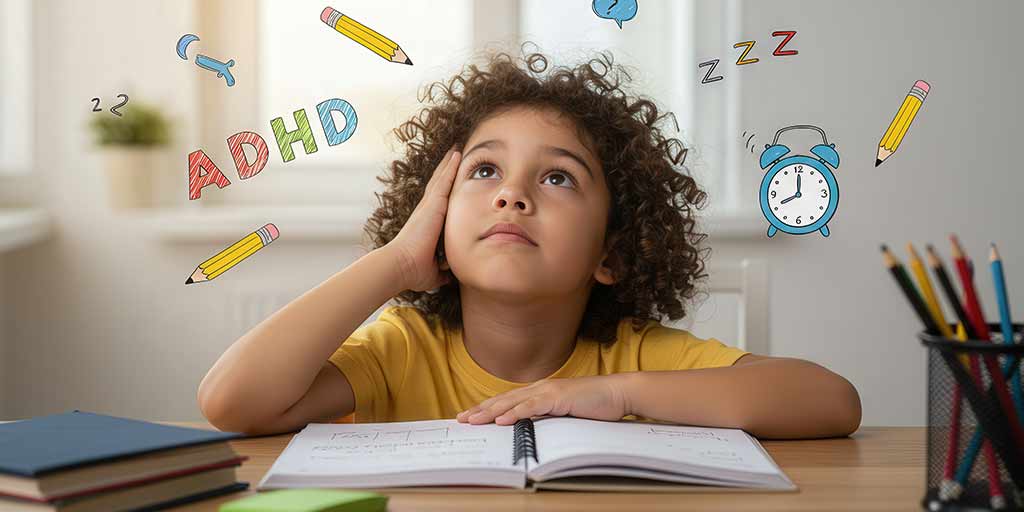
Understanding your child’s behaviour, learning patterns, and emotional responses is not always easy. Many developmental conditions such as ADHD, autism, and learning difficulties can appear similar in early years, often leading to confusion or delayed support. A child who struggles to focus, avoids certain tasks, or behaves differently in social settings may not simply be “distracted” or “slow to learn”; there may be underlying neurodevelopmental factors shaping how they think, process, and interact with the world. For parents, recognising the problem is important for providing the right support at the right time. To help eliminate confusions, in this article, we’ll explore the finer lines of common developmental conditions and common signs, so that parents can make informed decisions about their child’s wellbeing. Let’s start by understanding these disorders.
In clinical practice, many children are initially labelled as “distracted” oe “weak in studies” before an underlying developmental condition is recognised. Early identification and intervention can significantly improve a child’s developmental and academic outcomes.
What is ADHD?
Attention Deficit Hyperactivity Disorder (ADHD) is a neurodevelopmental condition that affects how a child focuses, controls impulses, and manages activity levels. It is not simply about being restless or easily distracted. The condition can influence behaviour, learning, and day to day functioning, especially in school and structured settings.
Children with ADHD may find it hard to stay attentive, sit still for long periods, or think before acting. These challenges are ongoing and can interfere with tasks such as following instructions, completing schoolwork, or staying organised. The signs usually appear in early childhood and may continue into adolescence and adulthood.
These difficulties are not occasional, they are persistent and affect functioning across multiple settings (such as home and school), and are not appropriate for the child’s developmental age.
ADHD is generally grouped into three types based on the main symptoms seen:
- Inattentive type: Difficulty focusing, frequent mistakes, easily distracted
- Hyperactive-impulsive type: Constant movement, restlessness, acting without thinking
- Combined type: A mix of both inattentive and hyperactive-impulsive symptoms
What is Autism?
Autism, also known as Autism Spectrum Disorder (ASD), is a neurodevelopmental condition that affects how a child communicates, interacts with others, and experiences the world. It is called a spectrum because the signs and their severity can vary from one child to another.
Children with autism may have differences in social interaction and communication. This can include limited eye contact, delayed speech, or difficulty understanding social cues such as facial expressions or tone of voice. Some children may prefer solitary play or may not engage in typical back and forth social interaction.
What is a Learning Difficulty?
A learning difficulty refers to challenges in acquiring specific academic skills such as reading, writing, spelling, or mathematics, despite having average or above-average intelligence. It is not linked to a child’s willingness to learn but to how their brain processes, understands, and retains information. These difficulties occur despite adequate schooling and normal intelligence.
Children with learning difficulties may find certain tasks consistently harder than their peers. For example, a child may struggle to read fluently, understand written text, write clearly, or grasp basic mathematical concepts. These difficulties are often specific rather than general, meaning a child may excel in some areas while needing support in others.
Common types of learning difficulties include:
- Dyslexia: Difficulty with reading, spelling, and language processing
- Dysgraphia: Challenges with writing, spelling, and organising thoughts on paper
- Dyscalculia: Difficulty understanding numbers, calculations, and mathematical reasoning
The signs usually become noticeable once a child starts school and is expected to engage in structured learning. With the right support, teaching methods, and early intervention, children with learning difficulties can build confidence and progress effectively in their academic journey.
How are ADHD and Autism Different From Having Learning Difficulties?
ADHD, autism, and learning difficulties can sometimes look similar, especially when a child struggles in school, but they affect very different areas of development.
ADHD is mainly linked to attention and behaviour. A child may find it hard to focus, sit still, or control impulses. The difficulty is not with understanding concepts, but with staying engaged long enough to complete tasks.
Autism affects communication and social interaction. A child may struggle to understand social cues, express thoughts clearly, or adapt to changes in routine. The challenges are more related to how a child connects with others and processes the world around them.
Learning difficulties are different because they specifically affect academic skills. A child may have trouble reading, writing, spelling, or solving math problems, even with regular practice and effort. Attention and social skills may be normal, but learning certain subjects becomes consistently challenging.
In simple terms, ADHD affects attention and self-control, autism affects communication and social interaction, and learning difficulties affect how a child learns and processes academic information. Understanding this difference can help in choosing the right kind of support for the child.
Common Signs of ADHD
Children with ADHD often show a pattern of inattention, hyperactivity, and impulsive behaviour that goes beyond what is expected for their age. These signs can affect schoolwork, daily routines, and interactions with others.
- Difficulty focusing: Trouble staying attentive during tasks or activities, especially those that require sustained effort.
- Easily distracted: Attention shifts quickly due to sounds, movements, or unrelated thoughts.
- Frequent careless mistakes: Errors in schoolwork despite understanding the task.
- Trouble following instructions: Steps may be missed or tasks left incomplete.
- Restlessness: Constant movement such as fidgeting, tapping, or inability to stay seated.
- Excessive talking: Speaking more than usual or interrupting conversations.
- Impulsive actions: Acting without thinking about consequences.
- Difficulty waiting: Struggles with turn-taking or waiting in lines.
- Disorganisation: Problems managing time, tasks, or belongings.
These signs are usually persistent and noticeable across different settings such as home and school.
Common Signs of Autism
Children with autism often show differences in communication, social interaction, and behaviour. These signs may appear early and can vary in how strongly they are seen.
- Limited eye contact: Avoids or finds it difficult to maintain eye contact during interactions.
- Delayed speech or unusual communication: Late speaking, repeating words, or using language in a different way.
- Difficulty with social interaction: Finds it hard to understand emotions, facial expressions, or social cues.
- Preference for being alone: Shows less interest in playing or engaging with others.
- Repetitive behaviours: Repeats actions such as hand movements, rocking, or lining up objects.
- Strong need for routine: Gets upset with small changes in daily activities.
- Unusual reactions to sensory input: Sensitive to sounds, lights, textures, or smells.
- Focused interests: Shows deep interest in specific topics or objects.
These signs are usually persistent and can affect how a child communicates, learns, and interacts in everyday situations.
Common Signs of Learning Difficulty
Learning difficulties mainly affect how a child understands, processes, and applies information, especially in school-related tasks. These challenges are usually specific to certain skills rather than overall intelligence.
- Trouble with reading: Difficulty recognising words, reading fluently, or understanding what is read.
- Problems with writing: Poor spelling, messy handwriting, or difficulty forming sentences.
- Difficulty with maths: Struggles with numbers, basic calculations, or understanding concepts.
- Slow learning pace: Takes longer to grasp new ideas despite repeated practice.
- Difficulty following instructions: Finds it hard to remember or carry out multi-step directions.
- Weak memory skills: Trouble recalling information such as lessons, instructions, or sequences.
- Poor organisation: Difficulty keeping track of tasks, books, or assignments.
- Avoidance of academic tasks: Shows reluctance or frustration when asked to do schoolwork.
These signs are usually persistent, noticed in classroom settings and may continue despite regular teaching and effort.
Can a Child Have More Than One Condition?
Yes, a child can have more than one condition at the same time. This overlap is medically referred to as “COMORBIDITY” and is commonly seen in developmental conditions. For example, a child with ADHD may also have a learning difficulty, or a child with autism may show signs of ADHD.
When conditions overlap, the signs can become more complex and harder to identify. A child may struggle with attention, social interaction, and academic skills all at once, which can sometimes lead to confusion or delayed diagnosis.
This is why a proper assessment is important. Looking at the child’s behaviour, development, and learning patterns in detail helps identify all underlying concerns, not just one.
What Support Options are Available for Each Condition?
The support needed depends on the child’s specific challenges, as ADHD, autism, and learning difficulties affect different areas. A combination of school support, structured routines, and professional guidance often helps manage these conditions effectively.
Support for ADHD
- Behavioural strategies: Clear rules, consistent routines, and positive reinforcement can help manage attention and behaviour
- Classroom adjustments: Seating arrangements, shorter tasks, and regular breaks can improve focus
- Skill-building support: Activities that improve organisation, time management, and self-control
Support for Autism
- Speech and communication support: Helps improve language, expression, and understanding of social cues
- Behavioural therapy: Focuses on improving social skills and reducing repetitive behaviours
- Structured environment: Predictable routines and clear instructions help reduce stress and confusion
Support for Learning Difficulties
- Remedial education: Specialised teaching methods to improve reading, writing, or maths skills
- Individualised learning plans: Adjustments in teaching style, pace, and assessment methods
- Extra academic support: Practice sessions, guided learning, and step-by-step instruction
In many cases, a child may benefit from a combination of these approaches. Early intervention significantly improves long term outcomes in all conditions.
When Should Parents be Concerned?
Some differences in behaviour and learning are a normal part of growing up, but certain signs should not be ignored if they continue over time or begin to affect daily life. These include:
- Delays compared to peers: Skills such as speaking, reading, or social interaction develop much later than expected
- Ongoing school struggles: Consistent difficulty in understanding lessons, completing tasks, or keeping up with classwork
- Behaviour affecting daily routine: Trouble following simple instructions, sitting through activities, or managing basic tasks
- Social challenges: Difficulty making friends, avoiding interaction, or not responding to social cues
- Frequent frustration or meltdowns: Strong reactions to small changes, tasks, or expectations
- Concerns raised by teachers: Repeated feedback about attention, behaviour, or learning issues in school
These signs become more important when they are seen across different settings, such as both at home and school, and do not improve with time or guidance. If you find yourself repeatedly worried about your child’s development, it is advisable to seek professional evaluation.
Consult a Specialist at Graphic Era Hospital
Every child develops at their own pace, and noticing that something may need attention is already a significant and important step. ADHD, autism, and learning difficulties are not barriers to a child’s success, but they do require the right understanding and timely support to ensure each child reaches their full potential. If these signs have been noticeable for some time, it is strongly recommended to take the next step. Consult a child psychologist or developmental paediatrician at Graphic Era Hospital to get a clear evaluation and guidance for your child.
Frequently Asked Questions
At what age can ADHD, autism, or learning difficulties be detected?
Signs can appear in early childhood, often between ages 2 and 7, but a formal assessment may happen later when challenges become more noticeable at home or school.
Can a child with one condition develop another later on?
It is possible for a child to show new challenges as they grow, such as learning difficulties emerging alongside ADHD or autism traits. Ongoing observation and evaluation help address these changes early.
Do children outgrow ADHD, autism, or learning difficulties?
These conditions may persist into adolescence or adulthood, but early support, therapy, and learning strategies can significantly improve skills and daily functioning.
How do schools usually support children with these conditions?
Many schools offer accommodations like extra time for tasks, modified teaching methods, or access to special educators to help children learn at their own pace.
Are there any screening tools parents can use at home?
While there are checklists and questionnaires available online, these are only indicators. Professional evaluation by a qualified specialist is necessary for an accurate diagnosis.
Can lifestyle or daily routines make a difference?
Structured routines, consistent schedules, and a supportive home environment can help children manage challenges better and reduce stress related to attention, behaviour, or learning.
How should parents talk to their child about these challenges?
Use simple, positive language, focus on strengths, and encourage effort rather than outcomes. This helps the child feel understood and supported without feeling singled out.
Can excessive screen time mimic ADHD symptoms?
Excessive screen exposure can reduce attention span and mimic ADHD-like behaviour, but it does not cause ADHD. A proper evaluation is required to differentiate.
















 Emergency 24×7 : 1800 889 7351