
From Speed to Accuracy: Key Benefits of a 128-Slice CT Scan
Key Takeaways
- A 128 Slice CT scanner captures multiple cross sectional images in a single rotation, enabling faster and more detailed imaging.
- Advanced features such as thin-slice imaging, rapid rotation, and 3D reconstruction improve diagnostic accuracy.
- Faster scan times reduce motion blur and improve comfort, particularly for children, older adults, and emergency cases.
- A 128 Slice CT is widely used for cardiac imaging, stroke evaluation, trauma, cancer diagnosis, and other complex conditions.
- Modern dose optimisation technology helps minimise radiation exposure while maintaining high-quality images.
- At Graphic Era Hospital, advanced 128 Slice CT imaging supports timely diagnosis and personalised treatment planning.
A CT scan is often recommended to investigate conditions such as head injuries, stroke, chest pain, persistent abdominal pain, suspected fractures, and many other medical concerns. While all CT scanners produce detailed images, the technology behind influences how fast the images are captured and the level of details they provide. A 128-slice CT scanner captures multiple thin image sections of the body in a single rotation, enabling faster scanning and clearer visualisation of internal structures. This can be particularly useful when examining moving organs such as the heart, assessing blood vessels or evaluating patients who may find it difficult to remain still for long periods. In this article, we’ll explain how a 128-slice CT scan works, when it may be recommended, its key benefits and what patients can expect during the procedure.
What is a 128 Slice CT Scanner?
A 128 Slice CT scanner is an advanced computed tomography (CT) system that uses X-rays and computer technology to create detailed cross-sectional images of the body’s internal structures. The term “128 slice” refers to its ability to capture multiple cross-sectional images in a single rotation, allowing it to acquire more imaging data than older 16-slice or 64-slice CT scanners. This enables faster image acquisition and high-quality imaging for a wide range of diagnostic examinations.
How Does a 128 Slice CT Scanner Work?
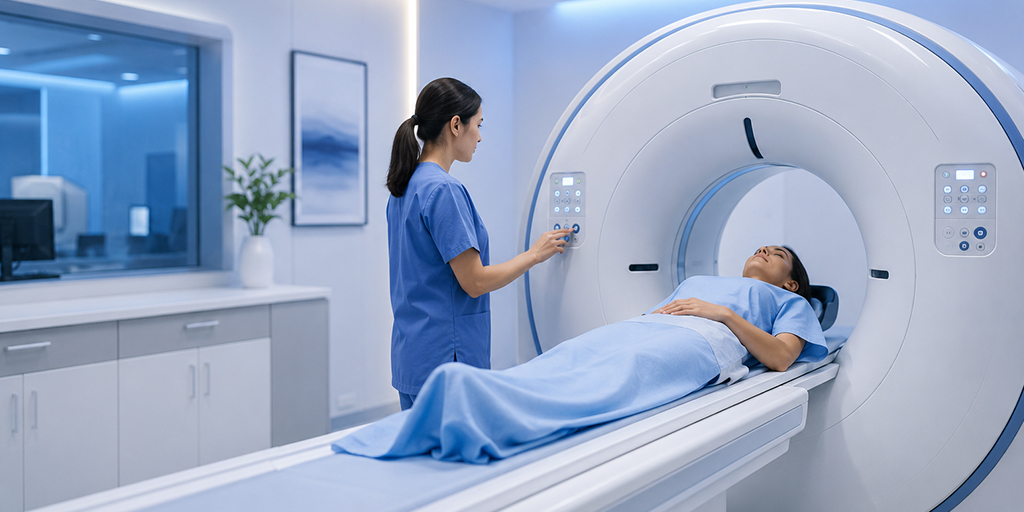
A 128 Slice CT scanner combines X-ray technology, multiple detectors, and advanced computer processing to create detailed images of the body’s internal structures. The scanning process involves three simple steps:
- X-ray images are captured: The individual lies on a motorised table that moves through the scanner while the X-ray tube rotates around the body.
- Multiple images are collected: During each rotation, 128 detector rows capture cross-sectional images from multiple angles.
- Images are reconstructed: Advanced computer software combines these images to create detailed cross-sectional and, when required, three-dimensional views of organs, bones, blood vessels, and soft tissues.
The entire scan is typically completed within seconds, enabling doctors to examine the area of concern quickly and accurately.
Features That Make a 128 Slice CT Faster and More Accurate
The speed and accuracy of a 128 Slice CT scanner are made possible by several advanced imaging technologies. Each feature plays a specific role in producing clear, detailed images while reducing scan time.
128 Detector Rows
Multiple cross-sectional images are captured in a single rotation, allowing larger areas of the body to be scanned in less time. Faster image acquisition shortens the examination, improves comfort, and reduces the likelihood of repeat scans.
Thin-Slice Imaging
The scanner captures very thin image slices, producing exceptionally clear and detailed images of the body’s internal structures. The enhanced image quality helps detect small abnormalities that may be difficult to identify with lower-resolution imaging, supporting an accurate diagnosis.
Faster Rotation Speed
The X-ray tube rotates rapidly around the body, capturing images within seconds. This reduces image blurring caused by breathing or natural body movements, resulting in clearer images and a quicker, more comfortable scanning experience.
Advanced 3D Reconstruction
Advanced software converts the captured images into detailed three-dimensional views of organs, bones, blood vessels, and other structures. These images provide a more comprehensive view of the area being examined, supporting accurate diagnosis and personalised treatment planning.
Dose Optimisation Technology
A 128 Slice CT scanner automatically adjusts radiation levels according to the area being examined and the individual’s size. Combined with faster scanning, this helps minimise radiation exposure while maintaining excellent image quality for reliable diagnostic imaging.
Clinical Applications of a 128 Slice CT Scanner
A 128 Slice CT scanner is used to evaluate a wide range of medical conditions where fast, detailed imaging is essential. It is particularly beneficial when accurate diagnosis is needed without delay.
Heart and Blood Vessel Conditions
A 128 Slice CT scanner is widely used to evaluate coronary artery disease, congenital heart defects, aneurysms, and other cardiovascular conditions. Its rapid image acquisition reduces motion caused by the beating heart, producing clear images of the heart and blood vessels that support accurate diagnosis.
Stroke and Brain Conditions
In suspected stroke or other neurological emergencies, every minute is critical. A 128 Slice CT scanner quickly captures detailed images of the brain and blood vessels, helping identify bleeding, blocked arteries, or other abnormalities so that appropriate treatment can begin without unnecessary delay.
Injuries and Medical Emergencies
Following road accidents, falls, or other serious injuries, a 128 Slice CT scanner can assess multiple parts of the body in a single examination. Its fast scanning capability helps detect fractures, internal bleeding, and organ injuries quickly, making it particularly valuable in emergency care.
Cancer Detection and Evaluation
A 128 Slice CT scanner helps detect many types of cancer by providing detailed images of tumours and surrounding tissues. It is also used to determine the size and location of a tumour, assess whether the disease has spread, monitor treatment response, and support ongoing follow-up care.
Imaging for Children and Older Adults
Children and older adults may find it challenging to remain still during a CT scan. Because a 128 Slice CT scanner completes the examination within seconds, it reduces the likelihood of motion blur, improves image quality, and makes the scanning experience more comfortable.
Access Advanced 128 Slice CT Scan Services at Graphic Era Hospital
At Graphic Era Hospital, our 128 Slice CT scanner delivers fast, high-resolution imaging to support the diagnosis of a wide range of medical conditions, from emergencies and heart disease to neurological disorders and cancer.
Supported by experienced radiologists and a multidisciplinary team of specialists, every scan is interpreted with precision to help guide timely and informed treatment decisions. Whether a CT scan has been recommended as part of a routine health check-up or for an urgent medical concern, Graphic Era Hospital offers advanced diagnostic imaging in a patient-centred environment. To benefit from advanced 128 Slice CT imaging and expert diagnostic care, schedule a consultation by calling 1800 889 7351 or booking an appointment through the hospital’s online portal.
Frequently Asked Questions
What is a 128 Slice CT Scan?
A 128 Slice CT Scan is an advanced diagnostic imaging test that uses X-rays and computer technology to create detailed cross-sectional images of the body’s internal structures. The term “128 slice” refers to the scanner’s ability to capture 128 slices in a single rotation, enabling faster image acquisition and high-resolution visualisation of organs, bones, blood vessels, and soft tissues.
How is a 128 Slice CT Scan different from a conventional CT scan?
Compared with conventional CT scanners, a 128 Slice CT scanner captures more imaging data in a single rotation, allowing it to scan larger areas of the body more quickly. It also produces thinner image slices and clearer images, making it easier for doctors to evaluate complex anatomy and detect subtle abnormalities.
Is a 128 Slice CT Scan faster?
Yes. A 128 Slice CT Scan acquires images within seconds by capturing multiple cross-sectional images in a single rotation. The shorter scan time improves patient comfort and reduces the likelihood of blurred images caused by movement or breathing.
How accurate is a 128 Slice CT Scan?
A 128 Slice CT Scan provides highly detailed images that help doctors evaluate a wide range of medical conditions with greater precision. Its advanced imaging capabilities support the detection of small abnormalities, assessment of injuries and diseases, and treatment planning. However, the overall accuracy also depends on the condition being evaluated and the expertise of the interpreting radiologist.
Is a 128 Slice CT Scan safe?
Yes. A 128 Slice CT Scan is considered safe when performed for an appropriate medical reason. Like all CT scans, it uses a controlled amount of ionising radiation. Modern 128 Slice CT scanners incorporate dose optimisation technologies to minimise radiation exposure while maintaining excellent image quality. Doctors recommend the scan only when its diagnostic benefits outweigh the potential risks.
How long does a 128 Slice CT Scan take?
The scan itself usually takes only a few seconds to a few minutes, depending on the body part being examined. However, the total appointment may take 15 to 30 minutes, particularly if contrast material is required or additional preparation is needed.
Does a 128 Slice CT Scan require contrast?
Not always. Whether contrast is required depends on the area being examined and the condition being investigated. Contrast material helps improve the visibility of certain organs, blood vessels, and tissues. The doctor or radiologist will determine if contrast is necessary before the scan.
What conditions can a 128 Slice CT Scan help diagnose?
A 128 Slice CT Scan can assist in diagnosing and evaluating a wide range of conditions, including fractures, internal injuries, stroke, heart disease, lung disorders, abdominal conditions, infections, vascular diseases, and many types of cancer. It is also commonly used to monitor disease progression and assess the effectiveness of treatment.
Is a 128 Slice CT Scan useful for heart and blood vessel imaging?
Yes. A 128 Slice CT Scan is particularly valuable for imaging the heart and blood vessels because its rapid image acquisition helps reduce motion caused by the heartbeat. It is commonly used for coronary CT angiography and the evaluation of coronary artery disease, aneurysms, and other vascular conditions.
Can a 128 Slice CT Scan detect cancer?
A 128 Slice CT Scan can help detect many types of cancer by identifying abnormal growths and assessing their size, location, and spread. It also plays an important role in cancer staging, treatment planning, and monitoring the response to therapy. A CT scan is often used alongside other investigations to confirm a diagnosis.
How should I prepare for a 128 Slice CT Scan?
Preparation depends on the type of CT scan being performed. Some scans require no special preparation, while others may require fasting for a few hours or avoiding certain medications if contrast material is being used. Individuals should inform their doctor about any allergies, kidney problems, pregnancy, or existing medical conditions before the examination. At Graphic Era Hospital, Dehradun, the radiology team provides clear pre-scan instructions to help ensure a safe and comfortable experience.


















 Emergency 24×7 : 1800 889 7351