
MRI vs CT Scan: Key Differences, Uses and Benefits
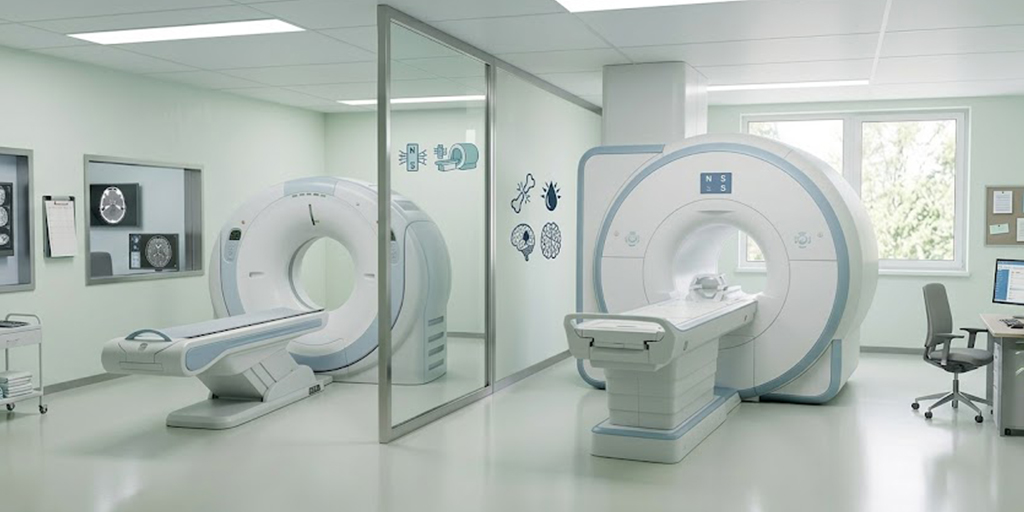
Key Takeaways
- CT scans and MRI are both widely used diagnostic imaging tests, but they serve different purposes and provide different types of clinical information.
- CT scans are commonly recommended for emergencies, bone injuries, internal bleeding, and chest and abdominal conditions, while MRI is better suited for examining soft tissues, the brain, spine, joints, and muscles.
- Neither imaging test is inherently better than the other. The most appropriate choice depends on the symptoms, suspected condition, and the area of the body being examined.
- Both CT scans and MRI are generally safe when performed for appropriate medical reasons and under the guidance of experienced radiologists.
- Choosing Graphic Era Hospital for diagnostic imaging provides access to advanced imaging technology, experienced radiologists, and specialist support for accurate diagnosis and coordinated patient care.
CT scans and MRI are two of the most commonly used cross sectional diagnostic imaging tests, helping doctors diagnose, evaluate, and monitor a wide range of medical conditions. While both provide detailed images of the body’s internal structures, each is designed for different clinical situations and offers distinct diagnostic advantages. Choosing the right imaging test depends on several factors, including the symptoms, the area being examined, and the suspected condition, making a doctor’s evaluation essential. In this blog, we’ll explain the key differences between CT scans and MRI, when each test is recommended, and why choosing a hospital-based diagnostic facility is important for accurate diagnosis and coordinated patient care.
What is a CT Scan?
A computed tomography (CT) scan is a diagnostic imaging test that uses a series of X-rays and computer technology to create detailed cross-sectional images of the body’s internal structures. Unlike a standard X-ray, which produces a single image, a CT scan combines multiple images taken from different angles to provide a detailed view of bones, organs, blood vessels, and other tissues.
CT scans are quick, non-invasive, and widely used to help doctors diagnose a variety of medical conditions, especially when timely evaluation is important. Depending on the area being examined, the scan usually takes only a few seconds to a few minutes.
A CT scan is commonly used to examine:
- Bones and joints
- The chest and lungs
- The abdomen and pelvis
- Blood vessels using CT angiography
- Internal organs for signs of injury or disease
- Coronary arteries and heart
What is an MRI?
Magnetic resonance imaging (MRI) is a diagnostic imaging test that uses a powerful magnetic field and computer technology to create detailed images of the body’s internal structures. It helps doctors examine organs, soft tissues, nerves, muscles, joints, and blood vessels in detail, supporting the diagnosis and assessment of a wide range of medical conditions. Depending on the area being examined, an MRI scan typically takes between 30 and 60 minutes.
An MRI scan is commonly used to examine:
- The brain and spinal cord
- Muscles, tendons, and ligaments
- Joints
- Internal organs, including the liver and pelvic organs, when appropriate
- Blood vessels using magnetic resonance angiography (MRA)
CT Scan vs MRI
Although CT scans and MRI are both valuable diagnostic imaging tests, they use different technologies and serve different clinical purposes. Understanding these differences can help patients better understand why a doctor recommends one test instead of the other.
| Feature | CT Scan | MRI |
| Technology | Uses X-rays and computer technology to create cross-sectional images | Uses a powerful magnetic field and computer technology to create detailed images |
| Radiation | Uses ionising radiation | Does not use ionising radiation |
| Best suited for | Bones, lungs, internal bleeding, and many emergency conditions | Soft tissues, the brain, spinal cord, muscles, ligaments, and joints |
| Image detail | Excellent for visualising bones and many internal organs | Provides highly detailed images of soft tissues and internal structures |
| Scan duration | Usually completed within a few seconds to minutes | Typically takes 30 to 60 minutes, depending on the examination |
| Emergency use | Often preferred when rapid diagnosis is needed | More commonly used for non-emergency or planned evaluations |
| Contrast agents | May use an iodine-based contrast agent for certain examinations | May use a gadolinium-based contrast agent for selected examinations |
| Cost | Generally lower | Generally higher |
Note: Neither a CT scan nor an MRI is inherently better than the other. Doctors recommend the most appropriate imaging test based on the patient’s symptoms, the area being examined, and the suspected condition.
Conditions That May Require a CT Scan
Doctors may recommend a CT scan to diagnose or evaluate conditions where detailed images of internal structures are needed for accurate assessment. It is commonly used for detecting injuries, evaluating organ-related conditions, identifying abnormalities, and supporting treatment decisions in various medical situations. A CT scan may be recommended for:
- Head injuries to detect skull fractures, bleeding, or swelling in the brain
- Suspected stroke to quickly identify bleeding or other abnormalities in the brain
- Bone fractures that require detailed imaging, especially in complex joints
- Chest and lung conditions, including infections, lung nodules, and other abnormalities
- Internal bleeding following an injury or accident
- Trauma and emergency care to assess multiple injuries affecting different parts of the body
- Certain cancers to help detect tumours, determine their size and location, and monitor response to treatment
- Imaging blood vessels of the body using contrast angiography
Conditions That May Require an MRI
Doctors may recommend an MRI to diagnose or evaluate conditions that require detailed images of soft tissues, organs, or the nervous system. It helps identify abnormalities and changes that may not be clearly visible through other imaging tests, supporting accurate diagnosis and treatment planning. An MRI may be recommended for:
- Brain and spinal cord disorders, such as stroke, epilepsy, or spinal cord abnormalities
- Joint, ligament, tendon, and muscle injuries, including damage caused by trauma or overuse
- Sports injuries affecting soft tissues, cartilage, or joints
- Herniated discs and other spinal conditions that cause back or neck pain
- Multiple sclerosis (MS) and other neurological disorders
- Tumour evaluation to assess the size, location, and extent of tumours in different parts of the body
- Selected liver and pelvic conditions, where detailed soft tissue imaging can support diagnosis and treatment planning
- Cardiac MRI for imaging the heart
Choosing Between a CT Scan and an MRI
Choosing between a CT scan and an MRI is not simply a matter of which test is better. Doctors recommend the most appropriate imaging test based on the information needed to diagnose or evaluate a specific medical condition. Several factors help determine the right choice, including:
- Symptoms and medical history: The type, severity, and duration of symptoms help doctors decide which imaging test is most suitable.
- Suspected condition: Different conditions require different imaging techniques to provide the most useful diagnostic information.
- Body part being examined: Certain areas of the body are better evaluated with one imaging test than the other.
- Urgency of diagnosis: When rapid assessment is essential, doctors may choose the imaging test that can provide results more quickly.
- Patient-specific considerations: Factors such as pregnancy, implanted medical devices, claustrophobia, kidney function, or the need for a contrast agent may influence the choice of imaging.
Rather than choosing between a CT scan and an MRI based on preference, it is important to follow your doctor’s recommendation. Selecting the most appropriate imaging test helps ensure an accurate diagnosis and supports timely treatment planning.
Preparing for a CT Scan or MRI
Most CT scans and MRI examinations require little or no special preparation. However, the instructions may vary depending on the type of examination and requirement of a contrast agent – a special dye that helps highlight certain organs, blood vessels, or tissues for clearer images. Patients may be advised to:
- Wear comfortable clothing or change into a hospital gown if required.
- Remove metal objects such as jewellery, watches, hairpins, glasses, and hearing aids before entering the imaging room.
- Avoid eating or drinking for a few hours if instructed, particularly before examinations that require a contrast agent.
- Arrive a little early to complete any necessary paperwork and pre-examination checks.
- Follow any additional instructions provided by the doctor or radiology team.
Are CT Scans and MRI Safe?
Yes. Both CT scans and MRI are generally safe and have been used for many years to diagnose a wide range of medical conditions.
That said, each imaging test has certain safety considerations. CT scans use ionising radiation, so doctors recommend them only when clinically necessary. MRI does not use radiation, but because it uses a powerful magnetic field, it may not be suitable for people with certain metal implants or medical devices. In some cases, a contrast agent may be used to produce clearer images. While contrast agents are generally safe, they may not be suitable for everyone.
At Graphic Era Hospital, doctors carefully review each patient’s medical history, symptoms, and any existing medical conditions before recommending a CT scan or MRI. The radiology team follows established safety protocols and provides appropriate guidance before, during, and after the examination to ensure the procedure is performed safely and comfortably.
Final Word
CT scans and MRI are both valuable diagnostic imaging tests that help doctors identify and evaluate a wide range of medical conditions. The most suitable imaging test depends on the symptoms, the area being examined, and the clinical information needed for an accurate diagnosis.
If a CT scan or MRI has been recommended, choosing a hospital-based diagnostic facility can help ensure timely imaging, accurate reporting, and access to experienced specialists under one roof. At Graphic Era Hospital, our experienced doctors and radiologists use advanced diagnostic technology, including a 3 Tesla MRI for exceptional soft tissue imaging and a 128-slice CT scanner for fast, high-resolution scans, enabling accurate diagnosis and personalised treatment planning.
To learn more about our diagnostic imaging services or to schedule a consultation, call our toll-free number 1800 889 7351 or book an online appointment.
Frequently Asked Questions
What is the main difference between a CT scan and an MRI?
A CT scan and MRI are both advanced diagnostic imaging tests, but they use different technologies and provide different types of information. A CT scan uses X-rays to create detailed images of bones, organs, blood vessels, and other internal structures, while an MRI uses magnetic fields to produce detailed images of soft tissues, the brain, spine, and joints. The doctor recommends the most suitable test based on the condition being evaluated and the information required for diagnosis.
Is a CT scan better than an MRI?
Neither a CT scan nor an MRI is universally better than the other. Each test has specific advantages depending on the medical situation. CT scans are often preferred for emergencies, injuries, and conditions requiring quick imaging, while MRI is commonly used when detailed images of soft tissues, nerves, or the brain are needed. The doctor decides which imaging test is most appropriate based on the patient’s symptoms and medical condition.
Which is safer: a CT scan or an MRI?
Both CT scans and MRI are generally considered safe when performed for appropriate medical reasons. A CT scan involves radiation exposure, while MRI does not use ionising radiation. However, MRI may require additional safety checks for patients with certain metal implants or medical devices. Doctors carefully review individual health factors before recommending the most suitable imaging test.
Which imaging test is better for brain, spine, or soft tissue conditions?
MRI is often preferred for evaluating the brain, spinal cord, nerves, muscles, ligaments, and other soft tissues because it provides detailed images of these structures. However, a CT scan may also be recommended in certain situations, such as emergency evaluation of head injuries or bleeding. The choice depends on the suspected condition and the urgency of diagnosis.
Are CT scans or MRI used for detecting tumours?
Both CT scans and MRI can be used in the evaluation of tumours. The choice depends on the location of the tumour, the type of information needed, and whether doctors need to assess surrounding tissues or possible spread of disease. MRI is often useful for detailed soft tissue evaluation, while CT may be used for broader imaging and treatment planning.
How long do CT scans and MRI examinations take?
The duration of a CT scan is usually shorter and may take only a few seconds to minutes, depending on the area being examined. An MRI generally takes longer, often around 30 to 60 minutes, depending on the type of examination. The doctor or radiology team will provide specific information based on the required imaging procedure.
Does a CT scan expose patients to radiation?
Yes, a CT scan uses X-rays, which involve exposure to ionising radiation. However, CT scans are performed only when medically required, and doctors consider the benefits of accurate diagnosis while recommending the test. Modern CT technology is designed to provide detailed images while using appropriate radiation levels.
Can patients with metal implants undergo an MRI?
Some patients with metal implants or medical devices may require additional evaluation before undergoing an MRI. Since MRI uses a powerful magnetic field, the doctor will review the type of implant or device to determine whether the examination can be performed safely. Patients should always inform the radiology team about any implants before the MRI.
Do CT scans and MRI require a contrast agent?
Not all CT scans and MRI examinations require a contrast agent. When needed, a contrast agent is used to improve the visibility of certain organs, blood vessels, or tissues, helping doctors obtain clearer images. The doctor decides whether contrast is required based on the purpose of the examination and the patient’s health condition.
How do doctors decide whether a CT scan or MRI is needed?
Doctors consider several factors before recommending a CT scan or MRI, including symptoms, the suspected condition, the body part being examined, and how quickly results are needed. The goal is to choose the imaging test that provides the most useful information for accurate diagnosis and appropriate treatment planning.
Can a patient request an MRI instead of a CT scan?
Patients can discuss their concerns and preferences with the doctor, but the choice between a CT scan and MRI should be based on medical requirements rather than personal preference. Doctors recommend the most suitable imaging test after considering the condition being evaluated, safety factors, and the information needed for diagnosis.
Where can I get a CT scan or MRI in Dehradun?
For reliable diagnostic imaging services, choosing a hospital with advanced technology and experienced specialists is important. Graphic Era Hospital, Dehradun, provides comprehensive radiology services with advanced imaging facilities and experienced radiologists to support accurate imaging, timely reporting, and coordinated patient care. The hospital also offers diagnostic services, including imaging support as part of comprehensive evaluations such as a full body health check-up.


















 Emergency 24×7 : 1800 889 7351