Stress Awareness Month 2026: It is Time to Be the Change
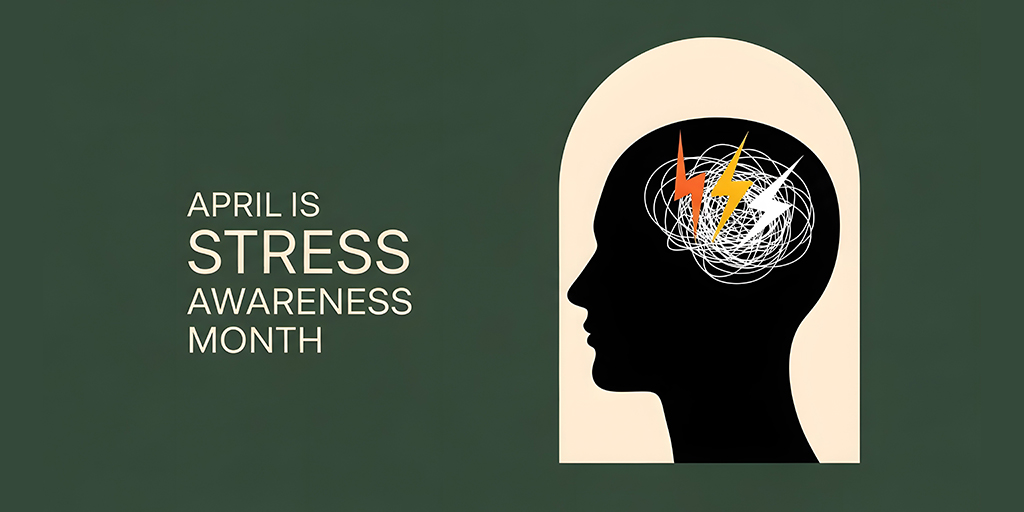
April is Stress Awareness Month. This year’s theme, #BeTheChange, asks one direct question: now that you are aware, what will you actually do?
Stress at a Glance
- What it is: The body and mind’s response to pressure, perceived threat, or demand. Normal in short bursts, damaging when sustained.
- The signs: Persistent headaches, disrupted sleep, irritability, difficulty concentrating, fatigue, and a racing heart that has nothing to do with exercise.
- Why it matters: Chronic stress is not a mood. It is a medical risk factor linked to heart disease, weakened immunity, digestive disorders, anxiety, and depression.
- Act on it: If stress has become your baseline rather than an occasional response, it is time to speak to someone. A psychologist or psychiatrist can help, and asking for that help is itself an act of change.
Stress is Not a Personality Trait. It is a Health Issue.
April is Stress Awareness Month, observed every year since 1992 to bring honest, open conversations about stress into homes, workplaces, and clinics. The 2026 theme, #BeTheChange, builds on that tradition with a sharper edge. Awareness is no longer enough. The call this year is for action that is personal, deliberate, and beginning now.
In India, that call is particularly urgent. A 2021 survey across 13 countries found that 91% of Indian respondents reported that stress significantly affected their lives, well above the global average of 80%. Work pressure, financial anxiety, caregiving responsibilities, and the lingering psychological weight of recent years have combined to make stress one of the most widespread and most under-addressed health concerns in the country.
Most people manage it silently. They push through. They tell themselves it is temporary, that everyone feels this way, that it will ease when the deadline passes or the situation settles. Sometimes it does. Often, it does not, and the body keeps the score long after the mind has moved on.
What is Stress and What Does it Do to the Body?
Stress is the body’s response to any demand it perceives as challenging or threatening. When the brain registers a stressor, a difficult conversation, a looming deadline, a financial worry, it triggers the release of cortisol and adrenaline, the hormones that prepare the body for action. Heart rate rises. Muscles tighten. Digestion slows. Focus sharpens.
This is the stress response, and in short doses, it is useful. It is what helps a person perform under pressure, respond quickly in an emergency, or push through a difficult moment. The problem arises when the stressor does not resolve, or when there are too many stressors arriving without adequate recovery between them. The body stays in a state of alert that it was never designed to maintain indefinitely. Over time, that sustained activation begins to cause damage.
Good to Know: Stress is not always caused by obviously difficult circumstances. Positive life events, such as a new job, a wedding, a relocation, trigger the same biological response. It is not the event itself but the body’s perception of demand that determines the stress response.
Common Causes of Stress in Daily Life
Stress does not have a single source, and for most people it is the accumulation of multiple pressures rather than one overwhelming event. The following are among the most common contributors:
Work Pressure and Deadlines: Sit at the top of the list for most working adults in India. Long hours, unclear expectations, difficult managers, job insecurity, and the blurring of work and personal time, particularly since the normalisation of remote and hybrid work, all sustain a level of occupational stress that many people no longer recognise as abnormal because it has become constant.
Financial Concerns: These produce some of the most persistent and least discussed stress. Anxiety about income, debt, EMIs, healthcare costs, and future security engages the stress response continuously, with no clear point of resolution.
Family and Relationship Pressures: Caregiving for elderly parents, marital or relationship conflict, parenting demands, and the particular stress of managing multiple roles simultaneously all contribute significantly. This pattern disproportionately affects women in India.
Health Concerns: Personal illness and anxiety about the health of family members generate significant sustained stress, compounded in many cases by the financial weight of medical care.
Lifestyle and Sleep Disturbances: These both cause and worsen stress in a cycle that is difficult to interrupt without deliberate intervention. Poor sleep elevates cortisol. Elevated cortisol disrupts sleep. Without adequate rest, the body’s capacity to regulate stress diminishes with each passing day.
Symptoms of Stress You Should Not Ignore
The body signals stress long before the mind acknowledges it. The following symptoms, particularly when they appear in combination or persist over weeks, warrant attention rather than normalisation.
| Symptom | What it May Indicate |
| Frequent headaches, especially tension headaches | Sustained muscle tension in the neck, scalp, and jaw |
| Persistent fatigue despite adequate sleep | Cortisol disrupting restorative sleep cycles |
| Irritability or mood swings | Stress hormones affecting emotional regulation |
| Difficulty concentrating or forgetfulness | Chronic stress impairing prefrontal cortex function |
| Disrupted sleep: difficulty falling asleep or waking frequently | Elevated cortisol and adrenaline at night |
| Increased heart rate or chest tightness | The autonomic nervous system in sustained activation |
| Digestive complaints: nausea, bloating, changes in bowel habit | The gut-brain axis responding to psychological stress |
| Skin flare-ups, hair loss | Inflammatory responses triggered by chronic cortisol |
| Social withdrawal or loss of interest in activities | Early indicators of stress moving toward depression |
Note: No single symptom confirms stress as the cause. Many of these overlap with other medical conditions. If symptoms persist, a clinical evaluation helps distinguish stress-related presentations from underlying health issues that require separate treatment.
How Chronic Stress Damages Your Health
Short-term stress resolves. Chronic stress, sustained, unmanaged, and without adequate recovery, does not. Its effects accumulate across multiple organ systems, and by the time the damage becomes visible, it has often been building for months or years.
Cardiovascular Risk: This is among the most documented consequences of chronic stress. Sustained elevated cortisol and adrenaline raise blood pressure, increase heart rate, promote inflammation in blood vessel walls, and contribute to the clustering of risk factors, including hypertension, dyslipidaemia, and insulin resistance, that drive heart disease and stroke. Stress does not cause a heart attack in isolation, but it is a genuine and modifiable risk factor.
Immune Suppression: Prolonged cortisol exposure suppresses the inflammatory response the immune system depends on. People under chronic stress fall ill more frequently, recover more slowly, and show a poorer response to vaccines. The immune system, like the stress response, is designed for short-term activation, not indefinite deployment.
Digestive Disruption: The gut and brain communicate continuously through the vagus nerve and the enteric nervous system. Stress slows digestion, alters gut motility, changes the gut microbiome, and worsens conditions such as irritable bowel syndrome, acid reflux, and inflammatory gut disease. This is not psychosomatic. It is a direct physiological pathway.
Mental Health Consequences: These are the most direct and often the most disabling outcomes of chronic stress. Stress is not the same as anxiety or depression. Stress is a response to external pressure, anxiety is a disorder of anticipation, and depression is a clinical condition. Sustained unmanaged stress, however, significantly raises the probability of developing both.
Effective Ways to Manage and Reduce Stress
The 2026 theme, #BeTheChange, is a prompt to move from acknowledging stress to actively doing something about it. The following strategies have an evidence base and are practical for daily Indian life.
Physical Activity: This is one of the most consistently effective stress management tools available. Exercise reduces cortisol, releases endorphins, improves sleep quality, and builds long-term resilience against stress. It does not need to be intensive. A 30-minute walk five days a week produces measurable benefits.
Mindfulness and Breathing Techniques: These interrupt the stress response by activating the parasympathetic nervous system, the body’s rest and digest mode. Diaphragmatic breathing, progressive muscle relaxation, and brief mindfulness practices are accessible, free, and effective. Apps and guided audio make them practical for busy schedules.
Sleep as a Non-Negotiable: Sleep is often the first thing sacrificed under stress and the most important thing to protect. A consistent sleep schedule, a screen-free wind-down routine, and an environment that supports rest are foundational. Sleep deprivation amplifies the stress response and reduces the capacity to regulate emotion and make sound decisions.
Setting Boundaries: At work, in relationships, and with one’s own time, boundaries are not a luxury. They are a skill that directly reduces the volume of stressors entering daily life. This includes learning to say no to demands that exceed capacity, managing digital availability, and protecting time for recovery.
Social Connection: This is one of the most powerful buffers against stress. Talking to someone trusted, whether a friend, family member, or professional, reduces the physiological stress response measurably. Isolation, conversely, amplifies it.
Balanced Nutrition: A balanced diet supports the body’s stress response systems. Regular meals, adequate protein, and a diet rich in vegetables, whole grains, and healthy fats sustain the neurotransmitter production that mood and resilience depend on. Caffeine and alcohol, both commonly used as stress coping mechanisms, disrupt sleep and worsen anxiety over time.
Tip: Do not wait for stress to become a crisis before intervening. Small, consistent changes compound over time in the same way that unmanaged stress does: a 20-minute walk, a boundary protected, a conversation started.
When to Seek Professional Help
Self-management strategies work well for moderate, situational stress. They are not sufficient for chronic stress that has crossed into clinical territory. Seek professional support if any of the following apply:
- Stress has persisted for more than several weeks without relief despite self-care efforts
- Symptoms, such as insomnia, fatigue, irritability, physical complaints, are affecting work, relationships, or daily function
- You are using alcohol, substances, or other avoidance behaviours to cope
- Feelings of hopelessness, worthlessness, or inability to experience pleasure have appeared alongside stress
- Anxiety has become disproportionate, persistent, or difficult to control
- You are experiencing physical symptoms, such as chest tightness, palpitations, persistent headaches, that a doctor has found no medical cause for
A psychologist offers structured talking therapies, such as cognitive behavioural therapy, stress management programmes, and psychoeducation, to help identify patterns and build sustainable coping skills. A psychiatrist is a medical doctor who can assess, diagnose, and treat stress-related disorders including anxiety and depression, including where medication is part of the appropriate management plan. The two often work together, and knowing which to approach first is something a general practitioner or our clinical team can help clarify.
At Graphic Era Hospital, our Psychiatry and Clinical Psychology departments in Dehradun offer both pathways, with specialists experienced in stress-related presentations across all age groups.
To consult a psychiatrist or clinical psychologist, or to schedule an evaluation, call 1800 889 7351 (24×7).
#BeTheChange Starts With One Decision
Stress Awareness Month exists because awareness alone changes nothing. The awareness has to become a decision – to sleep better, to set a boundary, to book an appointment, to tell someone how you are actually doing.
In a country where 91% of adults report being significantly affected by stress, and where mental health still carries enough stigma to make most people suffer in silence, choosing to act is itself a form of courage. It does not require a dramatic overhaul. It requires one honest step, taken today, and then another one tomorrow.
That is what #BeTheChange means in practice. Not a movement. A decision.
If stress has stopped feeling temporary and started feeling like the permanent background of your life, this month is the right time to change that.
Frequently Asked Questions
Is stress the same as anxiety?
No. Stress is a response to an identifiable external pressure, such as a deadline, a conflict, a financial worry. It typically resolves when the pressure does. Anxiety is a clinical condition characterised by persistent worry or fear that is disproportionate to the situation or continues in the absence of an identifiable trigger. Chronic stress can, over time, develop into an anxiety disorder, which is one reason managing stress early matters.
Can stress cause physical health problems?
Yes, and the evidence is extensive. Chronic stress raises blood pressure, suppresses immune function, disrupts digestion, impairs sleep, and significantly increases the risk of cardiovascular disease and depression. The physical consequences of unmanaged long-term stress are not secondary effects. They are direct physiological outcomes of sustained hormone dysregulation.
How do I know if my stress needs professional attention?
If stress is persistent, lasting weeks rather than days, and is affecting your sleep, concentration, relationships, or physical health despite your own efforts to manage it, professional support is appropriate. You do not need to be in crisis to see a psychologist or psychiatrist. Earlier intervention consistently produces better outcomes than waiting until the situation becomes unmanageable.
What is the difference between a psychologist and a psychiatrist?
A psychologist is trained in psychological assessment and therapy, including cognitive behavioural therapy, counselling, and other evidence-based talking therapies. A psychiatrist is a medical doctor who specialises in mental health and can prescribe medication where appropriate. For stress-related presentations, a psychologist is often the first point of contact. Where stress has progressed to clinical anxiety or depression, a psychiatrist may be involved in assessment and medication management.
Can lifestyle changes alone manage stress effectively?
For mild to moderate stress, yes. Regular exercise, consistent sleep, balanced nutrition, and social connection produce meaningful and measurable reduction in stress. For chronic, severe, or clinically significant stress, lifestyle changes are supportive but not sufficient on their own. Professional intervention, whether psychological, psychiatric, or both, provides the structured framework that lifestyle changes alone cannot replace.

















 Emergency 24×7 : 1800 889 7351