
Are You Getting Enough Vitamin C? Signs of Deficiency, Scurvy, and How to Restore Healthy Levels
Vitamin C Deficiency at a Glance:
- What It Means: Vitamin C deficiency occurs when the body does not get enough Vitamin C from the diet over time. Since the body cannot produce or store it in large amounts, daily intake is important.
- Why It Matters: Deficiency can develop gradually over 4 to 12 weeks, often before clear symptoms appear. By the time signs become noticeable, the body’s Vitamin C levels may already be low.
- Common Signs: Watch for persistent fatigue, swollen or bleeding gums, slow wound healing, easy bruising, dry or rough skin, joint pain, and changes in hair texture.
- What Scurvy Means: Scurvy is the severe stage of prolonged Vitamin C deficiency. It is preventable and usually improves quickly with timely treatment and proper nutritional support.
- When to Act: If these signs seem familiar, consult a qualified dietitian for a dietary assessment and personalised guidance before symptoms worsen.
Vitamin C deficiency may not seem like an everyday concern, but recent clinical reports show that it still deserves attention. As per the reports, Vitamin C deficiency and even scurvy continue to be seen in modern medical practice, especially among people with limited fruit and vegetable intake, restrictive diets, smoking habits, alcohol dependence, food insecurity, or conditions that affect nutrient absorption.
The challenging part is that the early signs of Vitamin C deficiency are easy to miss. Tiredness, weak gums, frequent bruising, slow wound healing, or body aches may seem ordinary at first and may be blamed on stress, age, or a busy routine.
In India, everyday cooking habits can add another layer to the problem. Vitamin C is water-soluble and sensitive to heat, which means prolonged boiling, reheating, and overcooking vegetables can reduce how much Vitamin C the body actually receives. The good news is that Vitamin C deficiency is preventable and often correctable. In this blog, we’ll look at the signs of Vitamin C deficiency, how it can progress to scurvy, who may be at higher risk, and how healthy Vitamin C levels can be restored safely.
What is Vitamin C and Why Does the Body Need it?
Vitamin C, also known as ascorbic acid, is a water-soluble vitamin and one of the body’s important antioxidants. Unlike many mammals, humans cannot make Vitamin C on their own because of an evolutionary loss of the gene needed for its production. This means the body must get Vitamin C regularly through food, and in some cases, supplementation.
Because Vitamin C is water-soluble, the body does not store it in large amounts. Any excess that the body does not use is generally passed out through urine. This is why regular dietary intake is important.
One of Vitamin C’s most important roles is collagen synthesis. Collagen is a structural protein that helps maintain the skin, blood vessel walls, gums, cartilage, bones, and healing wounds. Without enough Vitamin C, the enzymes involved in collagen formation cannot work properly. This helps explain why deficiency can lead to symptoms such as bleeding gums, easy bruising, slow wound healing, joint pain, dry skin, and general weakness.
Vitamin C also supports immune function, helps the body absorb iron from plant-based foods, contributes to the production of certain chemical messengers in the nervous system, including norepinephrine, and helps protect cells from oxidative damage.
The recommended daily intake for adults is 75 mg for women and 90 mg for men. Requirements are higher during pregnancy, around 85 mg daily, and breastfeeding, around 120 mg daily. People who smoke need an additional 35 mg of Vitamin C per day because smoking increases oxidative stress in the body.
Good to Know: Since Vitamin C is water-soluble, excess amounts are generally excreted rather than stored. This makes daily intake important, unlike fat-soluble vitamins such as A, D, E, and K, which can accumulate in body fat and the liver. However, very high supplemental doses should be taken only with medical guidance, as they may cause side effects in some people.
What Causes Vitamin C Deficiency?
Vitamin C deficiency develops when the body does not receive enough Vitamin C over time, when absorption is reduced, or when the body’s requirement increases. The causes are often more varied than people realise.
Inadequate Dietary Intake: This is the primary cause of Vitamin C deficiency. Diets low in fresh fruits and vegetables, whether due to food preferences, food insecurity, seasonal availability, or limited dietary variety, may not provide enough Vitamin C even when overall calorie intake appears adequate.
Cooking and Storage Losses: Vitamin C is water-soluble and sensitive to heat, oxygen, and prolonged storage. Long cooking times, extended boiling, and repeated reheating can reduce the Vitamin C content of food. Boiling vegetables for a long time may also cause Vitamin C to leach into the cooking water. This is especially relevant in the Indian dietary context, where vegetables are often cooked at high heat or for longer durations.
Smoking: Cigarette smoke increases oxidative stress in the body, which can reduce Vitamin C levels more quickly. Smokers need about 35 mg more Vitamin C per day than non-smokers. Even with similar dietary intake, people who smoke may have lower Vitamin C levels because their bodies use more of it to counter oxidative stress.
Alcohol Dependence: Chronic alcohol use can contribute to Vitamin C deficiency in more than one way. It may reduce dietary quality, impair absorption, and increase nutrient losses through urine. When poor dietary intake and reduced absorption occur together, deficiency can develop more quickly.
Malabsorption Conditions: Conditions that affect the digestive system, such as Crohn’s disease, ulcerative colitis, celiac disease, and other inflammatory or malabsorptive disorders, may reduce the body’s ability to absorb Vitamin C effectively. People on long-term dialysis may also be at higher risk because water-soluble vitamins can be lost during treatment and dietary restrictions may limit intake.
Restrictive Diets: Fad diets, very low-calorie diets, eating disorders, or eating patterns that exclude fruits and vegetables can lead to low Vitamin C intake. Infants fed inappropriate diets, such as boiled cow’s milk without suitable Vitamin C-containing foods or supplements, may also be at risk because heat can reduce the already limited Vitamin C content.
Increased Physiological Demand: Vitamin C requirements may increase during pregnancy, breastfeeding, major surgery, severe illness, infections, burns, or physical trauma. If intake does not rise during these periods, deficiency may be more likely, especially when appetite or diet quality is also affected.
Note: Early symptoms of Vitamin C deficiency can begin after several weeks of inadequate intake, often around 4 to 12 weeks. These symptoms may be vague at first, such as fatigue, weakness, reduced appetite, low mood, or irritability. Because the early signs are non-specific, deficiency is often missed until more noticeable symptoms such as bleeding gums, easy bruising, or slow wound healing appear.
Early Signs of Vitamin C Deficiency: What to Watch For
The early signs of Vitamin C deficiency can appear weeks before the condition becomes severe. They are often easy to miss because each symptom, on its own, may seem minor or may be explained away as stress, poor sleep, ageing, dental issues, or a busy routine. In many cases, it is the pattern of symptoms, rather than one single sign, that points towards a possible nutritional cause.
The following signs may occur as the body’s Vitamin C levels fall and collagen-dependent tissues such as the skin, gums, blood vessels, joints, and wound tissue become affected.
| Sign | Why It Happens | When It May Appear |
| Persistent fatigue and irritability | Vitamin C supports processes involved in energy production, including carnitine synthesis. Low levels may contribute to tiredness, weakness, low mood, or irritability. | Early, often within weeks of depletion |
| Dry, rough, or bumpy skin | Reduced collagen support and changes around hair follicles can make the skin feel rough, dry, or bumpy. | Early to moderate deficiency |
| Corkscrew or coiled body hair | Vitamin C deficiency can affect normal hair shaft formation, leading to twisted or coiled hairs, which are considered a distinctive sign of scurvy. | Early to moderate deficiency |
| Slow wound healing | Collagen is essential for tissue repair. When Vitamin C is low, wounds may take longer to close and heal. | Moderate deficiency |
| Easy bruising | Weakened blood vessel walls can make small blood vessels more fragile, allowing blood to leak into surrounding tissue after even minor impact. | Moderate deficiency |
| Swollen or bleeding gums | Low collagen support in gum tissue can make the gums fragile, swollen, inflamed, and more likely to bleed. | Moderate to severe deficiency |
| Joint pain and tenderness | Collagen depletion can affect cartilage, connective tissue, and blood vessels around the joints, leading to pain or tenderness. | Moderate to severe deficiency |
| Hair loss and splitting hair | Changes in hair shaft structure and reduced support around hair follicles may contribute to hair breakage, splitting, or shedding. | Moderate deficiency |
| Poor appetite and weight loss | As deficiency progresses, it may affect overall health, appetite, energy levels, and metabolism. | Moderate to severe deficiency |
Good to Know: Bleeding gums are often linked to dental problems, but they may also be a sign of Vitamin C deficiency, especially when they occur along with easy bruising, fatigue, poor wound healing, or a diet low in fresh fruits and vegetables. If gums bleed regularly during brushing despite otherwise adequate oral care, it may be worth discussing both dental health and nutrition with a healthcare professional.
What is Scurvy and How Does it Develop?
Scurvy is the severe clinical form of prolonged Vitamin C deficiency. It develops when the body’s Vitamin C levels remain very low for a sustained period, affecting collagen formation and weakening tissues that depend on collagen for strength and repair. Blood Vitamin C levels below about 11 micromol/L are commonly used to indicate deficiency, but diagnosis also depends on symptoms, dietary history, risk factors, and clinical assessment.
Although scurvy has been recognised since ancient Greek and Egyptian times, it is not only a disease of the past. Sporadic cases continue to be reported in modern medical practice, especially among people with poor dietary intake, food insecurity, alcohol dependence, restrictive eating patterns, malabsorption, chronic illness, or increased nutritional needs. In India, Vitamin C deficiency has also been documented in vulnerable groups, including older adults and children with inadequate or restricted diets, making it a present-day nutritional concern rather than only a historical condition.
The main problem in scurvy is impaired collagen formation. Vitamin C acts as a cofactor for enzymes such as prolyl hydroxylase and lysyl hydroxylase, which help form and stabilise collagen. When Vitamin C is severely low, collagen is not produced or maintained properly. Since collagen is present in the skin, gums, blood vessels, bones, cartilage, joints, and healing wounds, the effects can appear across the body.
Common Symptoms of Scurvy
The symptoms of scurvy reflect this widespread weakening of collagen-dependent tissues across the body:
Gum Problems: The gums may become swollen, tender, spongy, purple, and prone to bleeding, sometimes even without brushing. As scurvy progresses, gum tissue can deteriorate further, and teeth may become loose. Tooth loss is a late sign of untreated scurvy.
Skin Bleeding and Bruising: Classic skin signs include corkscrew hairs, perifollicular haemorrhages, which are tiny areas of bleeding around hair follicles, and widespread bruising. In advanced cases, purpura or larger areas of bleeding under the skin may appear on the limbs or trunk.
Severe Joint Pain: Fragile blood vessels and weakened connective tissue can lead to bleeding around or into joints, causing pain, swelling, tenderness, and restricted movement. In children, this may appear as severe leg tenderness or reluctance to move.
Extreme Fatigue and Weakness: Early Vitamin C deficiency may cause tiredness, but scurvy can lead to much more severe weakness, low energy, and reduced ability to carry out daily activities.
Poor Wound Healing: Collagen is essential for wound repair. In scurvy, new wounds may heal slowly, and previously healed wounds may reopen because the tissue support is weakened.
Anaemia: Anaemia is common in scurvy and may occur for several reasons. Vitamin C helps the body absorb non-haem iron from plant-based foods, so deficiency can worsen iron deficiency. Bleeding from fragile blood vessels may also contribute. This is why, when anaemia is suspected along with signs of poor nutrition, both iron status and Vitamin C intake may need to be assessed.
Symptoms in Children: Scurvy may cause bone pain, growth-related problems, severe tenderness of the lower limbs, and reluctance to stand, walk, or be handled. Infants may lie still with the hips and knees bent because movement can be painful.
Note: With appropriate treatment, many symptoms of scurvy begin to improve within days, while full recovery may take several weeks to a few months depending on severity. Scurvy is preventable and usually reversible when recognised early and treated with adequate Vitamin C intake under medical guidance.
Who is Most at Risk of Vitamin C Deficiency?
Vitamin C deficiency can affect anyone whose intake remains low over time, but some groups have a higher risk because of reduced intake, increased requirements, impaired absorption, or greater nutrient losses. These groups may benefit from early dietary assessment and, where clinically appropriate, nutritional monitoring.
Elderly Adults: Older adults may be at higher risk because of reduced appetite, limited dietary variety, difficulty chewing, reduced mobility, financial constraints, or limited access to fresh fruits and vegetables. Those living alone may be especially vulnerable if cooking and meal planning become irregular.
Smokers: People who smoke need more Vitamin C because tobacco smoke increases oxidative stress in the body. Smokers require about 35 mg more Vitamin C per day than non-smokers, and they may have lower Vitamin C levels even when their diet appears reasonably balanced.
People with Alcohol Dependence: Chronic alcohol use can increase the risk of Vitamin C deficiency by reducing dietary quality, affecting absorption, and increasing nutrient losses through urine. Poor appetite and limited fruit and vegetable intake can add to the risk.
Individuals with Malabsorption Conditions: Conditions such as Crohn’s disease, celiac disease, ulcerative colitis, and other inflammatory or malabsorptive bowel disorders may reduce the body’s ability to absorb Vitamin C effectively, even when intake is adequate.
Infants on Inadequate Diets: Infants may be at risk if they are given inappropriate diets, such as boiled cow’s milk without suitable complementary foods or supplementation. Exclusively breastfed infants may also be at risk if the mother is severely Vitamin C deficient or if complementary feeding after six months does not include Vitamin C-rich foods.
People Following Restrictive Diets: Fad diets, very low-calorie diets, weight loss programmes that eliminate food groups, and eating disorders that restrict fresh fruits and vegetables can all increase the risk of Vitamin C deficiency.
Pregnant and Breastfeeding Women with Poor Dietary Intake: Vitamin C requirements increase during pregnancy and breastfeeding. If these increased needs are not met through diet or medically advised supplementation, deficiency may develop more easily.
Tip: Older adults living alone are an important risk group that is often overlooked. Reduced appetite, limited motivation to cook, financial constraints, dental problems, reduced mobility, and social isolation can all lead to diets that are low in fresh fruits and vegetables. Families and caregivers can help by checking whether elderly relatives are eating Vitamin C-rich foods regularly, rather than waiting for symptoms such as fatigue, bruising, bleeding gums, or poor wound healing to appear.
How is Vitamin C Deficiency Diagnosed?
Vitamin C deficiency is usually diagnosed through a combination of clinical assessment, dietary history, risk-factor evaluation, physical examination, and, when available, blood testing. Laboratory testing can help confirm the diagnosis, but in many settings, doctors may first suspect deficiency based on symptoms and dietary patterns.
Clinical Assessment and Dietary History: A clinician or dietitian will usually ask about symptoms, food intake, cooking habits, medical history, lifestyle factors, and how long the symptoms have been present. Signs such as bleeding gums, perifollicular haemorrhages, corkscrew hairs, easy bruising, poor wound healing, and fatigue may raise strong suspicion of Vitamin C deficiency, especially in someone whose diet is low in fresh fruits and vegetables or who has known risk factors.
Plasma Vitamin C Level: A blood test measuring plasma ascorbic acid can help confirm Vitamin C deficiency. Plasma Vitamin C levels below about 11 micromol/L are commonly used to indicate deficiency. Very low levels, along with typical symptoms and risk factors, may support a diagnosis of scurvy. Leukocyte Vitamin C levels may reflect tissue stores more closely, but this test is less commonly available and requires specialised laboratory support.
Complete Blood Count: A complete blood count may be advised to check for anaemia, which can occur along with Vitamin C deficiency. This may happen because Vitamin C supports the absorption of non-haem iron from plant-based foods, while bleeding from fragile blood vessels may also contribute in some cases. Identifying both Vitamin C deficiency and iron deficiency can help guide a more complete treatment plan.
Dietary Recall Assessment: A structured dietary assessment by a dietitian can help estimate regular Vitamin C intake, compare it with daily requirements, identify gaps in the diet, and build a personalised correction plan. This may include changes in food choices, cooking methods, meal timing, and supplementation if required.
In Children: In children with suspected scurvy, X-rays may be used when bone pain, tenderness, limping, or refusal to walk is present. Severe deficiency may show characteristic bone changes, such as the Frankel line and generalised osteopenia or osteoporosis, which can support the clinical diagnosis.
The Best Food Sources of Vitamin C: An Indian Diet Focus
Vitamin C is found in many fruits and vegetables, but preventing deficiency is not only about eating “some vegetables.” It also depends on how often Vitamin C-rich foods are included, whether they are eaten fresh, and how they are cooked. This is especially important in Indian diets, where many vegetables are cooked for a long time, reheated, or boiled, which can reduce their Vitamin C content.
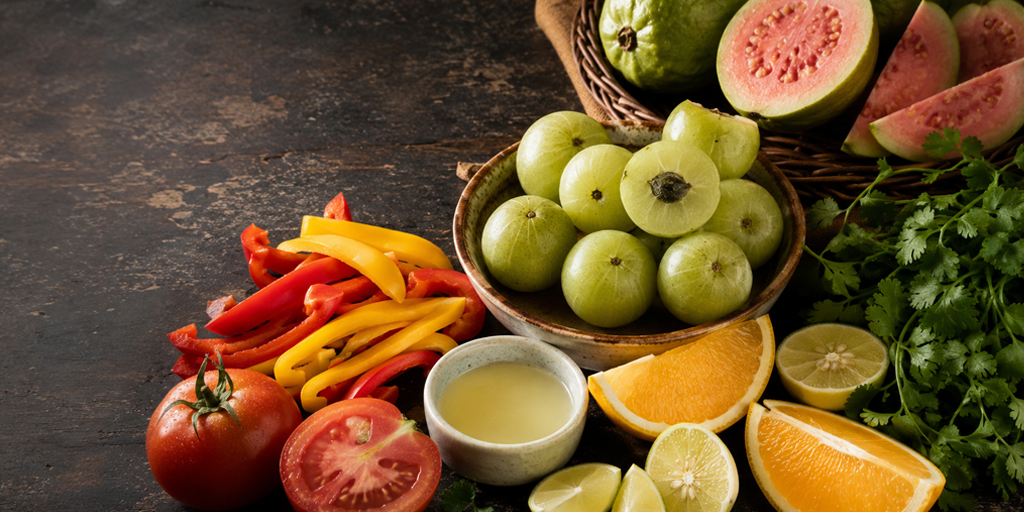
India has several excellent natural sources of Vitamin C, including amla, guava, citrus fruits, papaya, capsicum, tomatoes, green leafy vegetables, and fresh herbs. Adding even one or two of these foods daily can make a meaningful difference.
| Food | Approximate Vitamin C per 100 g | Practical Note |
| Amla, Indian gooseberry | Around 450 to 600 mg | One of the richest natural Vitamin C sources commonly eaten in India. Best consumed fresh, as chutney, or added after cooking. Amla candy and murabba may contain added sugar, so they should not be treated as the same as fresh amla. |
| Guava | Around 220 to 230 mg | One of the most affordable high-Vitamin-C fruits in India. One medium guava can provide more Vitamin C than an orange. |
| Yellow or red bell pepper, capsicum | Around 125 to 180 mg | Yellow capsicum is usually higher in Vitamin C than red capsicum, but both are excellent sources. Best eaten raw in salads, raita, sandwiches, or lightly sautéed rather than overcooked. |
| Kiwi | Around 90 mg | A good source of Vitamin C, though less affordable and less widely used than guava or amla in many Indian households. |
| Papaya, ripe | Around 60 mg | Ripe papaya is a useful everyday source of Vitamin C and is easy to include as a breakfast or snack fruit. The earlier claim that raw papaya has more Vitamin C than ripe papaya should be avoided unless a specific food-composition table is being cited for that comparison. |
| Strawberries | Around 55 to 60 mg | A good seasonal source when fresh and locally available. Best eaten fresh rather than in sweetened desserts or processed forms. |
| Orange | Around 50 to 55 mg | A reliable everyday source. Eating the whole fruit is preferable to packaged juice because it also provides fibre and avoids added sugar. |
| Broccoli | Around 50 to 90 mg | Raw broccoli is high in Vitamin C, but cooking reduces some of it. Light steaming generally preserves more Vitamin C than boiling. |
| Tomatoes | Around 15 to 25 mg | Tomatoes are not the richest source, but because they are used so often in Indian meals, they can still contribute to daily intake, especially when eaten raw in salads or added toward the end of cooking. |
| Lemon juice | Around 50 mg per 100 ml | Best added after cooking, such as over dal, poha, sabzi, sprouts, salads, or chana, because heat can reduce Vitamin C. Lemon also helps improve absorption of non-haem iron from plant-based foods. |
| Fresh coriander leaves | Around 130 mg | Often used only as garnish, but it can add useful Vitamin C when added fresh after cooking. Avoid adding it too early while the dish is still cooking. |
Tip: Vitamin C is water-soluble and heat-sensitive. Long boiling, prolonged cooking, and repeated reheating can reduce the amount retained in food, and boiling may cause Vitamin C to leach into the cooking water. To improve daily intake, include at least one fresh Vitamin C-rich food, such as guava, amla, orange, papaya, capsicum, tomato salad, sprouts with lemon, or fresh coriander, every day. For cooked meals, add lemon juice, coriander, or amla chutney after cooking rather than during cooking.
How to Restore Healthy Vitamin C Levels
Restoring healthy Vitamin C levels depends on the severity of deficiency, the person’s diet, and the underlying cause. For many people, improvement requires both dietary correction and supplementation, especially when symptoms are already present.
Dietary Correction
Increasing daily intake of fresh fruits and vegetables is the most sustainable approach for mild deficiency and long-term maintenance. A dietitian can help identify specific gaps in the diet and suggest practical, culturally appropriate changes that fit existing food habits rather than requiring a complete diet overhaul. This may include adding guava, amla, citrus fruits, papaya, capsicum, tomatoes, sprouts with lemon, or fresh coriander to everyday meals.
Supplementation
For moderate to severe deficiency, dietary correction alone may not restore Vitamin C levels quickly enough. In such cases, doctors may advise Vitamin C supplementation along with dietary changes. Common adult treatment regimens for scurvy include 500 to 1000 mg of oral Vitamin C daily for 1 to 2 weeks, or until symptoms improve, followed by a maintenance diet that provides adequate Vitamin C. The exact dose and duration should be decided by a healthcare professional, especially for children, pregnant women, people with kidney disease, people with a history of kidney stones, or those taking regular medicines.
The Iron Connection
Vitamin C improves the absorption of non-haem iron, the type of iron found in plant-based foods such as lentils, beans, spinach, millets, and fortified cereals. This is especially important for people following vegetarian diets, where iron absorption is generally lower than in mixed diets.
When Vitamin C deficiency and iron-deficiency anaemia occur together, which is more common than most people realise, correcting both simultaneously produces better outcomes than addressing either in isolation. Fatigue, weakness, and pallor driven by low iron status improve more completely when Vitamin C levels are also restored.
Cooking Practice Adjustments
Small changes in cooking can help preserve more Vitamin C. Steaming or light stir-frying is usually better than long boiling. Eating some produce raw, such as tomatoes, capsicum, cucumber, carrots, salads, sprouts, or fresh fruit, can also help. Add lemon juice, fresh coriander, or amla chutney after cooking rather than during cooking, as Vitamin C is sensitive to heat and water-soluble.
Recovery Timeline
With appropriate treatment, many symptoms of Vitamin C deficiency begin to improve within days, although complete recovery can take several weeks to a few months depending on severity. Fatigue and gum symptoms may improve earlier, while skin, joint, hair, and wound-healing changes may take longer. After the initial correction phase, regular dietary intake is important to prevent deficiency from returning.
When to Consult a Dietitian
It is not always easy to identify a nutritional deficiency on your own. Symptoms such as fatigue, bleeding gums, easy bruising, slow wound healing, poor appetite, or weakness can overlap with several other health conditions. That is why a proper dietary assessment and clinical evaluation are important, especially when symptoms persist or risk factors are present.
Consider consulting a dietitian if you or a loved one has:
- Persistent fatigue, bleeding gums, easy bruising, or slow wound healing without a clear reason
- Frequent infections or unusually slow recovery after illness
- Known risk factors such as smoking, alcohol dependence, a restrictive diet, or a malabsorption condition
- Pregnancy or breastfeeding, especially when there is uncertainty about dietary adequacy
- Limited dietary variety, reduced appetite, or difficulty eating well in older age
- Iron-deficiency anaemia, as Vitamin C deficiency and low iron intake or absorption can occur together
- A need for structured nutritional guidance instead of relying on trial-and-error supplementation
At Graphic Era Hospital, Dehradun, the Nutrition and Dietetics department provides comprehensive dietary evaluation, nutritional deficiency assessment, and personalised diet planning for patients across different age groups and health needs. The dietitians work closely with clinical specialists, including haematologists, gastroenterologists, and general physicians, so that nutrition support becomes part of the patient’s overall care plan.
Vitamin C Deficiency is Preventable. The Solution May Already Be on the Plate.
Vitamin C deficiency is one of the most preventable and correctable nutritional problems. In many cases, restoring healthy levels does not require expensive supplements, specialised foods, or complicated changes. Simple daily habits, such as eating guava, adding lemon juice to dal after cooking, including fresh amla chutney, or having raw capsicum, tomatoes, sprouts, or seasonal fruits with meals, can help improve Vitamin C intake in a practical and sustainable way.
The challenge is recognising the signs early. Fatigue, bleeding gums, easy bruising, a slow-healing cut, or unexplained joint aches may seem unrelated at first, but together they can point towards a possible nutritional deficiency. Nutrition often affects the body gradually, over weeks and months, which is why early symptoms are easy to miss.
If the signs discussed in this blog sound familiar, consider getting a proper dietary assessment and clinical evaluation. A dietitian can help identify gaps in daily food intake, while a doctor may advise blood tests or further evaluation when needed. With timely guidance, Vitamin C deficiency can often be corrected safely through the right diet, supplementation when required, and small changes in everyday cooking habits.
To consult a dietitian or schedule a nutritional assessment at Graphic Era Hospital, call 1800 889 7351 (24×7).
Frequently Asked Questions
What are the first signs of Vitamin C deficiency?
The first signs of Vitamin C deficiency are often easy to overlook. A person may feel unusually tired, weak, irritable, or low on energy even without a clear reason. Over time, other signs may appear, such as dry or rough skin, easy bruising, slow wound healing, swollen or bleeding gums, and body aches.
These symptoms do not always mean Vitamin C deficiency, but if they occur together, especially in someone who eats very few fresh fruits and vegetables, it is worth getting the diet and overall health assessed.
What is scurvy and who gets it today?
Scurvy is the severe form of long-standing Vitamin C deficiency. It develops when the body has very low Vitamin C levels for several weeks, affecting collagen formation and weakening the gums, skin, blood vessels, joints, bones, and wound-healing tissues.
Although scurvy is often associated with history, cases are still reported today. People at higher risk include older adults with poor dietary variety, people with alcohol dependence, those following highly restrictive diets, people with malabsorption conditions, food-insecure individuals, and infants on inadequate nutrition.
The good news is that scurvy is usually reversible with timely Vitamin C supplementation, dietary correction, and medical guidance.
Which foods are highest in Vitamin C and easiest to include in an Indian diet?
Some of the best Vitamin C-rich foods for Indian diets include amla, guava, capsicum, citrus fruits, papaya, tomatoes, lemon, fresh coriander, and sprouts with lemon. Amla and guava are especially useful because they are rich in Vitamin C and are commonly available in many parts of India.
The way food is prepared also matters. Vitamin C is sensitive to heat and water, so long boiling, overcooking, and repeated reheating can reduce how much Vitamin C remains in food. Simple habits such as eating one fresh fruit daily, adding lemon juice after cooking, using fresh coriander as a garnish, or including raw capsicum or tomato salad with meals can help improve daily intake.
Can low Vitamin C affect immunity?
Yes, low Vitamin C can affect immune health. Vitamin C supports the normal functioning of immune cells, helps protect cells from oxidative stress, and supports the skin barrier, which is one of the body’s first lines of defence.
That said, frequent infections can have many causes. If someone is falling ill often, taking longer to recover, or also has fatigue, bleeding gums, easy bruising, or poor wound healing, a healthcare professional may recommend a broader nutritional and medical assessment rather than focusing on Vitamin C alone.
How long does it take to recover from Vitamin C deficiency?
Recovery depends on how severe the deficiency is and whether there are other health problems involved. With proper supplementation and dietary correction, many symptoms, such as fatigue and gum tenderness, may start improving within a few days.
Skin changes, joint pain, hair changes, bruising, and wound-healing problems may take several weeks to improve. In more severe cases, full recovery may take one to three months. After the initial correction phase, it is important to maintain regular intake of Vitamin C-rich foods so the deficiency does not return.
Where can I consult a dietitian near me in Dehradun for Vitamin C deficiency?
If you are looking for a dietitian near you in Dehradun for Vitamin C deficiency, poor dietary intake, fatigue, bleeding gums, slow wound healing, or nutrition-related concerns, you can consult the Nutrition and Dietetics department at Graphic Era Hospital.
The dietitians can assess daily food intake, identify possible nutritional gaps, suggest practical diet changes, and work with doctors when blood tests or further medical evaluation are needed. To schedule a nutritional assessment, call 1800 889 7351 (available 24×7).














 Emergency 24×7 : 1800 889 7351