Sarcoma is a rare form of cancer that develops in the body’s connective tissues, such as bones, muscles, fat, blood vessels, and soft tissues. Because it can arise in different parts of the body and may grow silently in the early stages, timely diagnosis and specialised treatment are essential for the best possible outcomes.
At Graphic Era Hospital, Dehradun, sarcoma treatment is delivered through a coordinated, multidisciplinary approach. Our surgical oncologists, medical oncologists, radiation specialists, and diagnostic teams work together to design personalised treatment plans based on the type, stage, and location of the tumour. With access to advanced imaging, precise surgical techniques, chemotherapy, and targeted therapies when indicated, the hospital focuses on delivering comprehensive, evidence-based care while prioritising patient safety and quality of life.
When is Sarcoma Treatment Recommended and Why is it Done?
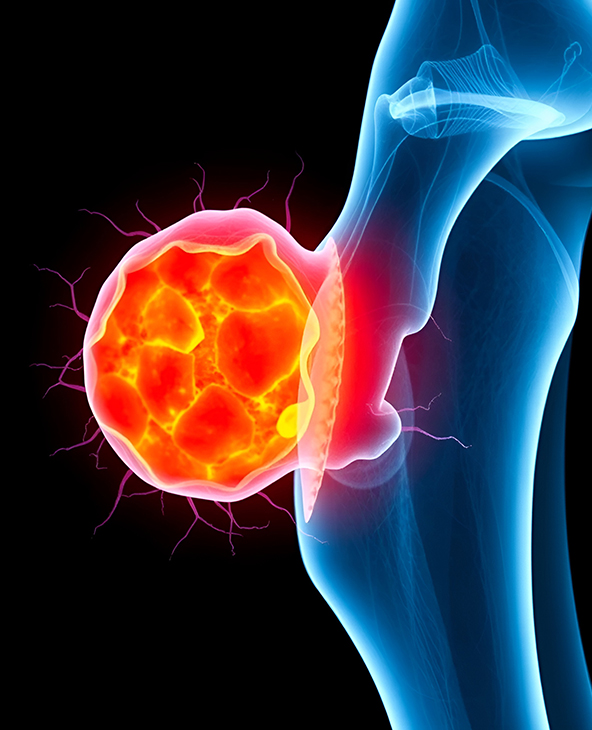
Sarcoma treatment is initiated once a malignant tumour of bone or soft tissue is confirmed through appropriate imaging and biopsy. Early intervention is essential because these tumours may grow silently and spread before causing significant discomfort. Timely treatment aims to remove or control the tumour, prevent further progression, and preserve limb function whenever possible. The treatment is recommended in the following situations:
- Biopsy-confirmed soft tissue sarcoma
- Biopsy-confirmed bone sarcoma
- A painless but progressively enlarging lump
- A deep-seated mass larger than 5 cm
- Persistent bone pain without clear injury
- Unexplained swelling in an arm or leg
- Pathological fracture associated with a tumour
- Imaging findings suggestive of malignancy
- Recurrent sarcoma
- Sarcoma that has spread beyond the primary site
Things to Know Before Starting Sarcoma Treatment
Sarcoma treatment requires thorough evaluation and precise planning before therapy begins. Decisions are guided by tumour subtype, histopathological grade, anatomical location, and overall health status to determine the most appropriate course of action. Before initiating treatment, the following key considerations are reviewed:
- Treatment depends on the tumour type and anatomical location
- Histopathological grade plays a key role in determining treatment intensity
- Detailed imaging is required to assess tumour size and involvement of nearby structures
- An image-guided core needle biopsy is essential for accurate diagnosis
- Limb-sparing surgery is possible in many cases
- Combination therapy such as surgery with chemotherapy or radiation may be recommended
- Chemotherapy protocols differ for adult and paediatric sarcoma cases
- Radiation therapy may be advised before or after surgery
- Rehabilitation planning is part of the treatment pathway
- Long-term follow-up is necessary after completion of therapy
Types of Sarcoma Treatment Available at Graphic Era Hospital
Sarcoma treatment is planned according to tumour subtype, histopathological grade, anatomical location, and overall stage of disease. At Graphic Era Hospital treatment may involve surgery, chemotherapy, radiation therapy, or a combination of these approaches, with a strong emphasis on limb preservation and functional recovery whenever feasible.
Surgical Treatment
- Limb-Sparing Surgery: Removal of the tumour with a margin of healthy tissue while preserving the affected limb.
- Wide Local Excision: Complete excision of the tumour along with surrounding tissue to reduce the risk of local recurrence.
- Bone Resection and Reconstruction: Removal of cancer-affected bone followed by reconstruction using prosthetic implants or bone grafts.
- Reconstructive Surgery: Soft tissue reconstruction to restore structural support and mobility after tumour removal.
- Amputation: Considered only when tumour extent prevents safe limb preservation.
Medical Treatment
- Chemotherapy (Adult Protocols): Systemic anti-cancer medicines used for certain high-grade or advanced sarcomas.
- Paediatric Chemotherapy Protocols: Age-specific regimens used in children and adolescents with bone or soft tissue sarcomas.
- Targeted Therapy: Medicines designed to act on specific molecular pathways in selected sarcoma subtypes.
- Immunotherapy: Used in select cases where immune-modulating treatment is indicated.
Radiation Treatment
- External Beam Radiation Therapy: High-energy radiation directed at the tumour site to destroy cancer cells.
- Image-Guided Radiation Therapy: Precision-based radiation delivery to minimise exposure to surrounding healthy tissue.
- Pre-Operative Radiation: Administered before surgery to shrink the tumour.
- Post-Operative Radiation: Given after surgery to reduce the risk of local recurrence.
Why Choose Graphic Era Hospital for Sarcoma Treatment?

Specialised Multidisciplinary Expertise : Our surgical oncologists, orthopaedic oncologists, medical oncologists, and radiation specialists collaborate closely to design subtype-specific treatment plans. Decisions are based on tumour biology, histopathological grade, and anatomical considerations to ensure appropriate intensity of care.

Advanced Diagnostic & Molecular Evaluation : Accurate treatment planning begins with high-resolution MRI and CT imaging, followed by image-guided core needle biopsy for definitive diagnosis. Histopathological grading and molecular pathology testing help identify the exact sarcoma subtype, enabling tailored therapy rather than a generic approach.

Limb Preservation & Functional Recovery Focus : Whenever medically feasible, limb-sparing surgery is prioritised to maintain mobility and independence. Reconstructive support, rehabilitation planning, and long-term surveillance are integrated into care to optimise recovery and quality of life.

Sarcoma Diagnostic & Molecular Services at Graphic Era Hospital
Accurate diagnosis is critical in sarcoma, as treatment decisions depend heavily on tumour subtype and biological behaviour. At Graphic Era Hospital, evaluation combines advanced imaging with precise pathological and molecular analysis to ensure the diagnosis is both accurate and complete. The diagnostic pathway includes:
- High-Resolution MRI: For detailed evaluation of soft tissue involvement and tumour extent.
- CT Scan: To assess bone involvement and detect spread to other organs.
- PET-CT Imaging: Used when systemic staging is required.
- Image-Guided Core Needle Biopsy: Preferred method for obtaining adequate tissue samples for definitive diagnosis.
- Histopathological Grading: Determines tumour aggressiveness and guides treatment intensity.
- Immunohistochemistry Panels: To classify specific sarcoma subtypes.
- Molecular Pathology & Genetic Testing: Identifies specific mutations or translocations that influence targeted therapy decisions.
Sarcoma Rehabilitation & Follow-Up Care
Sarcoma treatment does not end with tumour removal or completion of chemotherapy. Ongoing rehabilitation and regular follow-up are essential to restore function, monitor recovery, and detect any signs of recurrence at an early stage. Post-treatment care includes:
- Post-Surgical Physiotherapy: Focused exercises to improve strength, mobility, and limb function after tumour removal.
- Functional Rehabilitation: Targeted support to help regain independence in daily activities.
- Pain Management Services: Medical and supportive therapies to control post-treatment discomfort.
- Prosthetic Support (when required): Evaluation and fitting for patients who require limb reconstruction or prosthetic assistance.
- Chemotherapy Monitoring: Regular laboratory tests to assess blood counts and organ function during systemic treatment.
- Radiation Therapy Follow-Up: Monitoring for local tissue response and recovery.
- Surveillance Imaging: Periodic MRI or CT scans to monitor for recurrence.
Top Sarcoma Treatments at Graphic Era Hospital
- Limb-sparing tumour surgery
- Wide local excision of soft tissue sarcoma
- Bone tumour resection and reconstruction
- Adult sarcoma chemotherapy protocols
- Paediatric sarcoma chemotherapy protocols
- Image-guided radiation therapy
- Pre-operative and post-operative radiation therapy
Blog




World Cancer Day 2026: Spreading Awareness, Inspiring Action
Frequently Asked Questions
What is the difference between bone sarcoma and soft tissue sarcoma?
Bone sarcoma originates in the bone, whereas soft tissue sarcoma arises from muscles, fat, nerves, or blood vessels. Both require specialised evaluation and treatment planning.
Is a painless lump a warning sign of sarcoma?
Yes. Many soft tissue sarcomas present as painless but progressively enlarging lumps. Any growing mass should be evaluated by a specialist.
What does tumour grade mean in sarcoma?
Tumour grade refers to how aggressive the cancer cells appear under the microscope. High-grade tumours often require more intensive treatment compared to low-grade tumours.
Is amputation always necessary for sarcoma?
No. Limb-sparing surgery is possible in many cases when the tumour can be safely removed while preserving function.
Are sarcomas common in children?
Certain types, such as osteosarcoma and Ewing sarcoma, are more frequently seen in children and adolescents and require age-specific treatment protocols.
How is sarcoma diagnosed accurately?
Diagnosis involves imaging studies followed by an image-guided core needle biopsy and detailed histopathological evaluation.
Does molecular testing change sarcoma treatment?
Yes. Molecular and genetic testing can identify specific subtypes and guide targeted therapy decisions in selected cases.
Can sarcoma spread to other parts of the body?
Sarcoma can spread, commonly to the lungs or other tissues, which is why timely treatment and regular follow-up are important.
 Emergency 24×7 : 1800 889 7351