Vascular conditions can affect blood flow, healing, and overall organ function, often requiring timely and specialised care. At Graphic Era Hospital in Dehradun, our vascular surgeons diagnose and manage a wide range of arterial and venous disorders using both minimally invasive techniques and advanced surgical approaches. Care is guided by accurate diagnosis, detailed vascular imaging, and a multidisciplinary approach where needed. From common concerns such as varicose veins to complex vascular diseases, patients receive treatment plans that focus on restoring circulation, preventing complications, and supporting long-term vascular health.
Doctors Available
What Does a Vascular Surgeon Do?
Vascular surgeons are specialists who diagnose and treat diseases of the vascular system – the network of arteries, veins and lymphatic vessels that keeps blood circulating throughout your body. Beyond surgery, our vascular doctors at Graphic Era Hospital offer minimally invasive procedures, medical management and long-term care for a wide spectrum of vascular conditions. Key responsibilities of a vascular surgeon include:
- Arterial Surgery: Treats blockages, aneurysms and narrowing in arteries that restrict blood flow to vital organs and limbs.
- Venous Procedures: Manages varicose veins, deep vein thrombosis (DVT) and chronic venous insufficiency through surgical and minimally invasive techniques.
- Aortic Surgery: Addresses life-threatening conditions such as aortic aneurysms and aortic dissections requiring open or endovascular repair.
- Carotid Artery Surgery: Removes plaque buildup in the carotid arteries to reduce the risk of stroke and improve cerebral blood flow.
- Peripheral Vascular Surgery: Restores circulation in the legs and arms affected by peripheral artery disease (PAD), preventing limb loss.
- Endovascular Procedures: Uses minimally invasive catheter-based techniques such as angioplasty and stenting to treat vascular blockages without open surgery.
- Dialysis Access Surgery: Creates and maintains arteriovenous (AV) fistulas and grafts for patients on long-term kidney dialysis.
- Lymphatic Surgery: Treats lymphedema and lymphatic disorders causing chronic swelling in the limbs.
- Wound Care for Vascular Patients: Manages non-healing ulcers and wounds caused by poor circulation, particularly in diabetic patients.
When to Consult a Vascular Surgeon?
Vascular conditions often progress silently before symptoms become severe, which makes early consultation with a vascular specialist in Dehradun critical. Our vascular surgeons at Graphic Era Hospital evaluate, diagnose and manage both acute and chronic conditions affecting blood vessels. Signs that warrant a vascular surgical consultation include:
- Leg Pain or Cramping While Walking: Recurring pain, heaviness or cramping in the legs during physical activity, a classic sign of peripheral artery disease, warrants prompt evaluation.
- Visible or Swollen Veins: Twisted, bulging veins on the legs or persistent swelling in the limbs may indicate varicose veins or chronic venous insufficiency.
- Cold or Numb Extremities: Persistent coldness, numbness or a change in skin colour in the hands or feet often points to restricted arterial blood flow.
- Non-Healing Wounds or Ulcers: Wounds on the feet or legs that refuse to heal despite treatment are a warning sign of poor vascular circulation, particularly in diabetic patients.
- Pulsating Abdominal Mass: A noticeable pulsating sensation in the abdomen may indicate an abdominal aortic aneurysm requiring urgent assessment.
- Stroke Symptoms or TIA: Sudden weakness, slurred speech or vision changes, even briefly, may signal carotid artery disease and demand immediate attention.
- Blood Clots or DVT Diagnosis: A confirmed or suspected deep vein thrombosis requires specialist evaluation to determine clot burden and prevent pulmonary embolism.
Risk Factors for Vascular Disease
Vascular diseases often develop gradually and may remain unnoticed until symptoms appear. Understanding the risk factors helps in early identification and timely consultation. At Graphic Era Hospital, our vascular surgeons evaluate patients not only for presenting symptoms but also for underlying risk profiles that may influence disease progression. Common risk factors include:
- Diabetes: Damages blood vessels and accelerates arterial disease across multiple vascular beds.
- High Blood Pressure: Weakens vessel walls and increases the risk of aneurysms and stroke.
- Smoking: One of the strongest contributors to vascular damage and poor circulation.
- High Cholesterol: Leads to plaque buildup and progressive narrowing of arteries.
- Obesity and Sedentary Lifestyle: Reduces circulation and increases cardiovascular strain over time.
- Family History of Vascular Disease: Increases the likelihood of early-onset conditions requiring proactive monitoring.
- Advancing Age: Progressive deterioration of vessel elasticity and function raises the risk of aneurysms, stenosis and poor circulation.
- Chronic Kidney Disease: Often associated with accelerated vascular complications and arterial calcification.
- Previous History of Blood Clots or Stroke: Raises the risk of recurrence and warrants long-term specialist follow-up.
Why Choose Graphic Era Hospital for Vascular Care

A Multidisciplinary Team for Holistic Vascular Care: Graphic Era Hospital brings together vascular surgeons, interventional radiologists, cardiologists, nephrologists and diabetologists under one roof, ensuring every patient receives coordinated, end-to-end care. Our collaborative model means your vascular condition is never evaluated in isolation. Whether your case involves a single vessel or intersects with heart, kidney or metabolic health, our team aligns its expertise around your complete clinical picture from day one.

Recognised Expertise in Complex and High-Risk Cases: Our vascular surgeons carry particular depth in managing high-risk presentations, including critical limb ischaemia, acute aortic emergencies, vascular complications in diabetic patients and complex dialysis access cases. With experience across both elective and emergency vascular surgery, our team is equipped to make time-critical decisions that directly affect outcomes. Patients referred from across Uttarakhand and neighbouring states trust Graphic Era Hospital precisely because of this clinical depth.

Advanced Infrastructure and Round-the-Clock Emergency Cover: Our hospital is equipped with hybrid operating theatres, high-resolution vascular imaging and real-time fluoroscopy – infrastructure that supports both planned procedures and acute interventions with equal precision. A dedicated 24/7 emergency and trauma unit ensures patients presenting with aortic dissection, acute limb ischaemia or vascular trauma receive immediate, life-saving care without delay.
Vascular Conditions Treated at Graphic Era Hospital
Vascular Diagnostic Services
Accurate diagnosis forms the foundation of effective vascular treatment. Our hospital offers a full range of specialised vascular investigations:
- Duplex Ultrasound: Non-invasive imaging that evaluates blood flow and detects blockages, clots or valve dysfunction in arteries and veins.
- CT Angiography (CTA): High-resolution cross-sectional imaging to map arterial and venous anatomy and identify aneurysms, stenosis or malformations.
- MR Angiography (MRA): Magnetic resonance-based vascular imaging, particularly useful for patients where radiation exposure needs to be minimised.
- Digital Subtraction Angiography (DSA): The gold standard for detailed arterial imaging, used when planning complex endovascular or open surgical interventions.
- Ankle-Brachial Index (ABI) Testing: A simple, non-invasive test comparing blood pressure at the ankle and arm to screen for peripheral artery disease.
Endovascular and Surgical Procedures
Our vascular surgeons offer a wide range of interventions tailored to each patient's condition and overall health profile:
- Angioplasty and Stenting:Minimally invasive procedures that open narrowed or blocked arteries using a balloon catheter, often followed by stent placement to maintain patency.
- Endovascular Aneurysm Repair (EVAR): A minimally invasive technique to treat aortic aneurysms by placing a stent-graft inside the aorta, eliminating the need for open surgery in eligible patients.
- Carotid Endarterectomy: Surgical removal of plaque from the carotid artery to restore blood flow to the brain and significantly reduce stroke risk.
- Peripheral Bypass Surgery: Reroutes blood around a blocked artery in the leg or arm using a graft, restoring circulation and preserving limb function.
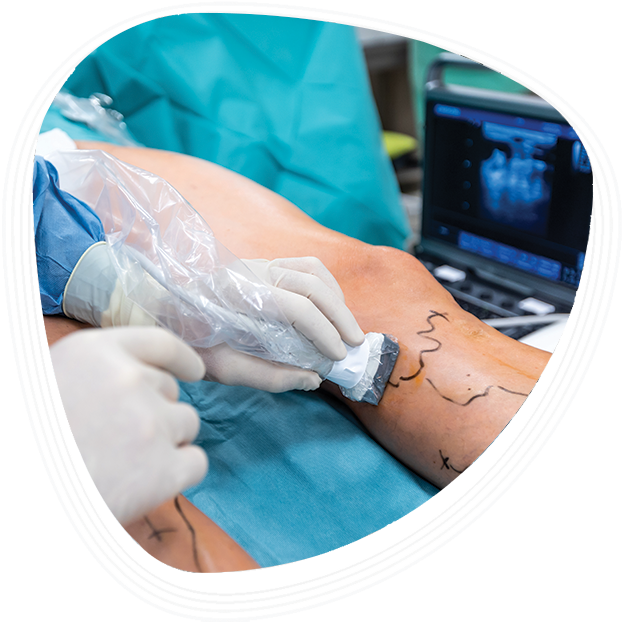
- Varicose Vein Treatments: Includes endovenous laser ablation (EVLA), radiofrequency ablation (RFA) and sclerotherapy for effective, minimally invasive management of varicose veins.
- AV Fistula and Graft Creation: Surgical creation of dialysis access points for patients with chronic kidney disease requiring regular haemodialysis.
Post-Procedure Care and Rehabilitation
Recovery and ongoing management are integral to long-term vascular health. Our team provides:
- Wound and Ulcer Management: Dedicated care protocols for non-healing vascular wounds and diabetic foot ulcers to prevent infection and promote healing.
- Anticoagulation Management: Personalised medication plans for patients with DVT, atrial fibrillation or post-surgical clot risk to prevent recurrence.
- Vascular Rehabilitation: Supervised exercise programmes and physiotherapy to improve circulation and functional capacity in patients with peripheral artery disease.
- Lifestyle and Risk Factor Counselling: Guidance on smoking cessation, diabetes control, blood pressure management and dietary changes to slow vascular disease progression.
Top Vascular Surgery Procedures
- Endovascular Aneurysm Repair (EVAR)
- Thoracic Endovascular Aortic Repair (TEVAR)
- Open Aortic Aneurysm Repair
- Carotid Endarterectomy
- Carotid Artery Stenting
- Peripheral Artery Angioplasty and Stenting
- Femoral-Popliteal Bypass Surgery
- Aortobifemoral Bypass Surgery
- Axillofemoral Bypass Surgery
- Varicose Vein Stripping and Ligation
- Endovenous Laser Ablation (EVLA)
- Radiofrequency Ablation (RFA)
- Sclerotherapy
- Deep Vein Thrombosis (DVT) Thrombolysis
- Inferior Vena Cava (IVC) Filter Placement
- AV Fistula Creation for Dialysis
- AV Graft Placement
- Renal Artery Stenting
- Mesenteric Artery Bypass
- Digital Subtraction Angiography (DSA)
- Diabetic Foot Revascularisation
- Lymphedema Surgery
- Subclavian Artery Stenting
- Sympathectomy
Vascular Conditions Treated at Graphic Era Hospital
Other Specialities


Patient Stories


Blog






Frequently Asked Questions
What is the difference between a vascular surgeon and a cardiovascular surgeon?
A vascular surgeon specialises in conditions affecting arteries, veins and the lymphatic system — excluding the heart. A cardiovascular surgeon focuses primarily on the heart and coronary vessels. At Graphic Era Hospital, both specialties work in close coordination for patients with overlapping conditions.
How do I know if I need to see a vascular specialist?
At your first consultation, our vascular surgeon reviews your symptoms, medical history and risk factors, followed by a clinical examination and, where needed, same-day non-invasive vascular tests such as duplex ultrasound or ABI testing. Most patients leave with a clear diagnosis or a defined investigation plan.
Are varicose vein treatments painful?
Modern minimally invasive treatments such as endovenous laser ablation and radiofrequency ablation involve minimal discomfort. Most patients return to normal activity within a day or two of the procedure.
How long does recovery take after vascular surgery?
Recovery varies by procedure. Minimally invasive endovascular procedures typically involve a hospital stay of one to two days and recovery within a week. Open surgeries such as aortic repair may require two to six weeks of recovery, with ongoing rehabilitation support.
Is vascular disease preventable?
Many forms of vascular disease are preventable or significantly delayed through lifestyle choices, such as quitting smoking, managing blood pressure and diabetes, maintaining a healthy weight and staying physically active all play a decisive role in vascular health.
How do I book an appointment with a vascular surgeon at Graphic Era Hospital?
Appointments are available through our website, by calling 1800-889-7351 or by visiting the outpatient department directly. Our team works to schedule consultations at the earliest available slot.
Can vascular disease affect young people?
Yes. While vascular disease is more common in older adults, conditions such as May-Thurner syndrome, arteriovenous malformations, vascular trauma and DVT occur across all age groups. Early diagnosis and treatment are equally important in younger patients.