Liver resection, also known as hepatectomy, is a surgical procedure in which a portion of the liver is removed to treat cancerous or non-cancerous conditions. It is most commonly performed to remove cancerous liver tumours, either originating in the liver (primary liver cancer) or that have spread from other parts of the body (liver metastases). In some cases, it may also be done for benign tumours, cysts, or localised infections that affect liver function. As the liver can regenerate after a portion is removed, surgical resection is considered a safe and effective treatment option for eligible patients.
At Graphic Era Hospital, Dehradun, liver resections are performed by experienced hepatobiliary and gastrointestinal surgeons using advanced technology and precision-guided techniques. Our team specialises in traditional (open), minimally invasive, laparoscopic, and robotic hepatectomy, ensuring every patient receives the best possible care and outcome.
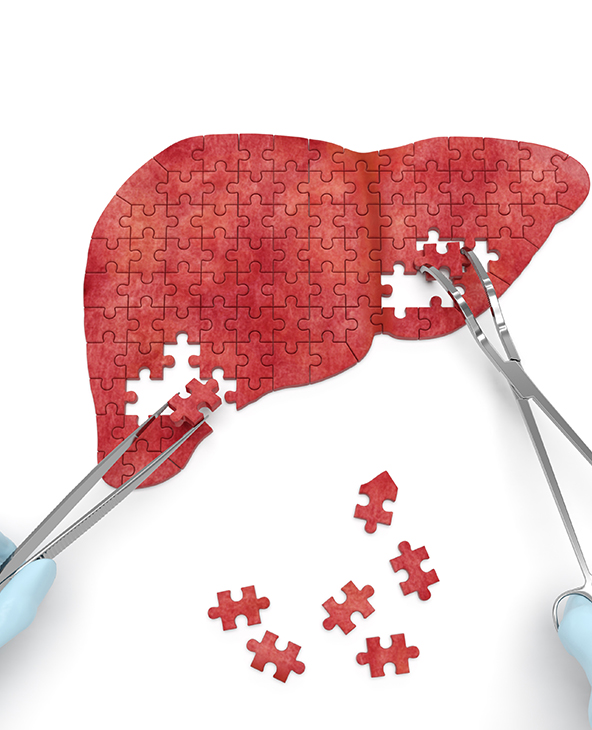
Why is Liver Resection Performed?
Liver resection is carried out to treat a range of liver diseases, both cancerous and non-cancerous. By removing the affected part of the liver, the procedure aims to eliminate tumours, relieve symptoms, and improve liver function while preserving as much healthy liver tissue as possible. Common reasons for liver resection include:
- Primary liver cancer: Such as hepatocellular carcinoma, where surgery offers the best chance of long-term survival when the disease is detected early and confined to one part of the liver.
- Liver metastases: Tumours that have spread to the liver from other organs, such as the colon or rectum, may be removed to control the disease and improve outcomes.
- Benign tumours or cysts: Non-cancerous growths or cystic lesions that cause symptoms or have a risk of complications may be surgically removed.
- Localised infections or abscesses: In select cases, surgery may be needed to remove infected tissue that does not respond to other treatments.
- Trauma or injury: Rarely, surgery may be required to manage damage to the liver caused by accidents or injuries.
- Diagnostic or staging purposes: In certain complex cases, surgery may help confirm a diagnosis or plan further treatment.
Schedule Your Appointment with
Our Expert Doctors
We are dedicated to driving lasting, positive transformation in healthcare management through innovation and patient-centered solutions.
Types of Liver Resection Procedures
The type of liver resection depends on the size, number, and location of tumours, as well as the patient’s overall liver health. The goal is to remove the diseased portion while preserving enough healthy liver to support normal function and allow regeneration. Common types include:
- Major Liver Resection: Involves removing three or more segments of the liver, such as during a right or left hepatectomy. This is usually done for larger or centrally located tumours.
- Minor Liver Resection: Removes two or fewer segments, typically for smaller or more accessible lesions.
- Multiple Liver Resections: Performed when there are several tumours in different parts of the liver that can be safely removed during the same operation.
- Two-Stage Liver Resection: Used for complex cases where multiple tumours are removed in two separate surgeries, allowing the liver to regenerate between procedures.
- Segmental Liver Resection: Targets only the specific liver segments affected by disease, preserving as much healthy tissue as possible.
- Laparoscopic and Robotic Liver Resection: Minimally invasive approaches performed through small incisions using advanced technology. These techniques often result in less pain, minimal scarring, and faster recovery compared to open surgery.
Every patient’s treatment plan is carefully tailored by the team at Graphic Era Hospital to ensure effective tumour removal while maintaining liver function and supporting recovery.
Liver Resection vs Liver Transplant
Liver resection and liver transplant are both surgical treatments for liver diseases, but they differ in their purpose, approach, and when they are recommended.
Liver Resection
In liver resection, only the diseased portion of the liver is surgically removed while preserving the healthy part. This option is usually considered for patients whose liver function is good and whose tumours are confined to a specific area. Because the liver can regenerate, patients often recover with enough healthy liver tissue remaining to support normal function.
Liver Transplant
A liver transplant involves replacing the entire diseased liver with a healthy donor liver. It is usually recommended when the disease involves the whole liver, when liver function is severely impaired (such as in advanced cirrhosis), or when tumours are not suitable for resection.
At Graphic Era Hospital, patients are carefully evaluated to determine the most appropriate treatment. For many localised liver tumours, resection is preferred as it preserves the patient’s own liver and avoids the risks and lifelong medication associated with transplantation.
Why Choose Graphic Era Hospital for Liver Resection Surgery?

Expert Hepatobiliary and Gastrointestinal Surgeons: Our surgical team has extensive experience in performing a wide range of liver resections, including major, minor, and complex segmental surgeries. The surgeons specialise in both open and minimally invasive techniques, ensuring that each procedure is tailored to the patient’s condition.

Advanced Surgical Technology: We are equipped with cutting-edge technology to support safe and accurate liver surgery. This includes high-resolution imaging for precise pre-surgical planning, intraoperative ultrasound for real-time guidance, and modern laparoscopic and robotic systems that enable minimally invasive procedures.

Multidisciplinary Care: Liver surgery requires collaboration across multiple medical specialties. At Graphic Era Hospital, surgeons work closely with anaesthesiologists, oncologists, radiologists, nutritionists, and critical care experts to develop an integrated treatment plan for each patient.

How the Hepatectomy Procedure is Performed
Liver resection is a highly planned surgery that requires precision, advanced imaging, and a specialised surgical team. While every case is different, the procedure typically follows these key steps:
- Pre-surgical evaluation and anaesthesia: Before surgery, patients undergo detailed blood tests, imaging, and assessments to ensure the liver can handle the operation. Anaesthesia is carefully planned to maintain stability during the procedure.
- Surgical access: The surgeon makes an incision in the abdomen. Depending on the case, this may be an open incision or several small incisions for laparoscopic or robotic surgery.
- Identifying and isolating liver segments: Intraoperative imaging and surgical guidance are used to locate the tumour precisely and identify the liver segments to be removed, while protecting healthy tissue.
- Resection of the diseased portion: The targeted liver segments, along with any affected blood vessels or bile ducts, are removed with meticulous control of bleeding and bile flow.
- Haemostasis and bile duct control: Special techniques are used to ensure that blood vessels and bile ducts are securely closed to prevent bleeding or leakage.
- Closure and post-operative transfer: Once the resection is complete, the incision is closed, and the patient is shifted to the ICU for close monitoring of vital signs, liver function, and early recovery.
How to Prepare for Liver Resection
Good preparation before liver surgery plays a vital role in ensuring a safe procedure and smooth recovery. Patients are advised to follow their medical team’s instructions closely and make certain adjustments in the days or weeks leading up to surgery. Key aspects of preparation include:
- Medical evaluation and tests: A thorough health check-up is done to assess liver function and overall fitness for surgery. This includes blood tests, liver imaging (such as CT or MRI), heart and lung evaluations, and anaesthesia clearance.
- Optimising liver health: Patients may be advised to follow a nutritious diet, stop alcohol intake, and treat any underlying liver conditions such as hepatitis or infections. In some cases, medications may be given to improve liver function before surgery.
- Medication review: The surgical team will assess all current medications, including blood thinners, diabetes medicines, or supplements, and may ask patients to stop or adjust certain drugs before surgery to reduce risks.
- Lifestyle adjustments: Quitting smoking, staying active, and maintaining good hydration can support healing and reduce complications after surgery.
- Planning for hospital stay and recovery: Patients should prepare for their hospital stay by arranging for post-operative support at home. Having a family member or caregiver to assist after discharge can make the recovery process easier.
Risks and Complications of Liver Resection
Liver resection is a major surgery, and like all complex operations, it carries certain risks. However, advances in surgical techniques, anaesthesia, and post-operative care have made it much safer. Being aware of possible complications helps patients and families prepare for the recovery journey. Common risks include:
- Bleeding: The liver has a rich blood supply, so bleeding during or after surgery is one of the main risks. Surgeons use advanced techniques to control blood vessels and minimise this.
- Bile leak: After a portion of the liver is removed, bile can sometimes leak from cut bile ducts. Most leaks are detected early and managed with drainage or minor procedures.
- Infection: Wound or internal infections may occur after surgery, but these are usually controlled with antibiotics and close monitoring.
- Liver failure: Rarely, if the remaining liver is too small or not healthy, liver function may temporarily worsen. Careful pre-surgical planning helps reduce this risk.
- Blood clots or anaesthesia-related risks: As with any major surgery, there is a risk of blood clots, lung infections, or reactions to anaesthesia.
- Temporary digestive changes: Some patients may experience appetite loss, fatigue, or mild digestive issues during recovery, which usually improve over time.
At Graphic Era Hospital, experienced hepatobiliary surgeons, specialised anaesthesiologists, and a dedicated critical care team work together to reduce these risks. Comprehensive pre-surgical evaluation and close post-operative monitoring play a key role in ensuring safe outcomes.
Liver Resection Recovery and Post-Surgery Care
Recovery after liver resection depends on the type of surgery performed, the extent of liver tissue removed, and the patient’s overall health. Most patients stay in the hospital for about 5 to 10 days, beginning their recovery in the ICU before shifting to a surgical ward once stable. Key aspects of recovery include:
- ICU and hospital monitoring: In the first few days, patients are closely monitored for vital signs, liver function, bleeding, and bile leaks. Tubes and drains may be temporarily placed to support healing.
- Pain management: Specialised pain control methods, such as epidurals or intravenous medication, are used to keep patients comfortable and support early movement.
- Dietary progression: Patients typically start with clear fluids and gradually move to soft and then regular food, depending on how well their liver and digestive system recover.
- Early mobilisation: Gentle walking and breathing exercises are encouraged soon after surgery to improve circulation, reduce the risk of blood clots, and support faster recovery.
- Monitoring liver function: Regular blood tests and imaging help assess how well the liver is working and detect any early complications.
- Follow-up appointments: Patients are scheduled for regular check-ups after discharge to monitor healing and plan any additional treatment, such as chemotherapy for cancer cases.
With careful monitoring and support, most patients gradually regain strength and return to their normal routines within a few weeks to months, depending on the surgery type and their baseline health.
Liver Resection Surgery Cost in Dehradun
The cost of liver resection surgery can vary depending on several factors, including the type of surgery, the complexity of the case, and the patient’s overall health. At Graphic Era Hospital, we ensure transparent pricing and personalised treatment planning to help patients and families make informed decisions.
Factors that can affect the cost include:
- Type of surgery: Open, laparoscopic, or robotic liver resections may have different costs depending on the equipment and level of expertise required.
- Extent of resection: Larger or more complex surgeries may involve longer operating times and additional resources.
- Length of hospital stay: ICU monitoring, recovery duration, and any additional post-operative care can influence the total cost.
- Additional treatments: Costs may vary if chemotherapy, radiology, or other follow-up treatments are needed.
- Insurance coverage or packages: Patients are encouraged to check their insurance plans or speak with the hospital team to understand coverage options.
Graphic Era Hospital offers comprehensive liver surgery services in Dehradun at competitive and transparent rates. The team provides detailed estimates before surgery, ensuring there are no hidden charges.
Patient Stories





Blog




Frequently Asked Questions (FAQs)
Is liver resection a major surgery?
Yes. Liver resection is considered a major surgery because it involves removing part of an organ with a rich blood supply. However, with careful planning, advanced techniques, and experienced surgeons, it can be performed safely with good outcomes.
How long does liver resection surgery take?
The duration depends on the type and complexity of the surgery. Most procedures take between three to six hours, but more complex resections may take longer.
How long does it take to recover from hepatectomy?
Initial recovery in the hospital usually takes 5 to 10 days. Full recovery can take several weeks to a few months, depending on the extent of surgery, the patient’s health, and the type of procedure performed.
Can the liver grow back after resection?
Yes. One of the unique features of the liver is its ability to regenerate. The remaining portion typically begins to grow within weeks after surgery, often reaching near-normal size and function over several months.
What is the survival rate after liver resection surgery?
Survival rates vary depending on the underlying disease, tumour stage, and overall liver health. When performed for early-stage liver cancer or isolated liver metastases, surgery offers excellent long-term outcomes, especially when combined with appropriate follow-up care.
Is laparoscopic liver resection safe?
Yes. When performed by trained specialists, laparoscopic and robotic liver resections are safe and effective. They often lead to less pain, smaller scars, and faster recovery compared to open surgery.
What is the cost of liver resection surgery in Dehradun?
The cost depends on factors such as the type of surgery, length of hospital stay, and any additional treatments required. At Graphic Era Hospital, we provide transparent cost estimates with no hidden charges.
Who performs liver resection surgery?
Liver resections are performed by hepatobiliary and gastrointestinal surgeons with specialised training in liver surgery. At Graphic Era Hospital, these surgeries are carried out by experienced experts supported by a multidisciplinary medical team.
How do I find the best hospital near me in Dehradun for liver resection surgery?
When choosing a hospital, look for experienced liver surgeons, advanced surgical technology, strong ICU support, and a team that provides comprehensive pre- and post-operative care. Graphic Era Hospital offers all these facilities, making it a trusted centre for liver surgery in the region.
Are advanced liver surgeries available near me in Dehradun?
Yes. Graphic Era Hospital offers a complete range of advanced liver surgeries, including major resections, segmental resections, and minimally invasive procedures, supported by modern ICU care and a multidisciplinary medical team.
 Emergency 24×7 : 1800 889 7351